Sikhote-Alin
The Sikhote-Alin is a vast mountain complex located in the Russian Far East. Stretching 750 miles (1,200 km) along the Tatar Strait and the Sea of Japan…
What is Sikhote-Alin?
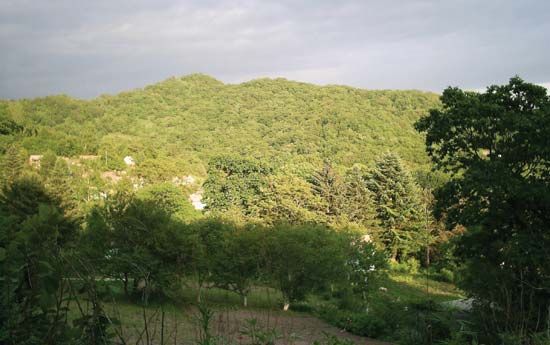
The Sikhote-Alin is a vast mountain complex located in the Russian Far East. Stretching 750 miles (1,200 km) along the Tatar Strait and the Sea of Japan, this region is characterized by eight main mountain ranges, with its highest peak, Mount Tardoki-Yani, reaching an elevation of 6,814 feet (2,077 m).12
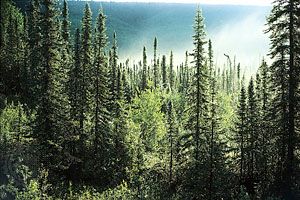
The landscape is defined by dense forests, featuring birch and conifers on the higher slopes and mixed deciduous forests at lower elevations. Economically, the area is significant for its lumbering industry and the extraction of minerals such as lead, zinc, and tin. Due to the rugged terrain, the region remains very sparsely populated.1
What kind of wildlife lives in the Sikhote-Alin forests?
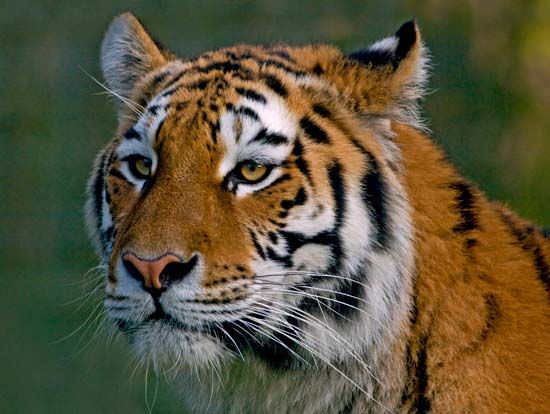
The Sikhote-Alin mountain complex serves as a critical habitat for a diverse range of wildlife, most notably the Siberian tiger. As an apex predator, this tiger inhabits the region’s taiga and mixed forests, relying on a variety of prey species to survive.3
Common animals found within these forests include:
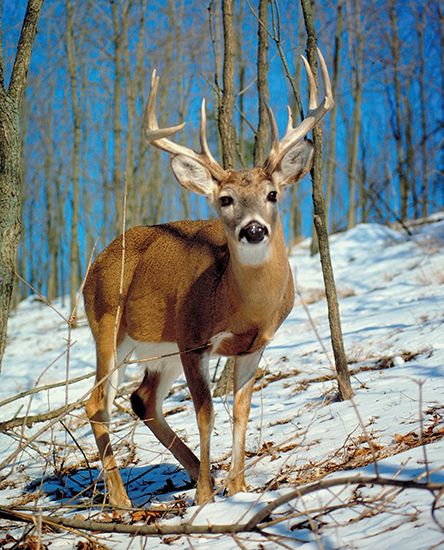
- Ungulates: Various types of deer, particularly sika, and wild boars.3
- Carnivores and Omnivores: Badgers, raccoon dogs, Asiatic black bears, and brown bears.3
The survival of these species is intrinsically linked to the health of the forest ecosystem. Unfortunately, populations face ongoing pressures from poaching, logging, and forest fires, which continue to threaten habitat quality and prey availability.3
What was the famous Sikhote-Alin meteorite event?
The Sikhote-Alin meteorite event was a significant meteorite shower that occurred in the Russian Far East in 1947. Unlike many other documented showers that consist of stony meteorites, this event was a rare, observed fall of iron meteorites.4
The event was caused by the fragmentation of a large meteoroid as it entered the atmosphere, resulting in a swarm of separate pieces landing in the same vicinity. This created a strewn-field—the area where the fragments landed—typically shaped as a rough ellipse along the object’s flight path. Because air resistance affects fragments differently based on their size, the larger pieces of the Sikhote-Alin iron mass traveled farther than the smaller ones, creating a distinct size gradation across the impact area.4
How does the climate of the Russian Far East affect the region?
The climate of the Russian Far East is defined by its severe continental nature, characterized by extreme seasonal temperature fluctuations and the profound influence of its geography.
Key Climatic Impacts
- Extreme Temperatures: The region experiences some of the lowest temperatures on Earth outside of Antarctica. During winter, an intensely cold pocket of air develops over inland Siberia, with mean temperatures reaching as low as -50 °C (-58 °F). Conversely, summer temperatures can rise significantly, creating a vast seasonal range that increases toward the interior.56
- Permafrost: Much of the region is susceptible to permafrost, where ground remains frozen year-round. This poses significant challenges for agriculture, as the thawing of ice within the soil can destroy cultivated fields and necessitate the abandonment of land.57
- Atmospheric Dynamics: The contrast between the frigid Siberian air and the relatively warmer, unfrozen Pacific Ocean generates powerful, westward-moving storm systems that influence weather across the Northern Hemisphere. Additionally, outblowing winds from the interior depress temperatures along the Pacific coast, making coastal areas colder than their latitude might otherwise suggest.56
- Vegetation Constraints: In the northern reaches, such as the Chukotka region, the rigorous cold and short snow-free seasons preclude the growth of trees, limiting the expansion of taiga forests.5
Sources
- Sikhote-Alin — Encyclopædia Britannica
- Sikhote-Alin' — Merriam-Webster
- Siberian tiger — Encyclopædia Britannica
- Meteorite shower — Encyclopædia Britannica
- Taiga - Climate — Encyclopædia Britannica
- Russia - Temperature — Encyclopædia Britannica
- Russia - Climate of Russia — Encyclopædia Britannica
- Altai Mountains - Climate — Encyclopædia Britannica
- permafrost - Air temperature and ground temperature — Encyclopædia Britannica
- permafrost - Agriculture — Encyclopædia Britannica
- Asia - The polar front — Encyclopædia Britannica
Published on · 3 min read