Simaroubaceae
Simaroubaceae, commonly known as the quassia family, is a group of flowering plants within the order Sapindales. This family comprises approximately 25…
What is Simaroubaceae?
Simaroubaceae, commonly known as the quassia family, is a group of flowering plants within the order Sapindales. This family comprises approximately 25 genera of pantropical trees and shrubs.12
Key characteristics of the family include:
- Physical traits: Members typically feature alternate, pinnate leaves, small flowers with a prominent disk, and bitter bark. Their fruits are often fleshy, though they may also be winged or take the form of a drupe, berry, or samara.12
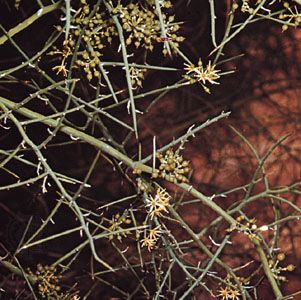
- Notable species: The family includes the tree of heaven (Ailanthus), often used as an ornamental, and the crucifixion thorn (Castela emoryi), which is native to the deserts of the southwestern United States.1
- Economic and medicinal use: The family is well-regarded for its medicinal plants. Bark from genera such as Quassia and Picrasma yields quassia, a bitter substance historically used in tonics and treatments for conditions like dysentery.13
What makes the tree of heaven so resistant to urban environments?
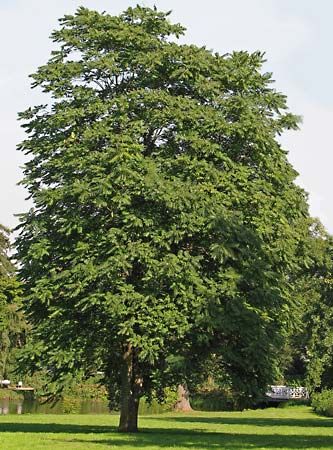
The tree of heaven (Ailanthus altissima) is highly resilient in urban environments due to several key biological advantages:
- Pollution Tolerance: It possesses a notable resistance to air and environmental pollution, allowing it to thrive in settings where other species might struggle.5
- Soil Adaptability: The tree is capable of growing in almost any soil type, making it well-suited for the often poor or compacted conditions found in city landscapes.5
- Hardiness: It is largely free from common insects and diseases, which reduces the maintenance required to keep the tree healthy in populated areas.5
- Rapid Growth: Its fast growth rate allows it to quickly establish itself in urban centers.5
How is quassia wood traditionally used in medicine?
Quassia wood, derived from the heartwood and bark of various tropical trees within the Simaroubaceae family, has a long history of traditional medicinal use. Its primary application is as a bitter tonic, a substance historically valued for its intense bitterness.67
In tropical America, decoctions made from the bark and wood of Quassia amara are traditionally used to create an antimalarial tonic. Similarly, in the West Indies, bitters are prepared from the bark of Picrasma excelsa, also known as Jamaica quassia. Beyond its use as a tonic, quassia has been employed as a remedy for roundworms in children and has historically served as an insecticide.736
The medicinal value of these plants was famously brought to wider attention in the 18th century by Quassi, an enslaved man in Suriname who discovered the properties of the tree. While these traditional uses are well-documented, it is important to note that the efficacy and safety of such herbal remedies should always be evaluated through modern medical standards.6
What are the defining characteristics of the order Sapindales?
The order Sapindales is a diverse group of dicotyledonous flowering plants comprising 9 families, approximately 460 genera, and about 5,700 species, including well-known plants like the Citrus genus8.
Morphological Characteristics
- Growth Habit: The order is overwhelmingly composed of woody plants, including trees, large shrubs, and woody climbers.8
- Leaves: Most species feature pinnately compound leaves arranged alternately along the stem. Stipules are typically absent.8
- Flowers: Flowers are often insect-pollinated and may be radially or bilaterally symmetrical. They frequently feature a nectar-producing disk at the base of the pistil. While many flowers are bisexual, there is a strong evolutionary trend toward dioecism (male and female flowers on separate plants) or polygamous arrangements to encourage cross-pollination.8
- Reproductive Structures: Stamens are usually double the number of petals. The ovary is typically superior and composed of 1 to 20 carpels.8
- Fruit and Seeds: While the ancestral fruit type is a capsule, it has diversified into various forms, including drupes, berries, and samaras. Seeds may be dispersed by wind or by animals attracted to fleshy fruits or colourful arils.8
Sources
- Simaroubaceae — Encyclopædia Britannica
- Simaroubaceae — Merriam-Webster
- Sapindales - Simaroubaceae — Encyclopædia Britannica
- Sapindales - Burseraceae — Encyclopædia Britannica
- tree of heaven — Encyclopædia Britannica
- quassia — Merriam-Webster
- Jamaica quassia — Merriam-Webster
- Sapindales — Encyclopædia Britannica
- Sapindales - Characteristic morphological features — Encyclopædia Britannica
Published on · 3 min read