Winter Aconite
Winter aconite (genus Eranthis) refers to a group of about seven species of perennial herbaceous plants belonging to the buttercup family (Ranunculaceae).…
What is winter aconite?
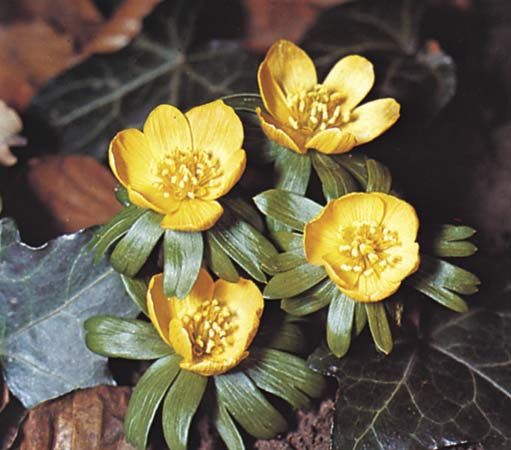
Winter aconite (genus Eranthis) refers to a group of about seven species of perennial herbaceous plants belonging to the buttercup family (Ranunculaceae). These plants are native to temperate regions of Europe and are widely cultivated as ornamentals due to their early blooming period.12
Key characteristics include:
- Appearance: They feature solitary yellow or white flowers with five to eight sepals, growing on short stalks from tuberous roots.13
- Blooming: They are notable for being among the first flowers to emerge in spring, often appearing while snow is still on the ground.13
- Foliage: The leaves are peltate—meaning the stem attaches to the center of the leaf—and the plant typically dies back by mid-spring.1
The most common species, Eranthis hyemalis, typically grows to a height of about 20 cm (8 inches). It is important to distinguish these spring-flowering plants from the genus Aconitum, which are summer-flowering and poisonous.12
What other plants belong to the buttercup family?
The Ranunculaceae family, commonly known as the buttercup family, is a diverse group comprising approximately 2,252 species across 62 genera. These plants are primarily herbaceous and are widely distributed throughout temperate and subtropical regions.45
Beyond winter aconite, the family includes many well-known wildflowers and garden ornamentals:
- Anemone (genus Anemone)
- Baneberry (genus Actaea)
- Bugbane (genus Cimicifuga)
- Buttercup (genus Ranunculus)
- Clematis (genus Clematis)
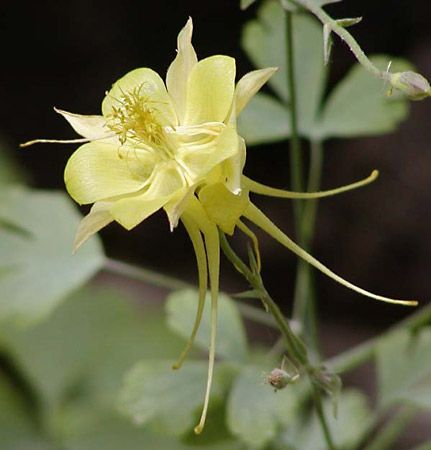
- Columbine (genus Aquilegia)
- Globeflower (genus Trollius)
- Goldenseal (Hydrastis canadensis)
- Hellebore (genus Helleborus)
- Hepatica (genus Hepatica)
- Larkspur (genus Delphinium)
- Love-in-a-mist (Nigella damascena)
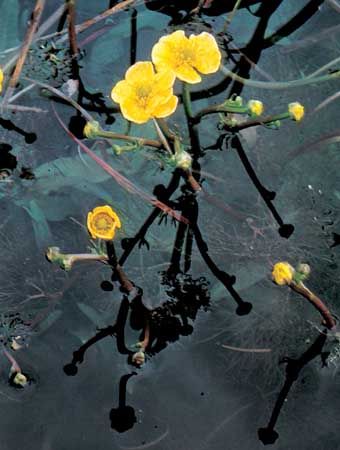
- Marsh marigold (Caltha palustris)
- Meadow rue (genus Thalictrum)
- Monkshood (genus Aconitum)
- Mousetail (genus Myosurus)
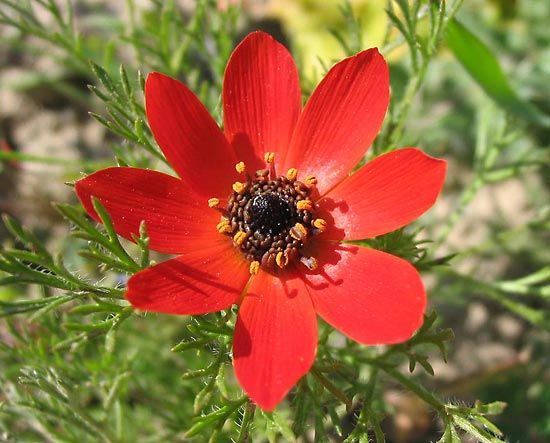
- Pheasant’s-eye (Adonis annua)45
Why are some plants in the buttercup family considered poisonous?
Some plants in the buttercup family are considered poisonous primarily due to the presence of various alkaloids—naturally occurring, nitrogen-containing chemical compounds that often produce strong physiological reactions in animals and humans.67
These toxic constituents are a common characteristic across the order Ranunculales, to which the buttercup family belongs. While many species in this family are popular garden ornamentals, they can be harmful or even fatal if ingested. Notable examples include:67
- Monkshood (Aconitum): Contains aconite and other complex alkaloids. It is considered an extremely poisonous plant, capable of causing respiratory distress, convulsions, and death.67
- Larkspur (Delphinium): Contains alkaloids such as delphinine, which cause inflammation of the mouth, vomiting, and respiratory distress. It is a significant cause of death in grazing livestock.6
The toxicity of these plants serves as a biological defense mechanism. Because alkaloids are typically bitter in taste, they may deter some herbivores, though they remain dangerous to those that consume them.6
What are some other flowers that bloom in late winter or early spring?
Several flowers are known for their ability to bloom in late winter or early spring, often emerging while snow is still on the ground:
- Snowdrop (Galanthus): These small, white-flowered perennials are among the earliest garden flowers to appear in late winter or early spring.1
- Winter aconite (Eranthis): A member of the buttercup family, these plants produce yellow or white flowers on short stalks and are frequently among the first to emerge in the spring.8
- Christmas rose (Helleborus niger): Also part of the buttercup family, this perennial herb typically blooms from late autumn to early spring, often appearing in the snow. Its relative, the Lenten rose (Helleborus orientalis), blooms slightly later with cream to purplish flowers.9
- Primrose (Primula vulgaris): Often associated with February, these playful flowers are known to brighten the landscape before the full arrival of spring.10
- Violet (Viola species): These dainty flowers are also recognized as early bloomers.10
Sources
- winter aconite — Encyclopædia Britannica
- winter aconite — Merriam-Webster
- aconite — Encyclopædia Britannica
- Ranunculaceae — Encyclopædia Britannica
- list of plants in the family Ranunculaceae — Encyclopædia Britannica
- poison - Plant poisons (phytotoxins) — Encyclopædia Britannica
- Ranunculales — Encyclopædia Britannica
- list of birth month flowers — Encyclopædia Britannica
- Christmas rose — Encyclopædia Britannica
- The Perils of an Early Spring — Encyclopædia Britannica
- snowdrop — Encyclopædia Britannica
Published on · 3 min read