Snow Goose
The snow goose (Chen caerulescens) is a North American waterfowl characterized by its distinct physical features and color variations. These birds possess…
What are the physical characteristics and appearance of snow geese?
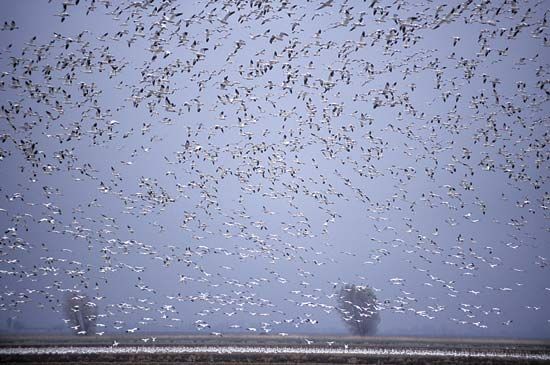
The snow goose (Chen caerulescens) is a North American waterfowl characterized by its distinct physical features and color variations. These birds possess pink legs and a bill featuring a black gape, often referred to as a “grin,” which functions like a combination of a nutcracker and a serrated knife to feed on seeds, roots, and grasses.1
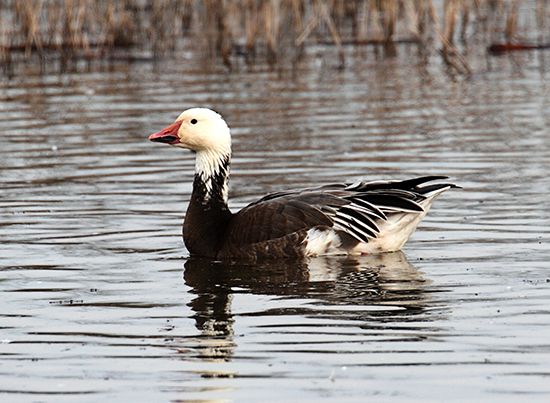
Snow geese appear in two primary color phases:
- White phase: Primarily white plumage with black wingtips.1
- Dark phase (Blue goose): Features a bluish-gray body with a white head and neck, and sometimes a white breast and belly.12
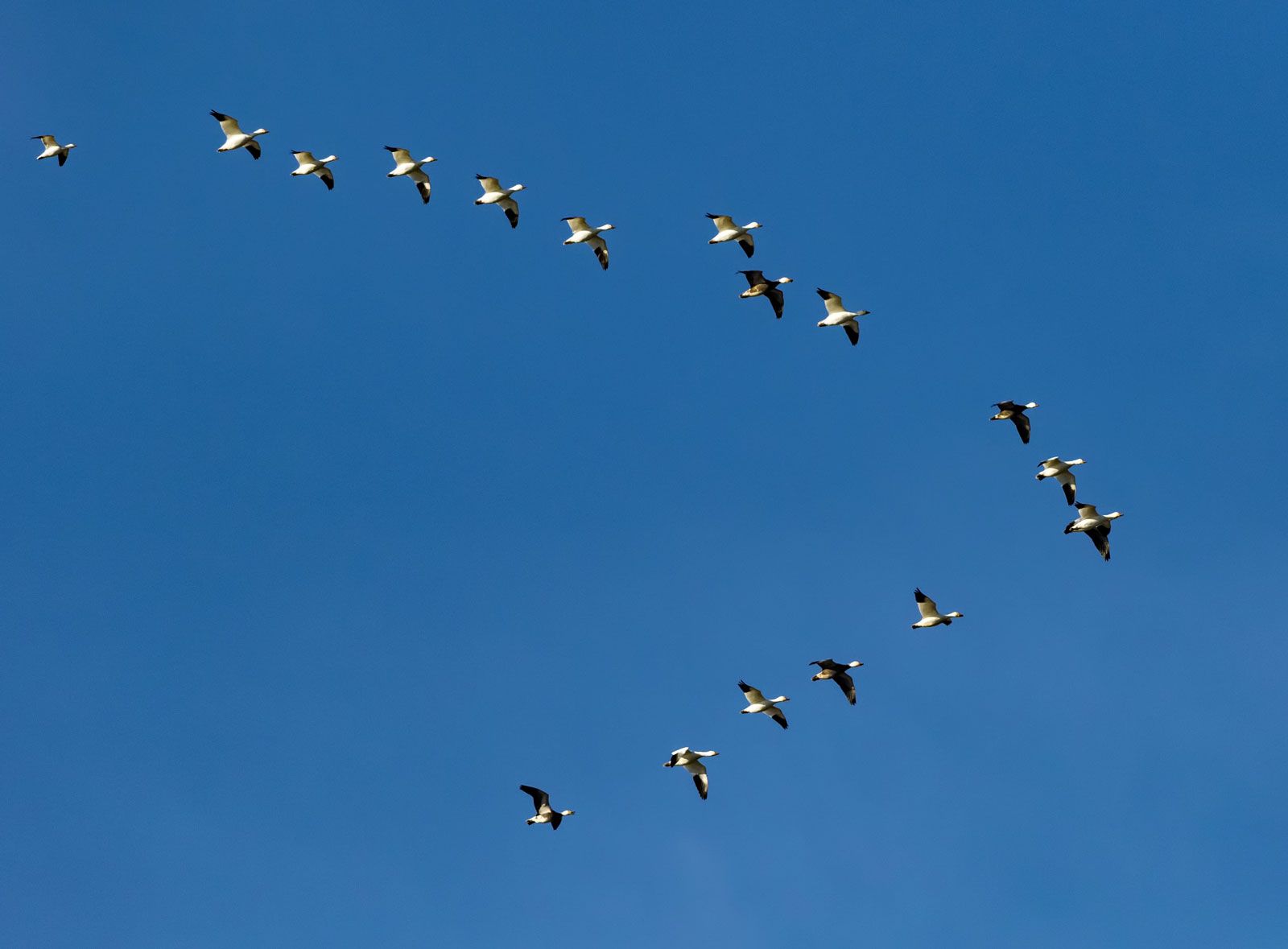
As members of the family Anatidae, they share general goose characteristics, such as a heavy-bodied build, a neck shorter than the body, and a bill adapted for grasping vegetation. While males (ganders) are typically larger than females, both sexes exhibit similar coloration. These birds are highly migratory and are known for their powerful flight, often traveling in V-formations to conserve energy.3
Where do snow geese typically live and migrate?
Snow geese (Chen caerulescens) are migratory birds that breed in the Arctic and travel long distances to reach their wintering grounds. Their distribution and migratory patterns depend on the specific subspecies:1
- Lesser snow goose (Chen caerulescens caerulescens): These birds breed across the Arctic and typically migrate to wintering locations in California and Japan.1
- Greater snow goose (C.c. atlantica): This subspecies breeds in northwestern Greenland and nearby islands. They migrate to winter along the east coast of the United States, ranging from Chesapeake Bay to North Carolina, with significant populations found at Pea Island in the Outer Banks.1
During the breeding season, they nest in colonies on ridges or hummocks within the tundra habitat. As highly migratory waterfowl, they are known for their powerful, high-altitude flight, often traveling in V-formations to conserve energy by utilizing air currents.13
What is the scientific name of the snow goose and what family does it belong to?
The scientific name of the snow goose is Chen caerulescens. It belongs to the family Anatidae, which is part of the order Anseriformes of the order Anseriformes.16
How do snow geese use their specialized bills to feed?
The snow goose (Chen caerulescens) possesses a specialized bill that is often described as a combination of a nutcracker and a serrated knife. This long, heavy, and powerful tool is equipped with hard, sharp lamellae—plate-like structures along the edges of the bill—that allow the bird to effectively grasp and tear at vegetation.178
These adaptations enable the snow goose to feed on a variety of plant materials, including the seeds, leaves, and roots of wild grasses, sedges, and bulrushes. Unlike some other waterfowl that sift through water or graze only on surface vegetation, the snow goose’s robust bill is specifically designed to dig into the ground to reach for roots and tubers. By foraging in this manner, they can significantly alter their environment, sometimes denuding areas of vegetation such as cotton grass.173
Sources
- Snow goose — Encyclopædia Britannica
- blue goose — Merriam-Webster
- Goose — Encyclopædia Britannica
- Polar ecosystem - Biota of the Arctic — Encyclopædia Britannica
- Migration - In North America — Encyclopædia Britannica
- Anatidae — Encyclopædia Britannica
- Anseriform - Anatomy — Encyclopædia Britannica
- Tundra - Birds — Encyclopædia Britannica
Published on · 3 min read