Water Moccasin
The term "water moccasin" most commonly refers to the cottonmouth (Agkistrodon piscivorus), a large-bodied, venomous pit viper native to the southeastern…
What is a water moccasin?
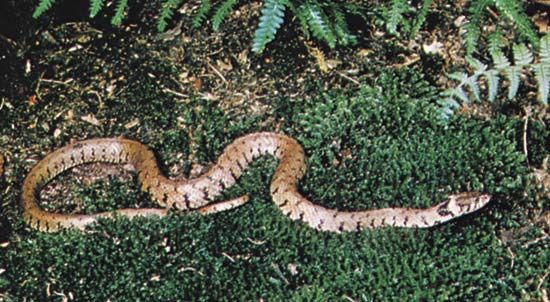
The term “water moccasin” most commonly refers to the cottonmouth (Agkistrodon piscivorus), a large-bodied, venomous pit viper native to the southeastern United States2. While the name is sometimes colloquially applied to harmless water snakes of the genus Nerodia, the true water moccasin is a distinct, semiaquatic species found in wetlands and moist forests in wetlands and moist forests.132
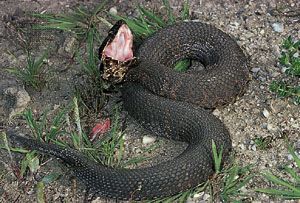
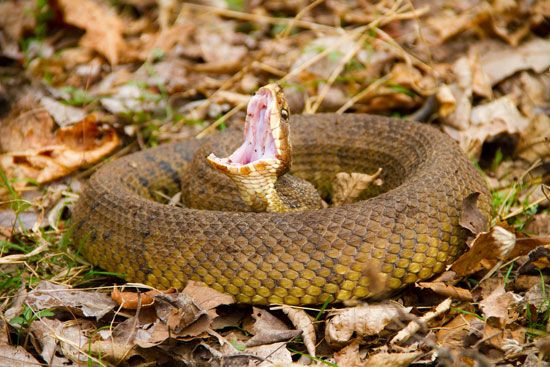
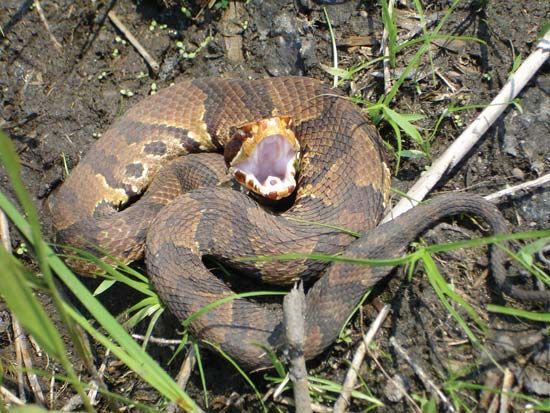
The cottonmouth earns its name from the bright white interior of its mouth, which it displays when threatened. It is a dangerous snake capable of delivering a painful, venomous bite, though fatalities are rare. Its venom is a hemotoxin that breaks down tissue and inhibits blood clotting.1
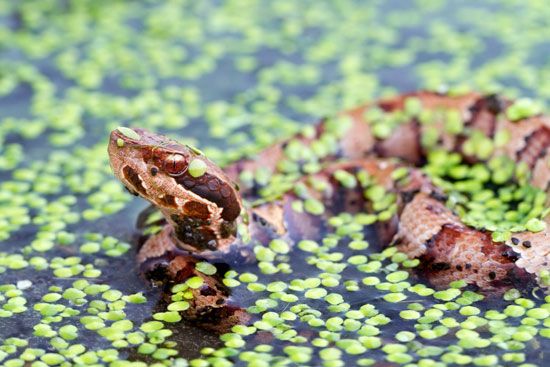
Physically, these snakes have broad, triangular heads and can reach lengths of up to 1.8 meters (5.9 feet). They are generally dark in color, ranging from black to brown or gray, often with darker crossbands. As pit vipers, they possess heat-sensing pits between their eyes and nostrils to help them hunt.13
Where do water moccasins live?
Water moccasins, specifically the cottonmouth (Agkistrodon piscivorus), are semiaquatic pit vipers native to the southeastern United States. They primarily inhabit moist forests, wetlands, and intertidal habitats.2
Their geographic range is extensive and includes the following regions:
- Central and Southern States: The range stretches from central Texas north to southeastern Missouri, southern Illinois, and the western fringes of the Ohio River valley.2
- Coastal Plains: They are found in wet areas across the coastal plains of Georgia, South Carolina, North Carolina, and southeastern Virginia.3
- Florida and Alabama: A related group, often classified as the Florida cottonmouth (A. conanti), is found from southeastern Alabama and southern Georgia through southern Florida. A hybrid zone between these groups exists from the Florida panhandle through eastern Alabama and central Georgia.2
How can you identify a water moccasin?
Identifying a water moccasin, also known as a cottonmouth, requires observing specific physical traits and behaviors. As a pit viper, it possesses a characteristic heat-sensing pit located between each eye and nostril.26
Key identification features include:
- Head Shape: They have a broad, triangular head.26
- Coloration: Adults are typically black, brown, or gray, often with darker, irregular crossbands. Juveniles are lighter in color with higher contrast and a distinct yellow-tipped tail.26
- Defensive Behavior: When threatened, they often stand their ground and open their mouths wide to reveal a bright white interior, which is the source of the name “cottonmouth”. They may also shake their tails and emit a foul-smelling odor.26
- Swimming Posture: Unlike non-venomous water snakes (Nerodia), which typically keep only their heads above the surface, a swimming water moccasin often floats with the anterior half of its body on the surface of the water.3
Because they are venomous and capable of delivering a dangerous bite, it is essential to maintain a safe distance and avoid handling them.6
What do water moccasins eat?
Water moccasins, or cottonmouths, are opportunistic predators that consume a wide variety of vertebrates. Their diet varies significantly based on their age:
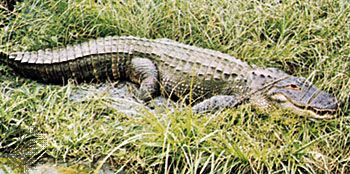
- Adults: Mature water moccasins feed on a diverse range of prey, including fish, frogs, turtles, birds, and even young alligators. Additionally, they have been observed feeding on decaying carcasses and occasionally engaging in cannibalism.23
- Juveniles: The diet of young water moccasins consists primarily of insects.3
These snakes hunt by striking their prey and using their fangs to inject venom, which is a hemotoxin that inhibits clotting and breaks down tissues.3
Sources
- water moccasin — Merriam-Webster
- moccasin — Encyclopædia Britannica
- water moccasin — Encyclopædia Britannica
- water moccasin — Merriam-Webster
- water moccasins — Merriam-Webster
- viper — Encyclopædia Britannica
- water snake — Encyclopædia Britannica
Published on · 3 min read