What Is the Largest Animal on Earth?
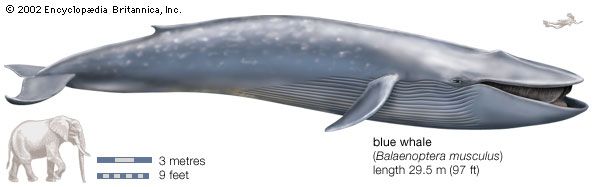
The largest animal on Earth is the blue whale (Balaenoptera musculus). Not only is it the largest mammal, but it is also the most massive animal known to…
What is the largest animal on Earth?
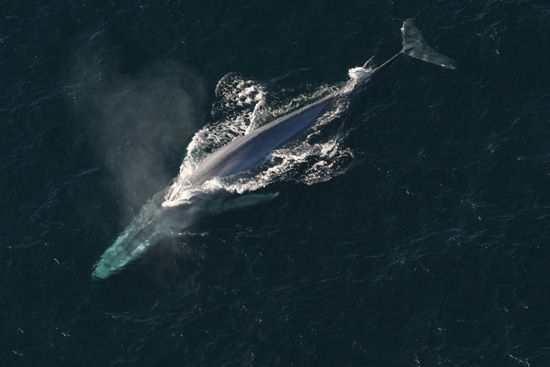
The largest animal on Earth is the blue whale (Balaenoptera musculus). Not only is it the largest mammal, but it is also the most massive animal known to have ever existed.123
These marine giants typically weigh approximately 150 metric tons and can reach lengths exceeding 30 meters (98 feet). Documented reports have noted individuals reaching up to 33.5 meters in length and weighing as much as 209 tons. Their physical scale is immense; for instance, a blue whale’s heart alone weighs about 180 kg (roughly 400 pounds).123
Blue whales are baleen whales that inhabit oceans worldwide, excluding the Arctic. They feed primarily on krill, consuming several tons daily. Despite their size, they are currently classified as an endangered species due to the historical impact of commercial whaling2.123
How do baleen plates help blue whales eat?
Blue whales use baleen plates to facilitate a process known as filter feeding. Instead of teeth, these whales possess hundreds of long, comb-like plates made of keratin that hang in rows from the roof of the mouth.45
When feeding, a blue whale takes in an enormous mouthful of water containing small prey, such as krill, copepods, or plankton. As the whale closes its mouth, it forces the water out through the sides of the baleen apparatus. The inner edges of the baleen plates are frayed into bristles, which act as a sieve to trap the tiny organisms while allowing the water to flow back out into the ocean. This efficient mechanism allows the whale to capture large quantities of food in a single gulp.456
Why are blue whales considered an endangered species?
Blue whales are considered an endangered species primarily due to the devastating impact of commercial whaling during the 20th century.2
During the first half of the 1900s, technological advancements—such as the steam-powered whale catcher, the harpoon cannon, and the development of factory ships—allowed the industry to hunt and process these massive animals with unprecedented efficiency. The scale of this exploitation was immense; for example, in the 1930–31 season alone, more than 29,000 blue whales were killed worldwide.72
Biologists estimate that the global population plummeted from approximately 228,000 individuals at the start of the 20th century to roughly 14,000 by the early 21st century. Although the species has been protected from commercial whaling since 1965, and populations are showing signs of recovery, the International Union for Conservation of Nature maintains their endangered status due to the severity of their historical decline.829
What are some other types of baleen whales?
Baleen whales (suborder Mysticeti) are a diverse group of cetaceans characterized by their unique filter-feeding apparatus. Beyond the blue whale, several other notable types of baleen whales exist, categorized primarily by their physical traits and feeding behaviors:
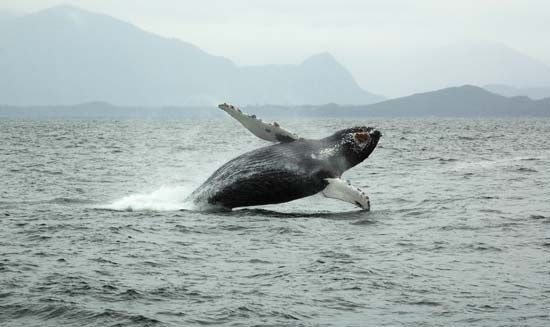
- Rorquals (Family Balaenopteridae): These whales are distinguished by ventral grooves that run from the chin to the belly, allowing their throat to expand significantly for “gulp-feeding.” This group includes the fin whale, sei whale, minke whale, Bryde’s whale, and the humpback whale, which is known for its complex cooperative feeding strategies like bubble netting.610
- Right Whales (Family Balaenidae): These stout-bodied whales have enormous heads and long, narrow baleen plates. They include the bowhead whale, which lives in Arctic waters, and the genus Eubalaena, which includes the northern right whale and the southern right whale.11
- Gray Whale (Family Eschrichtiidae): The gray whale is a bottom-feeding coastal species known for its mottled appearance and lack of a dorsal fin. It is the only living member of its family.5
- Pygmy Right Whale (Family Neobalaenidae): This uncommon and less-studied species is distinct from other right whales, possessing a dorsal fin and unique skeletal features.11
Sources
- What is the largest animal on Earth? — Encyclopædia Britannica
- blue whale — Encyclopædia Britannica
- 14 Questions About Aquatic Animals Answered - Which animal is both the biggest mammal and the largest living creature on Earth? — Encyclopædia Britannica
- Filter feeding — Encyclopædia Britannica
- What do whales eat? — Encyclopædia Britannica
- baleen whale — Encyclopædia Britannica
- whaling - Regulation — Encyclopædia Britannica
- whaling - Modern whaling — Encyclopædia Britannica
- cetacean - Abundance — Encyclopædia Britannica
- right whale — Encyclopædia Britannica
- rorqual — Encyclopædia Britannica
- gray whale — Encyclopædia Britannica
- gray whale — Merriam-Webster
Published on · 3 min read