Why Do Parrots Talk?
Parrots talk primarily due to their advanced vocal learning abilities, which are supported by complex brain structures and a specialized vocal apparatus.…
Why do parrots talk?
Parrots talk primarily due to their advanced vocal learning abilities, which are supported by complex brain structures and a specialized vocal apparatus. While this skill allows them to mimic human speech, it is deeply rooted in their nature as highly social animals.12
In the wild, parrots use vocalizations to communicate with their flock, establish territory, and strengthen social bonds. When kept as pets, they often view their human companions as members of their flock, utilizing their mimetic skills to interact and build social connections.12
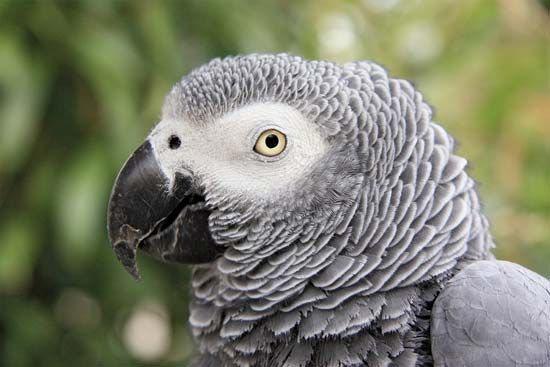
Beyond simple mimicry, research—notably studies involving the African gray parrot named Alex—indicates that these birds possess significant cognitive abilities. They can associate sounds with specific meanings, demonstrate comprehension of context, and even perform tasks like counting or differentiating objects. While these mimetic abilities are most famously expressed in captivity, they reflect the intelligence and gregarious nature inherent to the species.123
Who was the famous African gray parrot named Alex?
Alex was a famous African gray parrot whose cognitive abilities were the subject of groundbreaking research by American animal behaviorist and psychologist Irene Pepperberg. Purchased from a Chicago pet store in 1977, Alex became the centerpiece of studies that fundamentally changed scientific understanding of avian intelligence.1
Through the use of positive behavioral reinforcement, Alex demonstrated that parrots are capable of far more than simple mimicry. His significant accomplishments included:
- Conceptual Understanding: He proved that parrots could associate sounds with specific meanings, effectively demolishing the long-held theory that birds were only capable of imitating human voices.1
- Cognitive Skills: By the time of his death in 2007, Alex could count to six in English, identify five shapes, and label seven colors.1
- Categorization: He could differentiate groups of objects based on their color, material, and shape.1
- Social Communication: Alex even used English to communicate with other parrots in the lab, encouraging or chastising their efforts at labeling and categorization.1
His work remains a landmark in the study of animal cognition, with some researchers comparing his reasoning abilities to those of a three- or four-year-old human child.1
What other animals besides parrots are capable of vocal learning?
Vocal learning—the ability to acquire new vocalizations through imitation—is a sophisticated trait observed in several animal groups beyond parrots. While many animals produce species-typical calls innately, vocal learners must hear and practice sounds to develop their full repertoire.5
Birds
The most prominent vocal learners are found among birds, particularly songbirds. This process often involves establishing an internal “template” of a song during a sensitive period, followed by a practice phase where the bird refines its output to match that template.5
- Song Sparrows: These birds must hear their species’ song during their first autumn to develop a normal adult song. If they are deafened before they begin practicing in the spring, they produce only a crude, incomplete version.5
- Chaffinches: Young chaffinches learn from early exposure to song, but they require further exposure to other singing adults in the spring to refine their vocalizations.5
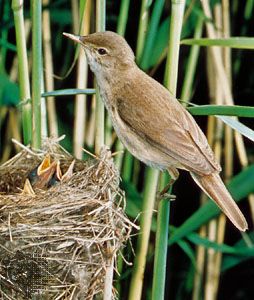
- Marsh Warblers: These birds represent an extreme of vocal learning, as they develop idiosyncratic songs by incorporating sounds from various other species they encounter during their sensitive period.5
- Indigo Buntings: Adult buntings continue to learn by acquiring songs from their territorial neighbors.5
Other Species
While the provided information highlights the prevalence of vocal learning in birds, evidence for similar complex learning in other mammals, such as toothed whales and dolphins, is often associated with their sophisticated use of echolocation and social communication, though the specific mechanisms of their vocal development differ from those of songbirds.6
How do parrots use vocalizations to communicate in the wild?
In the wild, parrots are highly social and gregarious creatures that rely on complex vocalizations to navigate their environment and maintain group cohesion. Their vocal behavior serves several critical functions:13
- Social Bonding and Group Cohesion: Parrots often live in large flocks, and they use vocal signals to keep members together, often through soft location notes.17
- Territorial Defense: Vocalizations are essential for establishing and maintaining territories, helping to warn off rivals of the same sex.17
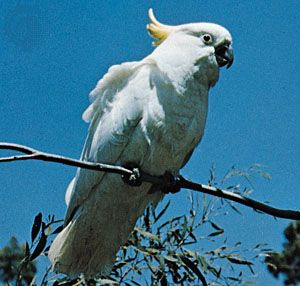
- Communication of Mood: Parrots utilize a variety of calls to express different emotional states. For instance, the greater sulfur-crested cockatoo has been observed using approximately a dozen distinct calls to announce different moods.3
- Survival and Safety: Like many other birds, parrots use specific alarm signals to alert the flock to the presence of predators or other dangers.78
While parrots are famous for their mimetic abilities in captivity, these behaviors are primarily an extension of their natural social nature and advanced vocal learning capabilities.13
Sources
- Why do parrots talk? — Encyclopædia Britannica
- Which parrots are most likely to talk? — Encyclopædia Britannica
- Psittaciform - Social behaviour — Encyclopædia Britannica
- African gray parrot — Encyclopædia Britannica
- Animal learning - Song learning — Encyclopædia Britannica
- sound reception - Echolocation in other mammals — Encyclopædia Britannica
- Bird - Sound — Encyclopædia Britannica
- Alarm signal — Encyclopædia Britannica
Published on · 3 min read