Which Parrots Are Most Likely to Talk?
Among the many species of parrots, the African gray parrot (Psittacus erithacus) is widely considered the most proficient at replicating human speech. Their…
Which parrots are most likely to talk?
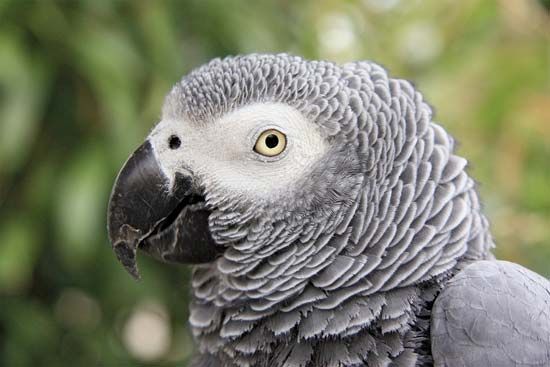
Among the many species of parrots, the African gray parrot (Psittacus erithacus) is widely considered the most proficient at replicating human speech. Their ability to mimic sounds is rooted in their highly social nature and advanced vocal learning capabilities, which allow them to interact with humans as if they were members of their flock.123
Other notable mimics within the parrot family include:
- Amazon parrots (Amazona): Known for their strong capacity for mimicry, though they can be aggressive and loud.12
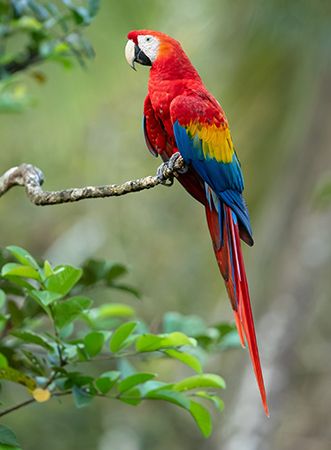
- Macaws: Capable of learning to speak to varying degrees.1
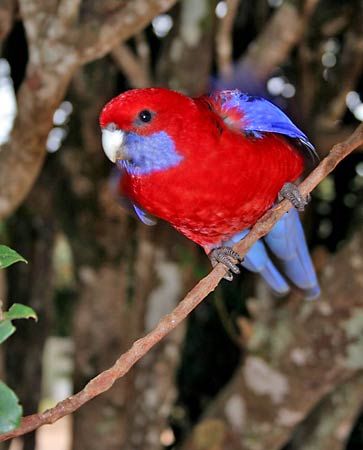
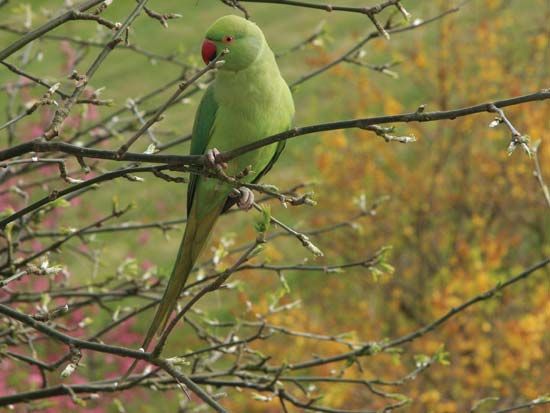
- Parakeets: Certain species, such as budgerigars (Melopsittacus undulatus) and rose-ringed parakeets (Psittacula krameri), exhibit skilled speaking abilities.1
Research, such as studies involving the famous African gray parrot named Alex, suggests that these birds do more than simple mimicry; they can associate sounds with specific meanings and understand the context of their vocalizations.13
How do parrots use their intelligence to solve problems?
Parrots demonstrate significant cognitive abilities that allow them to solve problems and interact with their environment in complex ways. Their intelligence is often highlighted by their capacity to associate sounds with specific meanings, a trait famously observed in studies of the African gray parrot. These birds can differentiate between objects, perform basic counting, and communicate with others, showing a clear degree of comprehension rather than simple mimicry.2
Beyond vocal communication, parrots utilize their physical anatomy to solve practical problems. Their highly kinetic (movable) upper jaw and powerful, hooked bill allow them to manipulate objects with great precision. They use these features, along with their highly manipulative tongues, to hold and process food, such as cracking hard nuts or peeling away seed covers. Furthermore, they often use their bills as a “third foot” to navigate their environment while climbing.4
While research into generalized rule learning—such as “matching-to-sample” tasks—often focuses on primates and dolphins, the demonstrated ability of parrots to understand context and communicate suggests a sophisticated level of problem-solving intelligence that supports their highly social nature.25
What makes the vocal anatomy of a parrot different from other birds?
It is a common misconception that parrots possess a unique vocal organ that distinguishes them from all other birds. In reality, all birds use a syrinx to produce sound.
The syrinx is located at the base of the trachea where it divides into the bronchi. While the basic structure is common to birds, parrots are particularly adept at mimicry because they possess a complex vocal apparatus and specialized brain structures that support advanced vocal learning.72
Unlike some birds that have simpler vocal capabilities, parrots utilize their complex anatomy in conjunction with high cognitive intelligence to imitate a wide range of sounds, including human speech. This ability is closely tied to their social nature, as they use these vocalizations to bond with their “flock”—which, in captivity, includes their human companions. While songbirds also possess highly complex syrinxes capable of independent control of both sides of the organ, the parrot’s specific combination of neural pathways and physical control allows for their unique proficiency in replicating human language.217
Besides parrots, what other animals are known for vocal learning?
Vocal learning—the ability to acquire new vocalizations through imitation—is a sophisticated trait found in several animal groups beyond parrots.
Avian Vocal Learners
Many bird species rely on learning to develop their songs, a process that often involves a sensitive period of observation followed by practice. Examples include:
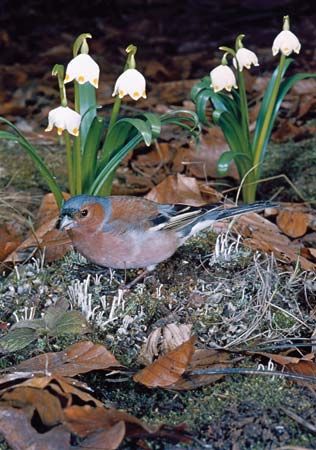
- Songbirds: Species such as the song sparrow and the chaffinch must hear adult songs to develop their own, often establishing a “template” in their brains that they later refine through practice.89
- Marsh Warblers: These birds are known for developing idiosyncratic songs by incorporating sounds from various other species they encounter during their development.8
- Indigo Buntings: These birds learn their songs from territorial neighbors, demonstrating that vocal acquisition can continue or be influenced by social interactions in adulthood.89
Marine Mammals
Vocal learning is also present in certain marine mammals, which use complex sounds for communication, navigation, and social bonding:
- Whales: Humpback whales produce elaborate songs that evolve over time as individuals listen to and incorporate patterns from other groups, indicating a socially driven form of vocal learning.10
- Dolphins: While dolphins are primarily noted for their signature whistles and complex communication systems, their high level of social intelligence and ability to learn new behaviors through observation suggest a capacity for sophisticated vocal and behavioral adaptation.11
Sources
- Which parrots are most likely to talk? — Encyclopædia Britannica
- Why do parrots talk? — Encyclopædia Britannica
- parrot — Encyclopædia Britannica
- Psittaciform - Social behaviour — Encyclopædia Britannica
- Animal learning - Generalized rule learning — Encyclopædia Britannica
- Psittaciform - Bill and skull — Encyclopædia Britannica
- Syrinx — Encyclopædia Britannica
- Animal learning - Song learning — Encyclopædia Britannica
- Birdsong — Encyclopædia Britannica
- How intelligent are dolphins? — Encyclopædia Britannica
- Why do whales sing? — Encyclopædia Britannica
Published on · 4 min read