Wood Duck
The wood duck (Aix sponsa) is a small, colorful North American perching duck measuring approximately 43–52 centimetres (17–20.5 inches) in length. Both sexes…
What are the distinctive physical characteristics of the wood duck?
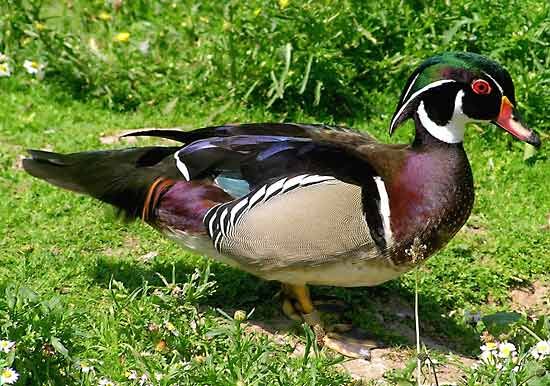
The wood duck (Aix sponsa) is a small, colorful North American perching duck measuring approximately 43–52 centimetres (17–20.5 inches) in length. Both sexes are characterized by a distinctive head crest, though this feature is absent during their summer eclipse plumage.1
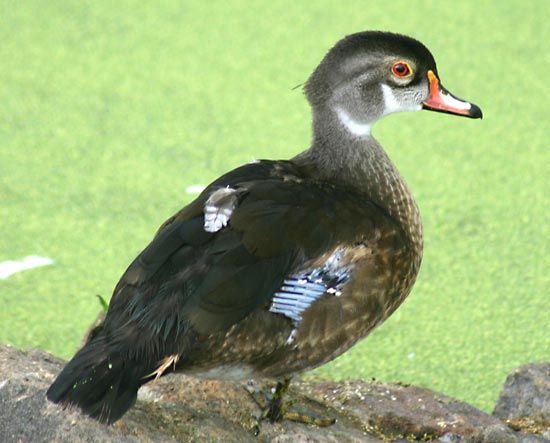
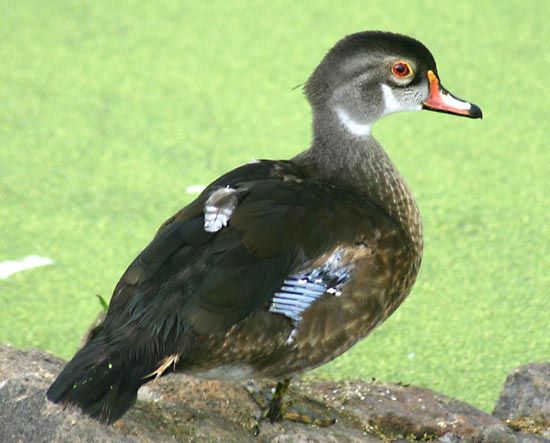
The male is highly identifiable by his iridescent plumage, which includes a purple and green head marked with two longitudinal white stripes, a red-brown breast flecked with white, and bronze-colored sides. In contrast, the female displays a more muted, sooty gray-brown body with a white throat and a white-streaked breast. Her most distinguishing physical characteristic is a prominent white eye-ring. These birds are well-adapted to their environment, notably nesting in tree cavities located high above the ground.12
Where are wood ducks typically found, and what is their natural habitat?
The wood duck (Aix sponsa) is native to North America. Their natural habitat is closely tied to wooded areas near water, as they are a type of perching duck that specifically requires tree cavities for nesting.12
These birds typically nest in cavities located up to 15 metres (50 feet) above the ground. Because of their reliance on these specific nesting sites, the use of artificial nest boxes placed on poles over or near bodies of water has been a critical factor in supporting their populations after they previously faced the threat of extinction due to habitat loss.1
What do wood ducks eat, and how do they find their food?
The wood duck (Aix sponsa) is an omnivorous bird with a diet that shifts significantly as it matures. While ducklings primarily consume aquatic insects and other small organisms, adult wood ducks have a distinct preference for acorns and other nuts, depending on their specific habitat.3
Like other ducks, these birds generally forage in or near water. Because they are classified as perching ducks, they are well-adapted to their wooded environments, where they search for food sources such as fallen mast (nuts) on the forest floor or vegetation in shallow water. Their ability to adapt their diet based on available resources and seasonal changes is essential for their survival.13
How have conservation efforts affected wood duck populations?
Conservation efforts have been remarkably successful in reversing the decline of the wood duck. At one time, the species faced the threat of extinction due to a combination of overhunting and the widespread destruction of their natural habitat.1
The recovery of the population was primarily driven by diligent conservation initiatives, most notably the implementation of artificial nest boxes. Because wood ducks rely on tree cavities for nesting, the loss of mature forests significantly limited their breeding success. By placing these artificial boxes on poles over or near bodies of water, conservationists provided the necessary nesting sites to stabilize and grow the population.1
These efforts demonstrate the positive impact that targeted environmental management can have on protecting biodiversity and restoring species that were once on the brink of collapse.1
Sources
- Wood duck — Encyclopædia Britannica
- wood duck — Merriam-Webster
- What do ducks eat? — Encyclopædia Britannica
- Ciconiiform - Bill shape — Encyclopædia Britannica
Published on · 2 min read