Perching Duck
Perching ducks, which belong to the tribe Cairinini within the family Anatidae, are defined by several distinct physical and behavioral characteristics:
What are the main characteristics that define perching ducks?
Perching ducks, which belong to the tribe Cairinini within the family Anatidae, are defined by several distinct physical and behavioral characteristics:
- Arboreal Habits: They are the most arboreal of all ducks, typically inhabiting wet woodlands and nesting in tree cavities. They are uniquely adapted to perch on branches, a feat made possible by their long-clawed toes.12
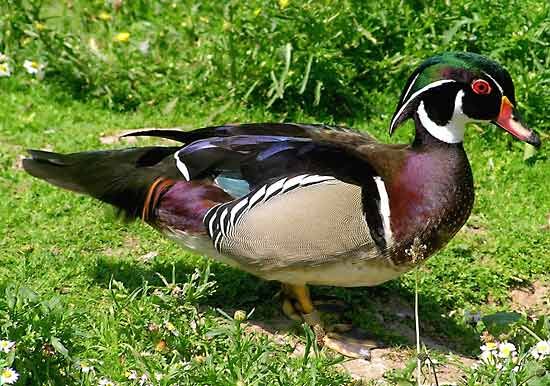
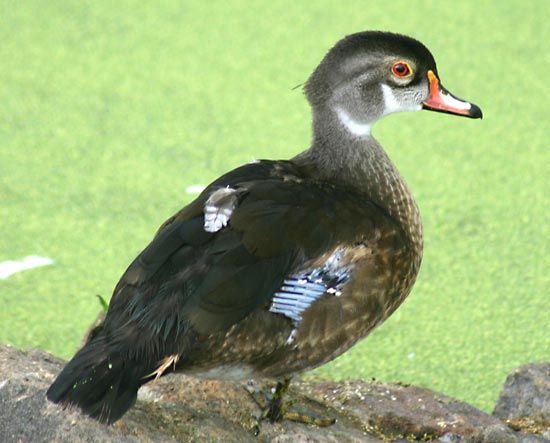
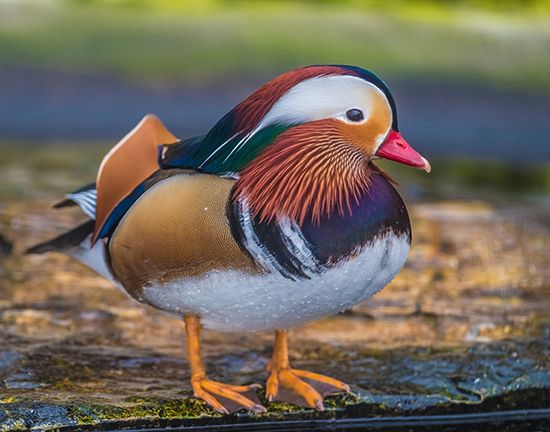
- Physical Features: Many species possess a bony knob at the bend of the wing. Most forms are characterized by white wing patches and black wing linings. There is significant sexual dimorphism; drakes (males) are generally larger than hens (females) and often feature more vibrant, sometimes metallic, plumage patterns.1
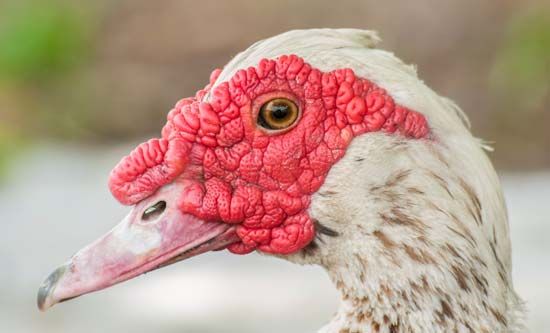
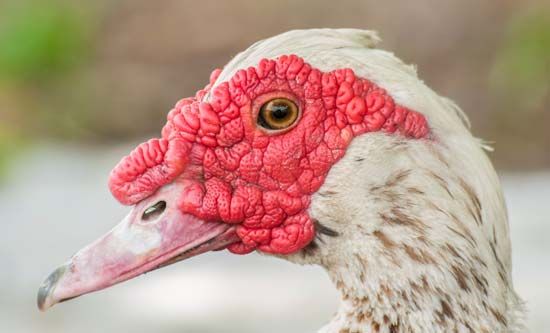
- Behavioral Traits: Their feeding habits and courtship behaviors often resemble those of dabbling ducks. Well-known examples include the North American wood duck, the mandarin duck, and the Muscovy duck.12
How do perching ducks’ feet differ from other ducks, and why is this important?
Perching ducks are distinguished from most other waterfowl by their specialized feet, which feature long, sharp claws. While typical ducks possess webbed feet primarily adapted for swimming and have legs positioned toward the rear of the body—resulting in a waddling gait on land—perching ducks have evolved to navigate arboreal environments.15
These long-clawed toes are essential for their survival because they allow the birds to grip branches securely and scramble up rough surfaces, such as tree trunks. This adaptation is critical for their lifestyle, as perching ducks are hole-nesters that typically inhabit wet woodlands and nest in tree cavities, sometimes as high as 15 meters (50 feet) above the ground. By being able to perch and climb, these ducks can access nesting sites that are safer from ground-based predators, a behavior exemplified by species like the North American wood duck and the mandarin duck.156
How do perching ducks’ nesting habits differ from other ducks?
Perching ducks (tribe Cairinini) are distinguished from many other waterfowl primarily by their reliance on elevated nesting sites. While many duck species nest on dry land or among marsh vegetation over water, perching ducks are specialized hole-nesters that typically utilize cavities in trees.18
Key differences in their nesting habits include:
- Elevated Locations: Unlike ground-nesting ducks that may settle up to a mile from water, perching ducks often nest in tree cavities at significant heights, sometimes as high as 15 meters (50 feet) above the ground.13
- Adaptability to Artificial Sites: Because they naturally seek out existing holes rather than constructing their own nests, perching ducks readily adopt artificial nesting boxes. This behavior has been instrumental in conservation efforts, such as those for the North American wood duck, where boxes placed on poles over water helped recover declining populations.83
- Early Departure: A unique aspect of their nesting cycle is the ability of the ducklings to leave the nest shortly after hatching. For example, wood ducklings can jump from high tree cavities to the ground unharmed just one day after hatching to follow the female.3
In what habitats do perching ducks typically live?
Perching ducks, which belong to the tribe Cairinini within the family Anatidae, are primarily adapted for life in wet woodlands1. These waterfowl are widely distributed across the globe, with a particularly strong representation in tropical regions.1
Their habitat preferences are closely tied to their unique physical adaptations, specifically their long-clawed toes, which allow them to perch on branches and navigate arboreal environments. Because they are hole-nesters, they rely on forested areas near water where they can find suitable tree cavities for nesting. While some species, such as the North American wood duck, have successfully adapted to human-made environments through the use of artificial nest boxes placed over water, their natural ecological niche remains centered around wooded wetlands and tropical forests.19
Sources
- Perching duck — Encyclopædia Britannica
- Duck — Encyclopædia Britannica
- Wood duck — Encyclopædia Britannica
- Anseriform - Behaviour — Encyclopædia Britannica
- Passeriform - Feet and legs — Encyclopædia Britannica
- Locomotion - Arboreal amphibians and reptiles — Encyclopædia Britannica
- Anseriform - Locomotion — Encyclopædia Britannica
- Anseriform - Reproductive behaviour — Encyclopædia Britannica
- What do ducks eat? — Encyclopædia Britannica
Published on · 3 min read