Corvo Island
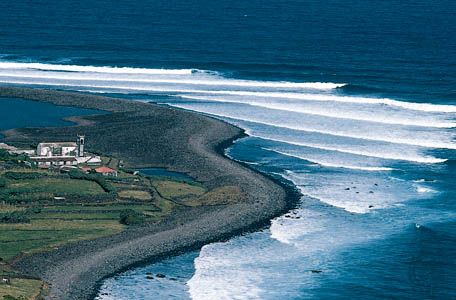
Corvo Island is a small volcanic island located in the east-central North Atlantic Ocean. It serves as the northernmost island of the Azores, an autonomous…
What is Corvo Island?
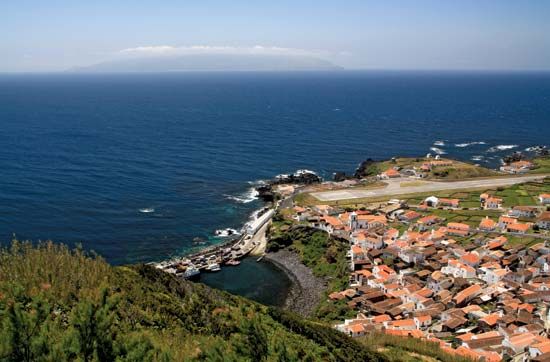
Corvo Island is a small volcanic island located in the east-central North Atlantic Ocean. It serves as the northernmost island of the Azores, an autonomous region of Portugal.12
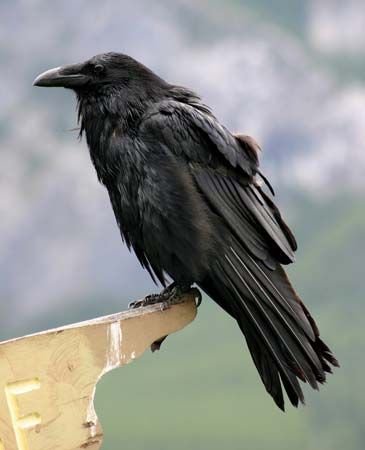
Spanning approximately 6.8 square miles (17.6 square km), the island reaches an elevation of 2,549 feet (777 m) at Mount Gordo. It is situated just 10 miles (16 km) north of Flores Island, with which it forms the northwestern group of the archipelago. The island’s name is derived from the Portuguese word for “raven”.123
Corvo is characterized by its relative isolation and challenging winter weather, which persists for much of the year. The island features only one town, Vila Corvo, located on the southeast coast, and its local economy includes the production of wool. While historically remote, the island’s connectivity has improved through the development of air links.1
How do volcanic islands like Corvo form in the middle of the ocean?
Volcanic islands like Corvo form through geological processes that allow molten rock to reach the surface from beneath the ocean floor. While many volcanoes occur at plate boundaries, islands can also emerge in the middle of the ocean through two primary mechanisms:
Mid-Ocean Ridges
Corvo and the other islands of the Azores are part of a major mountain range that rises from the Mid-Atlantic Ridge. This ridge is a “slow-spreading” boundary where tectonic plates move apart. As the plates diverge, magma from the mantle wells up to fill the gap, cooling to create new ocean floor. In areas where this volcanic activity is sufficiently elevated, the ridge emerges above sea level to form islands.452
Hotspots
Some volcanic islands form far from plate boundaries due to hotspots. These are thought to be the surface expression of mantle plumes—giant columns of heat rising from deep within the Earth. As a tectonic plate moves over a stationary plume, magma penetrates the crust to build a volcano. Over time, the plate’s movement carries the volcano away from the heat source, causing it to become extinct and eventually subside, while a new volcano forms directly above the plume. This process creates linear chains of islands, such as those found in Hawaii chains of islands, such as those found in Hawaii.624
What are the other eight islands that make up the Azores archipelago?
The Azores archipelago consists of nine major islands, which are organized into three distinct geographical groups. Excluding Corvo, the other eight islands are:
Eastern Group
Central Group
Northwestern Group
Why is the Mid-Atlantic Ridge significant to the geology of the Azores?
The Mid-Atlantic Ridge is fundamental to the geology of the Azores because the archipelago sits directly atop this massive, submarine mountain range.62
The significance of this location includes:
- Formation and Elevation: The Azores are essentially the peaks of a major mountain range that has risen above sea level due to the ridge’s elevation. While most of the Mid-Atlantic Ridge remains submerged, the Azores represent rare instances where the ridge is sufficiently elevated to form subaerial land.625
- Active Volcanism: The ridge is a “slow-spreading” boundary where tectonic plates diverge. This process allows magma from the mantle to well up, creating new crust and fueling the volcanic activity that built the islands.65
- Geological Instability: Because the islands are situated on this active tectonic boundary, they are characterized by an unstable geologic nature, frequently experiencing earthquakes and volcanic eruptions. This activity continues to shape the islands today, as seen in historical events like the 1957–58 Capelinhos eruption on Faial.2
Sources
- Corvo Island — Encyclopædia Britannica
- Azores — Encyclopædia Britannica
- Flores Island — Encyclopædia Britannica
- plate tectonics - Hotspots — Encyclopædia Britannica
- volcanism — Encyclopædia Britannica
- Mid-Atlantic Ridge — Encyclopædia Britannica
- oceanic ridge - Atlantic Ocean — Encyclopædia Britannica
- volcano - Submarine volcanoes — Encyclopædia Britannica
- Indian Ocean - Seamounts of the Indian Ocean — Encyclopædia Britannica
- plate tectonics - Island arcs — Encyclopædia Britannica
- Atlantic Ocean - Origin and development — Encyclopædia Britannica
Published on · 3 min read