Gudgeon
The term "gudgeon" refers to two distinct concepts depending on the context:
What is gudgeon?
The term “gudgeon” refers to two distinct concepts depending on the context:
Biological Definition
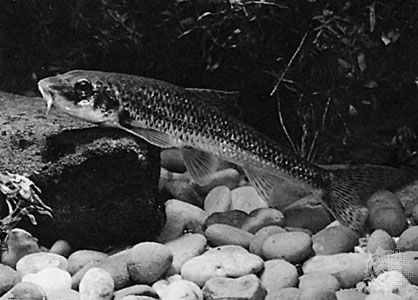
The gudgeon (Gobio gobio) is a small fish belonging to the carp family, Cyprinidae. Native to the fresh waters of Europe and northern Asia, these grayish or greenish fish typically grow to about 20 cm (8 inches) in length. They are characterized by a barbel at each corner of the mouth and a row of dark spots along their sides. Gudgeons live in schools, feed on small animals, and are commonly used as bait or for food.12
Mechanical Definition
In engineering and nautical contexts, a gudgeon is a mechanical component. It can refer to a pivot or journal, or specifically to a socket designed to receive a rudder pintle.3
What are other common fish in the carp family?
The family Cyprinidae includes a wide variety of fish beyond the common carp. Many of these species are significant for aquaculture, ornamental purposes, or their roles in aquatic ecosystems.
Common fish in the carp family include:
- Crucian carp (Carassius carassius): A European relative of the goldfish that lacks barbels.4
- Asian carp: A collective term for several species introduced to North America, including the grass carp, bighead carp, black carp, and silver carp.4
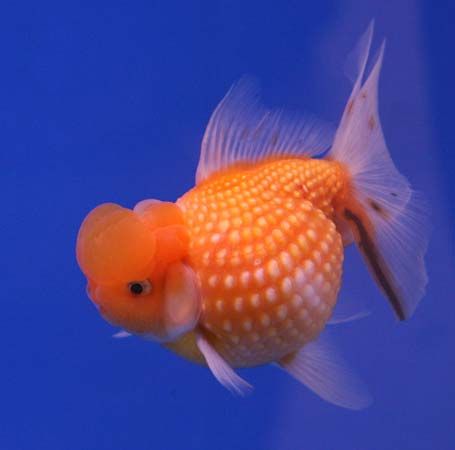
- Koi (Cyprinus rubrofuscus): A popular ornamental fish thought to be a domesticated variety of the Amur carp.4
- Barbs: Often kept in aquariums, these are popular members of the family.5
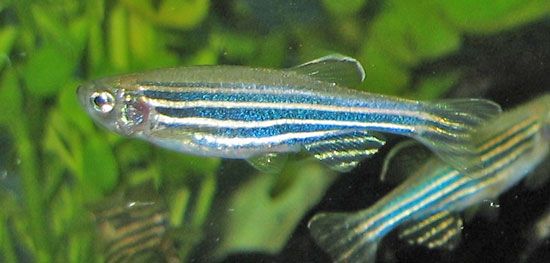
- Danios: Including the zebra fish, which is frequently used in scientific research.5
- Rasboras: Another group of small fish commonly found in the aquarium trade.5
How does a rudder pintle work on a boat?
A rudder pintle is a critical component of the steering apparatus on many small boats and ships. It functions as a hinge pin that connects the rudder to the sternpost of the vessel.
The system typically consists of two parts:
- Pintle: A metal pin or bolt attached to the rudder.
- Gudgeon: A corresponding socket or eyelet attached to the hull.
By inserting the pintle into the gudgeon, the rudder is securely fastened to the boat while remaining free to pivot. This hinge allows the helmsman to turn the rudder surface against the flow of water, creating unequal pressure that forces the stern to move and the vessel to change course. These components are often collectively referred to as rudder irons.8
What are some other examples of homonyms in the English language?
The term “homonym” is often used broadly to describe words that share the same spelling or pronunciation but have different meanings. Because the term can be confusing, linguists often categorize these words into more specific groups: homophones (same sound) and homographs (same spelling).101112
Here are common examples categorized by how they relate to one another:
Words with Identical Spelling and Pronunciation
These words are both homophones and homographs.1012
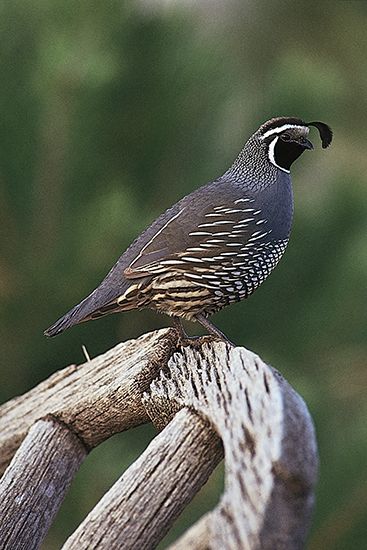
- Quail: A type of bird vs. to cringe or cower.1012
- Bat: A stout club used in sports vs. a nocturnal flying mammal.11
Words with Identical Spelling but Different Pronunciation
These are strictly homographs.1012
- Bow: The front of a ship vs. a weapon used to shoot arrows.1012
- Wind: The natural movement of air vs. to turn or coil something.1112
- Lead: A heavy metallic element vs. to guide or direct.1311
Words with Identical Pronunciation but Different Spelling
Sources
- gudgeon — Encyclopædia Britannica
- gudgeon — Merriam-Webster
- gudgeon — Merriam-Webster
- carp — Encyclopædia Britannica
- atheriniform - Natural history — Encyclopædia Britannica
- ostariophysan - Importance — Encyclopædia Britannica
- carp — Merriam-Webster
- rudder — Encyclopædia Britannica
- rudder iron — Merriam-Webster
- What are homonyms, homophones, and homographs? — Merriam-Webster
- homonym — Merriam-Webster
- Homophone — Encyclopædia Britannica
- Homophones, Homographs, and Homonyms — Merriam-Webster
- 9 Pairs of Words That Look the Same But Different | Disused & Unused — Merriam-Webster
Published on · 3 min read