Guinea Current
The Guinea Current is a warm, highly saline surface oceanic current located in the Atlantic Ocean off the western coast of Africa. It serves as the eastward…
What is Guinea Current?
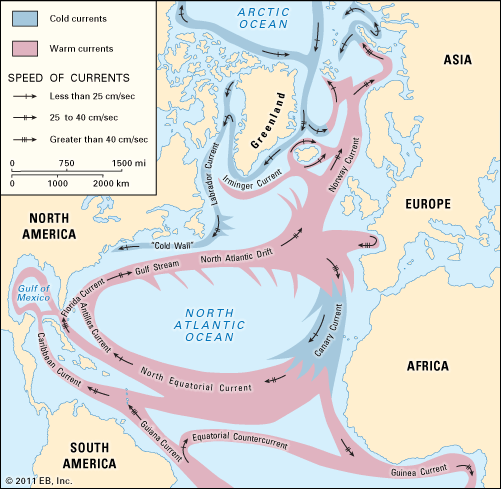
The Guinea Current is a warm, highly saline surface oceanic current located in the Atlantic Ocean off the western coast of Africa. It serves as the eastward continuation of the Atlantic Equatorial Countercurrent and flows southeastward along the northern coast of the Gulf of Guinea1.12
Key characteristics of the current include:
- Position: It remains north of the equator, though its northern limit shifts seasonally from approximately 7° N in winter to 15° N in summer.1
- Depth: The current reaches a depth of less than 660 feet (200 meters).1
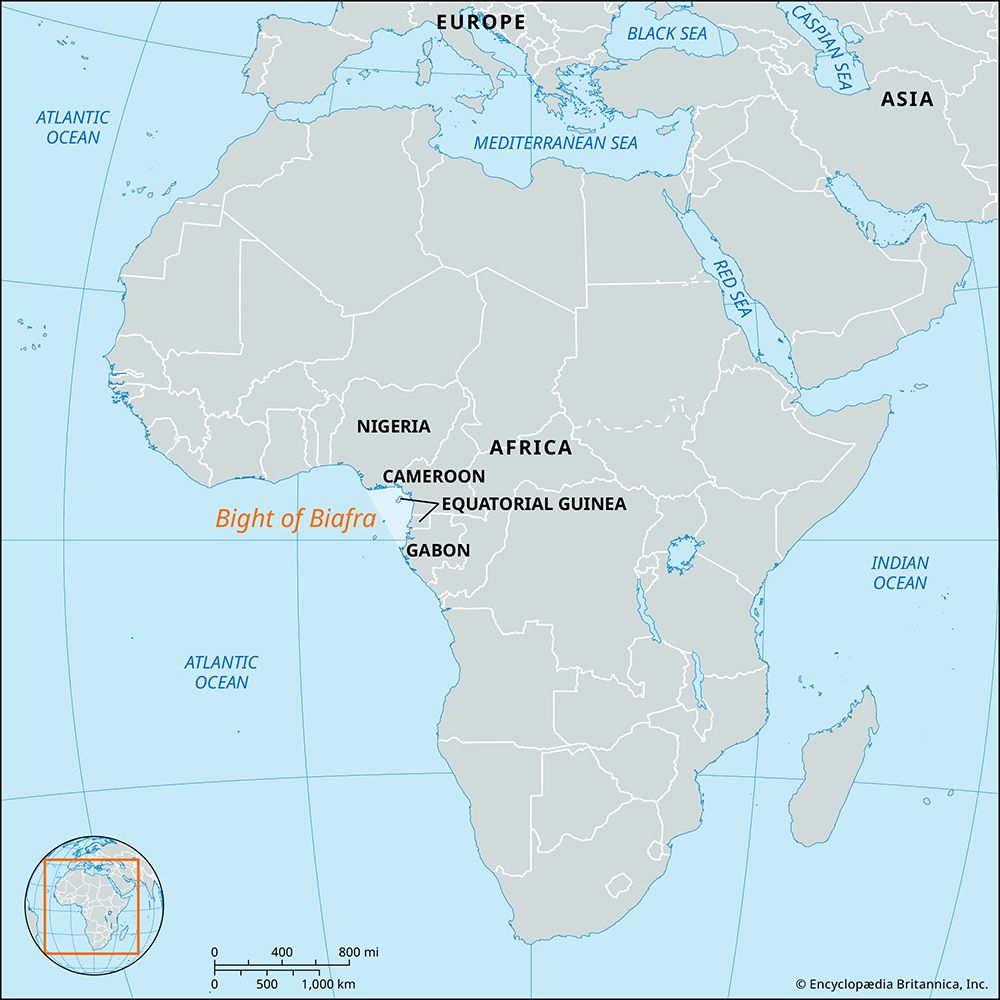
- Extent: It extends 250–300 miles (400–480 km) offshore, stretching from Senegal to the Bight of Biafra.2
- Environmental Impact: The high turbidity and relatively low salinity of the current’s water contribute to a lack of coral-reef ecosystems in the region.2
How do ocean currents influence global climate patterns?
Ocean currents play a fundamental role in regulating global climate by acting as a massive heat-distribution system, moving energy from the tropics toward the poles. This circulation is driven by wind, gravity, and variations in water density.34
Heat Transport and Climate Moderation
The most significant impact of ocean currents is the redistribution of heat. Warm currents, such as the Gulf Stream, transport heat from low latitudes to higher latitudes. In the North Atlantic, this warmth—carried by the Gulf Stream and the North Atlantic Current—is transported by prevailing westerly winds to northwestern Europe, significantly moderating its climate and keeping it much milder than other regions at similar latitudes. Conversely, cold currents like the Peru Current help regulate temperatures in tropical and subtropical regions.356
Ocean-Atmosphere Interaction
The relationship between the ocean and the atmosphere is reciprocal:
- Moisture and Latent Heat: Warm surface waters facilitate evaporation, which supplies moisture to the atmosphere. When this vapor condenses into clouds, it releases latent heat, influencing weather patterns and the development of tropical cyclones.54
- Jet Stream Guidance: Strong thermal gradients created where warm and cold currents meet—such as near the Grand Banks—influence the position of the jet stream, which in turn steers global weather systems.5
- Thermohaline Circulation: This slower, density-driven circulation (also known as the Atlantic Meridional Overturning Circulation) moves vast volumes of water globally. Scientists monitor this system closely, as changes in freshwater influx from melting ice could potentially weaken it, leading to shifts in regional climate patterns.7
Climatic Anomalies
Interactions between the ocean and atmosphere can trigger large-scale climate events. A prominent example is El Niño, where shifts in equatorial Pacific currents and sea-surface temperatures disrupt normal weather patterns, causing significant precipitation and temperature changes across multiple continents.54
What is the difference between the Guinea Current and the Benguela Current?
The Guinea Current and the Benguela Current are distinct oceanic systems in the Atlantic Ocean with contrasting physical and environmental characteristics.
Guinea Current
- Nature: A warm, highly saline surface current that serves as the eastward continuation of the Atlantic Equatorial Countercurrent.1
- Location: It flows southeastward along the northern coast of the Gulf of Guinea, remaining north of the equator.18
- Characteristics: It reaches depths of less than 660 feet (200 meters) and extends 250–300 miles offshore. Its high turbidity and relatively low salinity—caused by river effluents and rainfall—contribute to a lack of coral-reef ecosystems in the region.18
Benguela Current
- Nature: A cool, lower-salinity current that is a branch of the West Wind Drift (Antarctic Circumpolar Current).29
- Location: It flows northward along the west coast of southern Africa in the South Atlantic, eventually merging with the westward-flowing South Equatorial Current.29
- Characteristics: Driven by prevailing southerly and southwesterly winds, the current is defined by intense coastal upwelling, which brings nutrient-rich, cold water to the surface, creating excellent fishing grounds. The cool temperatures and low moisture content of the current contribute to the desertlike aridity of the adjacent coastal regions.29
Why are there few coral reefs in the Gulf of Guinea?
The scarcity of coral reefs in the Gulf of Guinea is primarily attributed to two main factors:
- Water Quality: The region experiences low salinity and high turbidity within the Guinea Current. These conditions are unfavorable for coral growth, as corals require seawater of normal oceanic salinity to maintain the necessary calcium carbonate levels for skeleton formation, and they rely on clear water for light penetration.21213
- Historical Climatic Factors: During the Miocene Epoch (approximately 23 to 5.3 million years ago), the Atlantic experienced a regression to cooler conditions. This period provided significantly fewer refuges for tropical species compared to the Indo-Pacific region, leading to a long-term limitation in the diversity of marine flora and fauna in the area.2
Sources
- Guinea Current — Encyclopædia Britannica
- Gulf of Guinea — Encyclopædia Britannica
- How Do Ocean Currents Affect the Biosphere? — Encyclopædia Britannica
- thermohaline circulation — Encyclopædia Britannica
- Gulf Stream — Encyclopædia Britannica
- Climate - Circulation, currents, and ocean-atmosphere interaction — Encyclopædia Britannica
- Climate - Climate and the oceans — Encyclopædia Britannica
- Benguela Current — Encyclopædia Britannica
- Mozambique Current — Encyclopædia Britannica
- Equatorial current — Encyclopædia Britannica
- Atlantic Ocean - The South Atlantic — Encyclopædia Britannica
- coral reef - Winds , currents, temperature, and salinity — Encyclopædia Britannica
- coral reef - Tropical water conditions — Encyclopædia Britannica
Published on · 4 min read