Gulf of Alaska
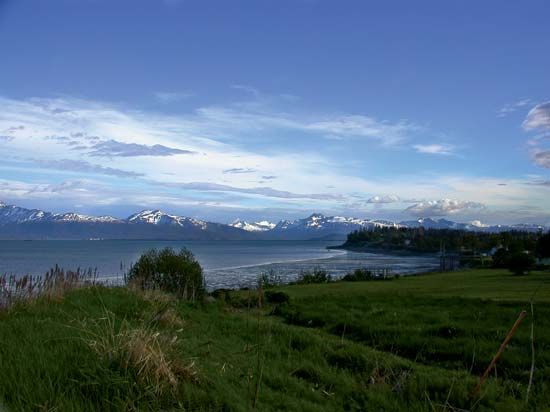
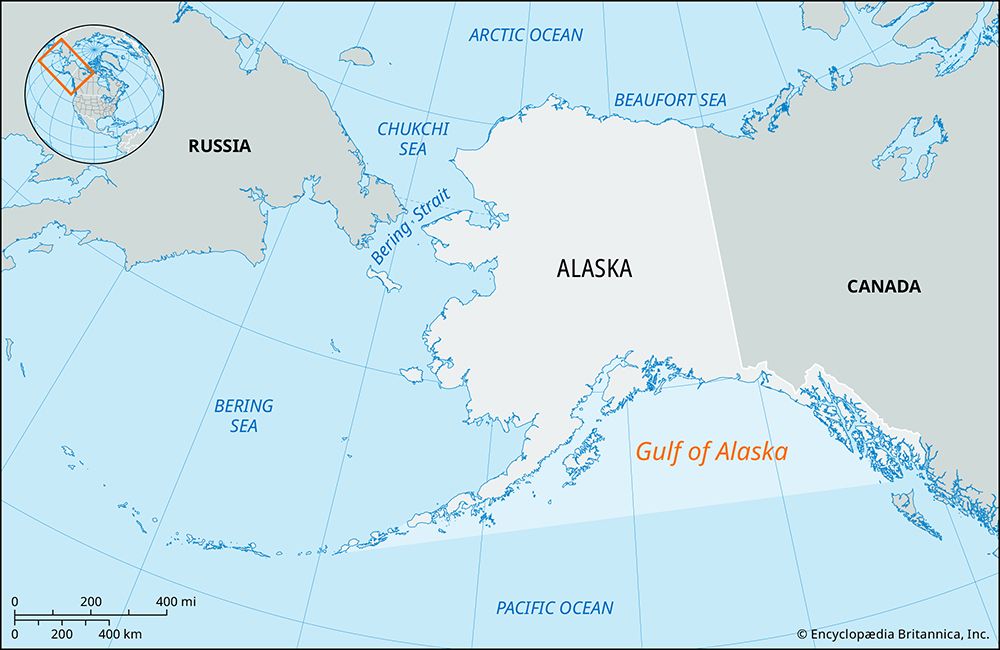
The Gulf of Alaska, a broad inlet of the North Pacific, features a coastline deeply indented by fjords and inlets that support several significant cities and…
What are some of the major ports and cities located along the Gulf of Alaska?
The Gulf of Alaska, a broad inlet of the North Pacific, features a coastline deeply indented by fjords and inlets that support several significant cities and ports. These locations serve as vital hubs for transportation, commerce, fishing, and tourism.12
Major Ports and Cities
- Anchorage: A primary urban center and port located near the head of Cook Inlet, serving as a central hub for the state’s transportation and administrative activities.12
- Valdez: Known as North America’s northernmost ice-free harbor, it is strategically significant as the terminal for the Trans-Alaska Pipeline.1
- Seward: An important port city that serves as a terminus for the Alaska Railroad.12
- Kodiak: Located on Kodiak Island, this city is home to one of the largest fishing ports in the United States.23
- Coastal Archipelago Cities: Communities such as Ketchikan, Sitka, and Juneau are major centers for the region’s fishing and tourism industries.2
How does the Alaska Current affect the Gulf of Alaska’s ecosystem?
The Alaska Current plays a significant role in shaping the ecosystem of the Gulf of Alaska by transporting relatively warm, low-salinity Pacific waters northward and westward along the coast.45
This current influences the region’s environment in several key ways:
- Thermal Regulation: By carrying warmer waters into the region, the current helps moderate the climate of the southern coastal and southeastern areas of Alaska, contributing to the temperate conditions found in the Gulf.5
- Atmospheric Interaction: The mixing of these warm waters with the colder waters of the Bering Sea helps generate the Aleutian low, an atmospheric low-pressure center that significantly influences regional weather patterns.5
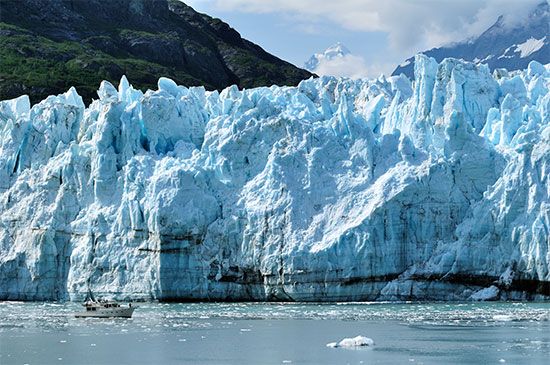
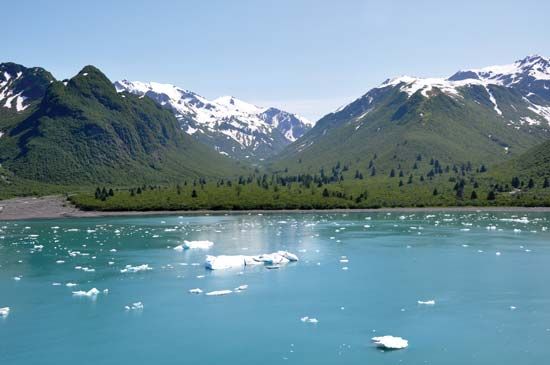
- Glacial Transport: The current acts as a mechanism for transporting icebergs cast off by the region’s large glaciers out to sea, which affects local marine conditions.6
- Species Migration: Recent warming trends have caused the current to facilitate the northward migration of various fish species along Alaska’s Pacific coast.5
What Native American tribes have historically inhabited the coastal regions of the Gulf of Alaska?
Historically, the coastal regions of the Gulf of Alaska have been inhabited by several distinct Indigenous groups. These populations developed unique cultures adapted to the region’s rich marine resources, which remain ice-free year-round due to the Alaska Current.910
Indigenous Groups of the Gulf Coast
- Sugpiat (Alutiit): Historically residing on Kodiak Island, the Alaska Peninsula, and Prince William Sound, these people speak a form of Yupik known as Pacific Yupik, Sugpiaq, or Alutiiq. They were often misidentified as “Aleut” by Russian colonizers, though they are culturally and linguistically distinct from the Unangan (Aleuts) of the Aleutian Islands.911
- Tlingit: Living along the islands and coastal lands of southern Alaska, specifically from Yakutat Bay to Cape Fox, the Tlingit are considered the northernmost of the Northwest Coast Indians. Their society was traditionally organized into lineages, clans, and moieties, with an economy heavily reliant on salmon fishing.12
- Unangan (Aleuts): While primarily associated with the Aleutian Islands, their historical territory extended to the western portion of the Alaska Peninsula.1113
These groups are recognized for their sophisticated maritime adaptations, including the use of kayaks and umiaks for hunting marine mammals and their development of permanent, hierarchical coastal settlements.111410
How does the Gulf of Alaska influence the climate of the surrounding regions?
The Gulf of Alaska exerts a profound influence on the climate of southern coastal and southeastern Alaska, primarily through its interaction with the Alaska Current. This current transports relatively warm, low-salinity Pacific waters into the region, which helps maintain temperate conditions along the coast and islands.74
Key climatic influences include:
- Temperature Moderation: The warm oceanic waters contribute to a distinct climatic zone characterized by relatively mild temperatures, with summer averages ranging from 40 to 60 °F (4 to 16 °C) and winter averages between 20 and 40 °F (−7 to 4 °C).7
- Atmospheric Pressure: The mixing of these warm waters with colder waters in the region contributes to the formation of the Aleutian low, a major atmospheric low-pressure center that significantly dictates regional weather patterns.716
- High Precipitation: The region experiences significant rainfall, with some areas receiving 220 inches (5,600 mm) or more annually, reflecting the moisture-rich maritime environment fostered by the gulf.7
Sources
- Gulf of Alaska — Encyclopædia Britannica
- Alaska - Settlement patterns — Encyclopædia Britannica
- Alaska - Agriculture, forestry, and fishing — Encyclopædia Britannica
- Alaska Current — Encyclopædia Britannica
- Aleutian Current — Encyclopædia Britannica
- California Current — Encyclopædia Britannica
- Alaska - Climate of Alaska — Encyclopædia Britannica
- Marine ecosystem - Ocean currents — Encyclopædia Britannica
- Arctic - Ethnic groups — Encyclopædia Britannica
- Aleut — Encyclopædia Britannica
- Alaska - Early history — Encyclopædia Britannica
- Tlingit — Encyclopædia Britannica
- Arctic - Sedentary peoples: the southern Yupiit and the Unangan ( Aleuts ) — Encyclopædia Britannica
- Arctic - History of settlement — Encyclopædia Britannica
- Arctic - Adaptations to local environments — Encyclopædia Britannica
- Aleutian low — Encyclopædia Britannica
Published on · 3 min read