Mount Davis
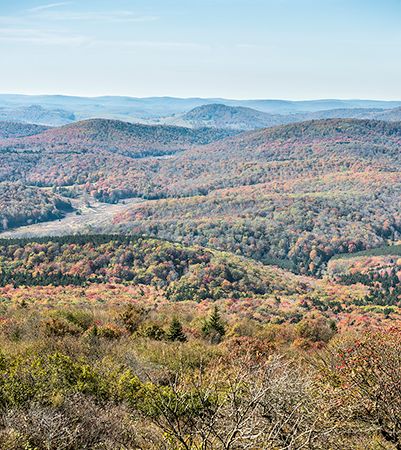
Mount Davis is the highest point in the U.S. state of Pennsylvania. It reaches an elevation of 3,213 feet (979 meters) and is situated on a ridge of the…
What is Mount Davis?
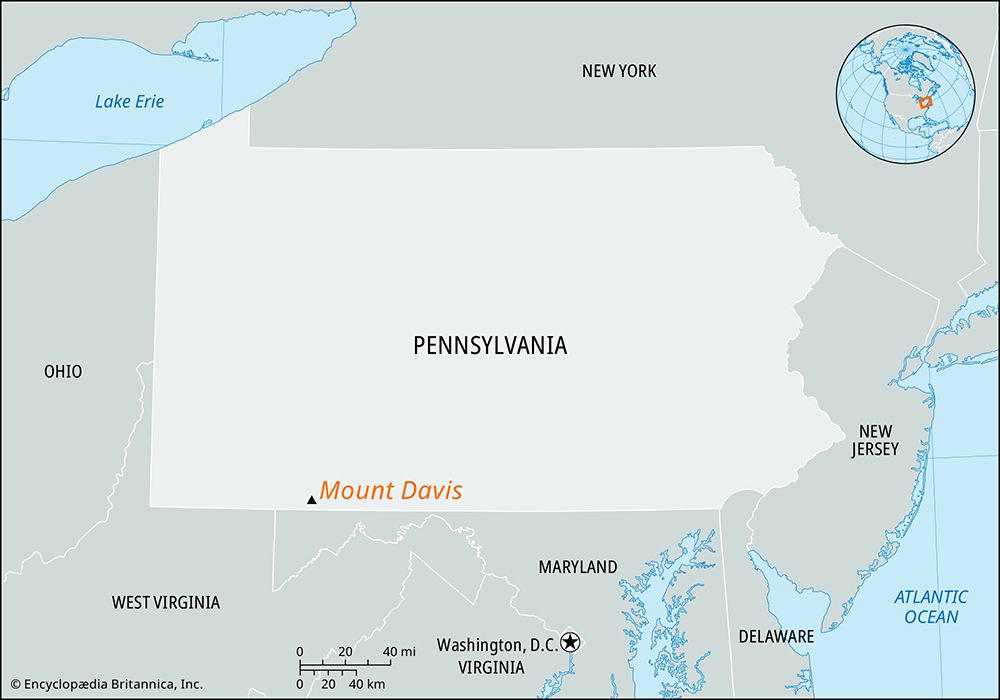
Mount Davis is the highest point in the U.S. state of Pennsylvania. It reaches an elevation of 3,213 feet (979 meters) and is situated on a ridge of the Allegheny and Appalachian mountains within Somerset county, located near the Maryland border.1
It is important to distinguish this peak from other similarly named geographic features. For instance, the Davis Mountains are a range in western Texas that includes Mount Livermore, the second-highest point in that state. Additionally, while there is a prominent area in Hong Kong featuring various peaks and ridges, Mount Davis is not listed among its primary summits, such as Mount Tai Mo or Victoria Peak.23
What are the main features of the Appalachian Mountains?
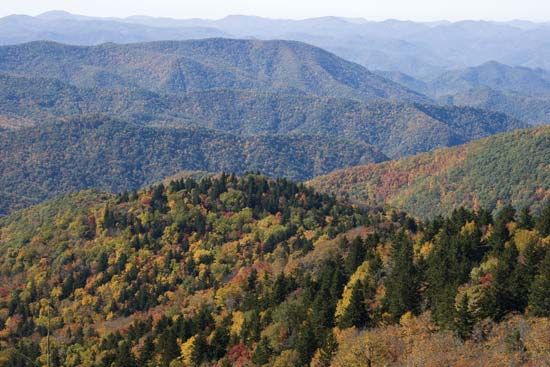
The Appalachian Mountains are a vast, ancient highland system stretching nearly 2,000 miles from Newfoundland and Labrador to central Alabama. They serve as a natural barrier between the eastern Coastal Plain and the Interior Lowlands of North America.4
Key Physical Features
- Geology: Among the oldest mountains on Earth, the system is composed of ancient crystalline rocks (the “Old” Appalachia) and younger Paleozoic sedimentary rocks, including coal beds.5
- Physiography: The range is divided into northern, central, and southern regions. Notable features include the Blue Ridge, the Appalachian Plateau, and the Ridge and Valley province.67
- The Great Valley: A prominent, continuous lowland trench—including the Shenandoah and Cumberland valleys—that has historically served as a vital transportation route.68
- Elevations: The highest peak is Mount Mitchell (6,684 feet) in North Carolina.68
- Climate: Generally temperate and humid, though conditions range from Arctic-like in the northern peaks to milder weather in the southern hills.9
How do mountain ranges form over time?
Mountain ranges are formed through a process known as orogeny, which involves intense geological deformation over millions of years. These mountain-building events are primarily driven by plate tectonics and occur in several distinct ways:10
- Continent-Continent Collisions: When two large landmasses collide, the crust is compressed and thickened, forcing rock upward. This process formed ranges like the Himalayas and the Alps.1112
- Subduction Zones: When an oceanic plate is forced beneath a continental margin, it can trigger volcanic activity and crustal uplift, creating linear ranges such as the Andes.1113
- Terrane Accretion: Smaller crustal fragments, island chains, or oceanic ridges can be “scraped off” and added to a continent’s edge during subduction, contributing to the growth of mountain belts like those in the North American Cordillera.12
- Rifting: Mountains can also form when continents pull apart, leading to block-faulting and volcanic activity, as seen in the East African Rift.1113
Once formed, these ranges are subject to constant change through erosion and isostatic uplift. While some ranges remain tectonically active, others, like the Appalachian Mountains, are ancient remnants that have been significantly lowered by millions of years of weathering.1311
What is the difference between a mountain peak and a mountain range?
A mountain peak and a mountain range are distinct geographical concepts, though they are closely related within the study of landforms.
- Mountain Peak: A peak refers to the top of a mountain that ends in a point or a well-defined summit. It represents the highest point of an individual mountain, often standing out as a prominent, sharp, or projecting feature among other high points.16
- Mountain Range: A range is an elongated chain or series of mountains that are connected by ridges and separated by valleys. Mountains rarely occur in isolation; instead, they typically form these extensive chains. When multiple ranges are linked together, they constitute a larger mountain belt, which can span hundreds to thousands of kilometers.1718
In essence, a mountain range is the larger structural system, while a peak is a specific, elevated point located within that system. For example, the Andes constitute a vast mountain belt containing various ranges, such as the Cordillera Blanca, which in turn contains individual peaks like Huascarán.18
Sources
- Mount Davis — Encyclopædia Britannica
- Hong Kong - Relief — Encyclopædia Britannica
- Davis Mountains — Encyclopædia Britannica
- Appalachian Mountains — Encyclopædia Britannica
- Appalachian Mountains - Geology of the Appalachian Mountains — Encyclopædia Britannica
- Appalachian Mountains - Physiography — Encyclopædia Britannica
- Appalachian Mountains - Climate — Encyclopædia Britannica
- United States - The Appalachian Mountain system — Encyclopædia Britannica
- Appalachian Highlands — Encyclopædia Britannica
- orogeny — Encyclopædia Britannica
- paleogeography - Mountain ranges — Encyclopædia Britannica
- plate tectonics - Mountain building — Encyclopædia Britannica
- mountain - Alpine- (or Himalayan-)type belts — Encyclopædia Britannica
- volcano - Determinants of size and shape — Encyclopædia Britannica
- continental landform - Orogenic geomorphic systems — Encyclopædia Britannica
- list of mountains — Encyclopædia Britannica
- peak — Merriam-Webster
- mountain — Encyclopædia Britannica
- list of mountains - North America — Encyclopædia Britannica
- Rocky Mountains - Physiography — Encyclopædia Britannica
Published on · 3 min read