Oyamel Fir
The oyamel fir (Abies religiosa), also known as the sacred fir, is a tall, elegant conifer native to the high-elevation, cool, and moist mountainous regions…

What is Oyamel fir?
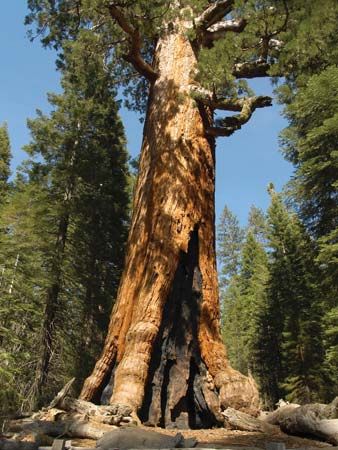
The oyamel fir (Abies religiosa), also known as the sacred fir, is a tall, elegant conifer native to the high-elevation, cool, and moist mountainous regions of central and southern Mexico and parts of Guatemala.12
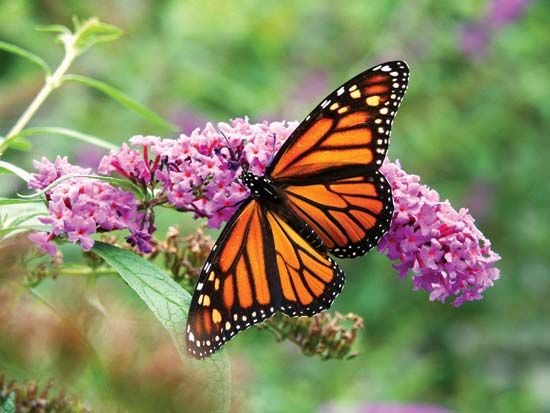
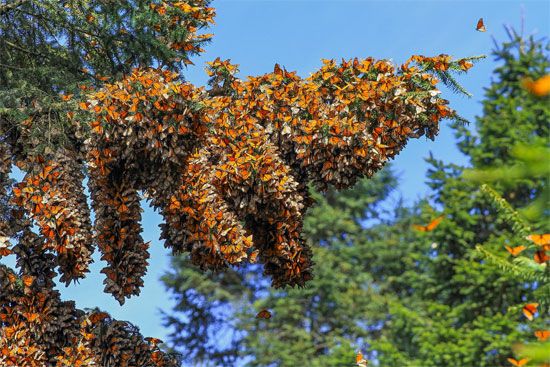
Reaching heights of up to 60 meters (200 feet), the tree features a straight gray trunk, a narrow conical crown, and dark green needles with silvery undersides. It is most famous for serving as the critical winter refuge for millions of migratory monarch butterflies, which cluster in the dense canopy to survive the winter months.123
Because these forests are essential to the survival of the monarch butterfly’s migration cycle, their protection is a major conservation priority. The trees currently face significant threats from logging, land conversion, and climate change, which is shifting suitable habitats to higher elevations.2
How does climate change impact the migration of monarch butterflies?
Anthropogenic climate change poses an existential threat to the monarch butterfly by disrupting its complex migration cycle and degrading its essential habitats.45
The impacts of climate change on the species include:
- Habitat Degradation: Rising temperatures and altered precipitation patterns stress the oyamel fir forests that serve as critical overwintering sites. As suitable climates shift to higher elevations, these forests face potential loss, particularly on lower mountains.2
- Resource Mismatch: Changes in temperature regimes can trigger early migrations. If butterflies arrive at breeding grounds before milkweed or nectar sources are available, their survival and reproductive success are severely compromised.5
- Extreme Weather: Increased frequency of drought and catastrophic wildfires destroys native milkweed populations and threatens the butterflies directly. Extreme weather events can kill migrating individuals before they complete their life cycles.5
Given these cumulative pressures, the migratory monarch was listed as a vulnerable species by the IUCN in 2023. Protecting these fragile ecosystems is a vital ethical responsibility to ensure the survival of this migratory phenomenon.542
What is the process of assisted migration for endangered tree species?
Assisted migration is a controversial conservation intervention designed to help species survive the impacts of climate change by human-assisted relocation. As global temperatures rise, the natural habitats of many species may become unsuitable, forcing their ranges to shift. Assisted migration involves intentionally moving individuals—such as seeds or seedlings—to new areas where future climatic conditions are projected to be more favorable for their long-term survival.2
For example, researchers studying the oyamel fir have experimented with planting seedlings at higher elevations than the species’ current range. By establishing these trees in areas where future climates are expected to mirror the conditions of their current, healthy habitats, scientists hope to preserve the species and provide essential future refuge for migratory monarch butterflies.2
While this strategy offers a proactive approach to preventing biodiversity loss, it remains a subject of debate within the scientific community due to the complexities of introducing species into new environments.2
How do fir trees differ from other types of conifers like pines or spruces?
True firs (genus Abies) are distinguished from other conifers like pines and spruces by several key physical characteristics:
- Leaf Attachment: The needlelike leaves of a true fir grow directly from the branch and possess bases shaped like suction cups. When these needles fall, they leave behind conspicuous circular scars. In contrast, spruce needles are jointed on a woody base that remains as a peglike projection on the twig after the leaf falls. Pine needles are typically borne in bundles (fascicles) of two to five.378
- Cone Orientation and Structure: Fir cones are borne in an upright position and fall apart at maturity, leaving only a spikelike axis on the branch. Conversely, spruce cones characteristically hang downward and remain intact when they fall. Pine cones are woody and typically hang downward, with scales that often feature prickles.378
- Classification: While all three belong to the Pinaceae family, they represent distinct genera (Abies, Pinus, and Picea, respectively).397
Sources
- Oyamel fir: Top Questions — Encyclopædia Britannica
- Oyamel fir — Encyclopædia Britannica
- fir — Encyclopædia Britannica
- Monarch butterfly: Top Questions — Encyclopædia Britannica
- Monarch butterfly - Threats — Encyclopædia Britannica
- invasive species - Solutions — Encyclopædia Britannica
- Pinaceae — Encyclopædia Britannica
- spruce — Encyclopædia Britannica
- pine - Physical description and natural history — Encyclopædia Britannica
- conifer - Stem — Encyclopædia Britannica
- China fir — Encyclopædia Britannica
- Douglas fir — Encyclopædia Britannica
Published on · 3 min read