Panjnad River
The Panjnad River is a river located in the Punjab province of Pakistan. Its name literally translates to "Five Rivers," as it is formed just below the town…
What is Panjnad River?
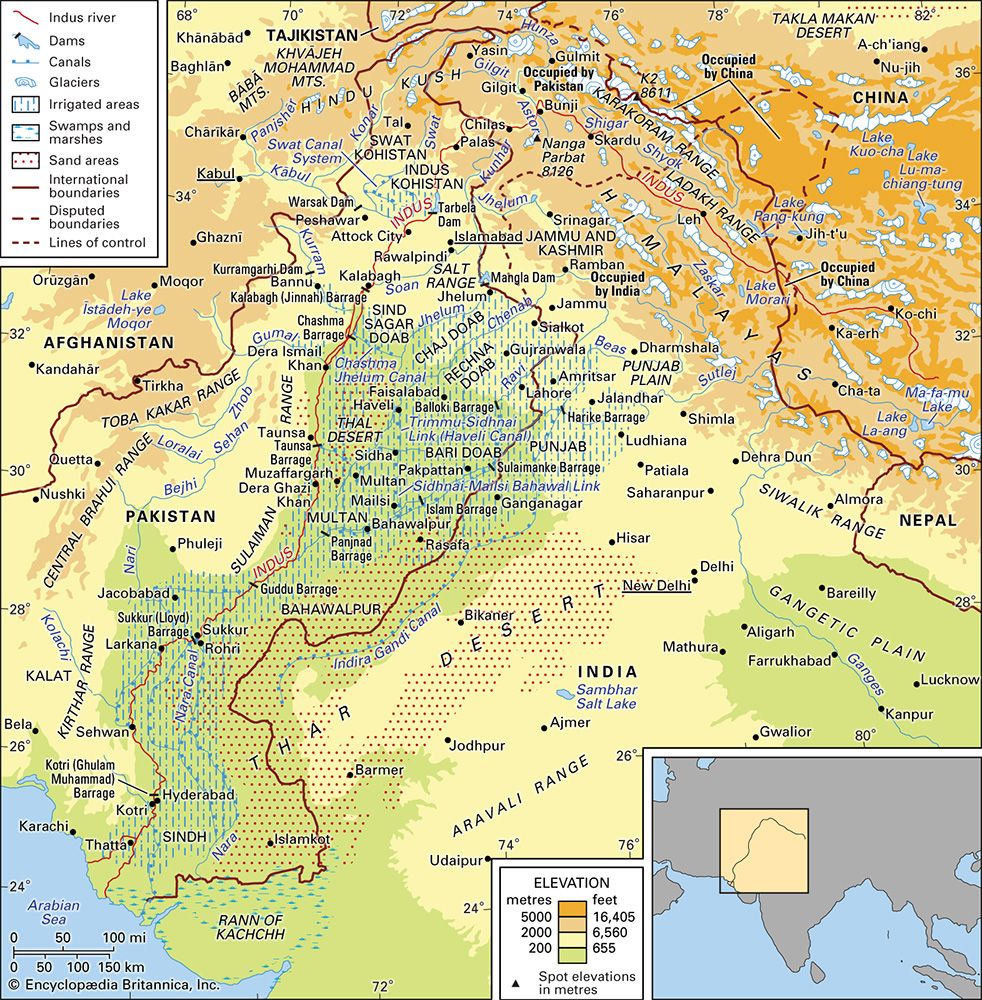
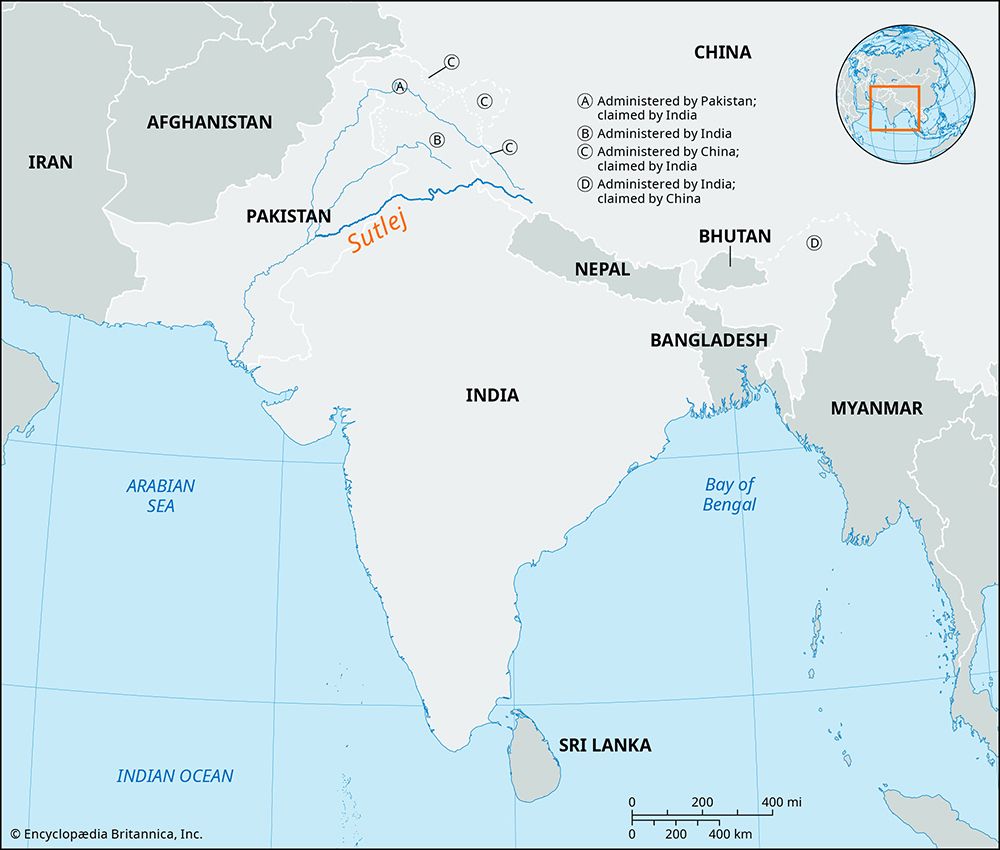
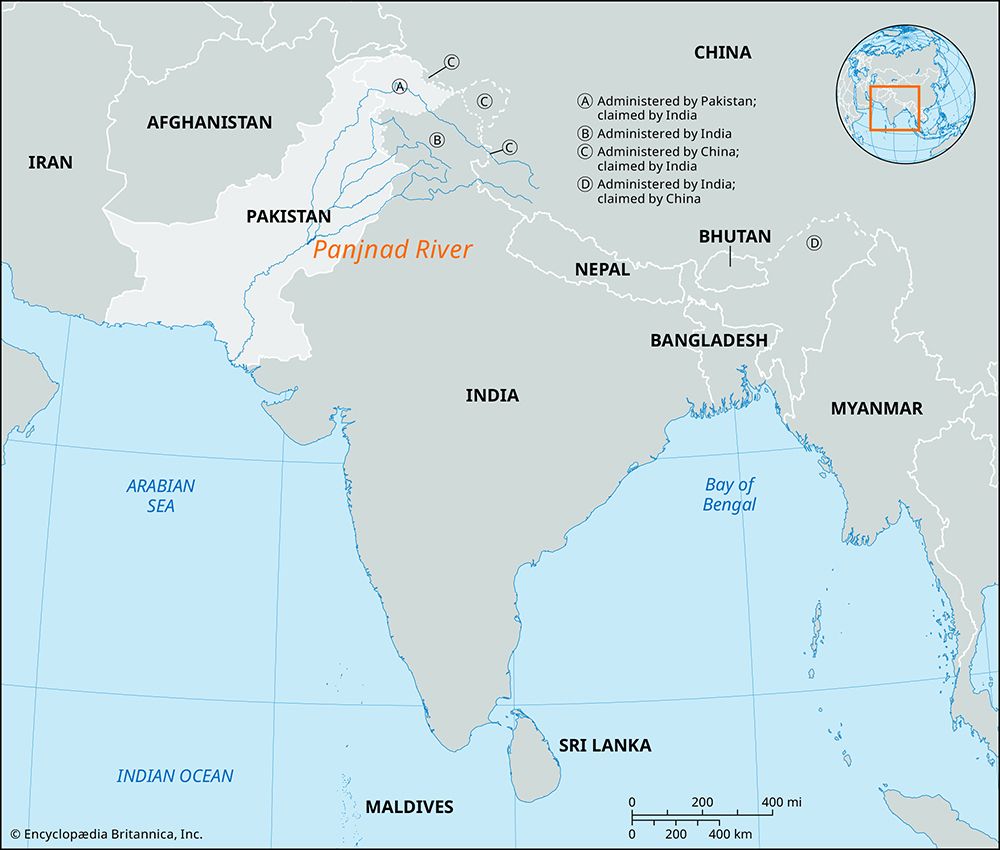
The Panjnad River is a river located in the Punjab province of Pakistan. Its name literally translates to “Five Rivers,” as it is formed just below the town of Uch by the successive junctions of the Sutlej, Beas, Ravi, Jhelum, and Chenab rivers.1
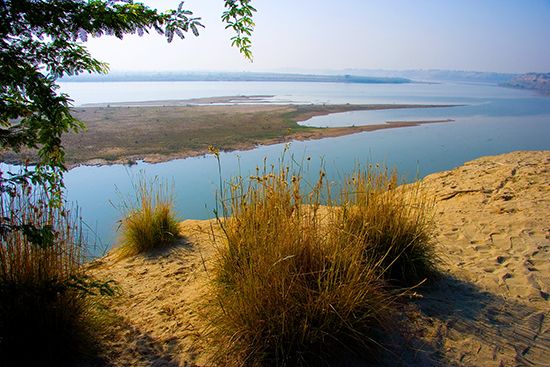
The river flows for 44 miles (71 km) in a southwest direction before joining the Indus River near Mithankot. It serves as the vital link between these five major tributaries and the Indus. Additionally, the river is significant for regional agriculture; a dam located on the Panjnad, situated just after the junction of the Sutlej River and the Chenab River, is a key component of the Sutlej Valley irrigation project.12
What is the significance of the Indus Waters Treaty?
The Indus Waters Treaty, signed on September 19, 1960, is a landmark agreement between India and Pakistan that was brokered by the World Bank to resolve long-standing disputes over the Indus River system.34
Historical Significance
Following the 1947 partition of India, the region’s irrigation system was bifurcated, leaving headworks in India and canals in Pakistan. This led to severe conflicts over water supply. The treaty provided a necessary framework to delimit the rights and obligations of both nations, effectively preventing water from becoming a primary driver of total war for decades.54
Key Provisions
- Water Allocation: The treaty assigned the western rivers—the Indus, Jhelum, and Chenab—to Pakistan, and the eastern rivers—the Ravi, Beas, and Sutlej—to India.34
- Infrastructure: It facilitated the construction of vital dams, such as the Tarbela Dam and Mangla Dam, to ensure water security for Pakistan.4
- Dispute Resolution: It established the Permanent Indus Commission and mechanisms for neutral experts and arbitration to address technical and legal disagreements.4
While the treaty has been hailed for its durability, recent tensions—including disputes over hydroelectric projects and India’s 2025 announcement to hold the treaty in abeyance—have significantly challenged its stability.4
How do the Himalayan glaciers influence the flow of these rivers?
Himalayan glaciers and snowmelt are fundamental to the hydrology of the Indus River system, acting as a primary source of water for the region’s major rivers.6
Role in River Flow
- Water Supply: A significant portion of the water in the Indus and its tributaries is provided by the melting of snow and glaciers from the Himalayan, Karakoram, and Hindu Kush ranges. Glaciers also play a critical role in draining higher elevations and feeding these river systems.67
- Seasonal Variation: The flow of these rivers is highly seasonal. Discharge is at its lowest during the winter months (December to February) when temperatures are freezing. As temperatures rise in spring and early summer (March to June), the melting of snow and glaciers causes the river levels to rise.89
- Glacial Impact: Glacial meltwater is carried into the Indus by various tributaries, such as the Shyok, Shigar, and Gilgit rivers. However, many Himalayan glaciers are currently in retreat due to climate change, which has led to unpredictable weather patterns and impacted the region’s water stability.1076
What is the historical importance of the Punjab region?
The Punjab region, historically known as the “land of five waters,” holds profound significance due to its ancient roots, strategic location, and role in shaping the history of the Indian subcontinent.11
Ancient Foundations
The region is home to the Indus civilization, one of the world’s earliest urban cultures, first identified at Harappa in 1921. The Punjab Plain is also cited in the ancient epic Mahabharata as the site of the legendary war between the Pandavas and Kauravas.1213
Political and Religious Evolution
Following centuries of rule by various northern Hindu dynasties and later Muslim empires, the region saw the rise of the Sikh empire under Ranjit Singh in the late 18th century. This period was marked by military prowess and religious tolerance before the region was annexed by the British Empire in 1849.131415
Modern Impact
The 20th century brought transformative events:
- Independence and Partition: The 1947 partition of India split the province between India and Pakistan, leading to massive displacement and communal violence.31614
- Green Revolution: In the 1960s, the region became the heart of the Green Revolution, significantly boosting India’s agricultural productivity.17
- Political Identity: The region experienced intense agitation for a Punjabi-speaking state, culminating in the 1966 reorganization of Punjab and the subsequent political challenges of the 1980s.14
Sources
- Panjnad River — Encyclopædia Britannica
- Sutlej River — Encyclopædia Britannica
- Indus Waters Treaty: Top Questions — Encyclopædia Britannica
- Radcliffe Line - Indus waters dispute — Encyclopædia Britannica
- Indus Waters Treaty — Encyclopædia Britannica
- Himalayas - Drainage of the Himalayas — Encyclopædia Britannica
- Indus River - Hydrology of the Indus River — Encyclopædia Britannica
- Jhelum River — Encyclopædia Britannica
- Indus River - Climate — Encyclopædia Britannica
- Indus River - Physical features — Encyclopædia Britannica
- Punjab — Encyclopædia Britannica
- Indian Independence Movement: Top Questions — Encyclopædia Britannica
- Punjab Plain — Encyclopædia Britannica
- Radcliffe Line - Implementation — Encyclopædia Britannica
- Mangla Dam: Top Questions — Encyclopædia Britannica
- Punjab - History of Punjab — Encyclopædia Britannica
- Punjab - Agriculture — Encyclopædia Britannica
- Pakistan - The Sikh empire in the Punjab — Encyclopædia Britannica
- Indus civilization - The recovery and study of the Indus civilization — Encyclopædia Britannica
Published on · 3 min read