Paracanthopterygian
Paracanthopterygian fishes are a diverse group of bony fishes that are primarily marine and possess a worldwide distribution. While most orders within this…
What is the geographical distribution of paracanthopterygian fishes?
Paracanthopterygian fishes are a diverse group of bony fishes that are primarily marine and possess a worldwide distribution. While most orders within this superorder are found globally in marine environments, their specific habitats vary significantly:12
- Marine Distribution: Most paracanthopterygians, including anglerfishes (Lophiiformes) and codfishes (Gadiformes), are found in marine waters ranging from shallow tropical reefs to the deep sea. Specifically, commercially important gadiforms are abundant along the continental shelf of the North Atlantic. Toadfishes (Batrachoidiformes) are primarily found in tropical and temperate shallow coastal waters.2
- Freshwater Distribution: The percopsiforms, or trout-perches, are an exception, occurring exclusively in the freshwater environments of North America. Additionally, toadfishes may be found in freshwater to a limited extent.2
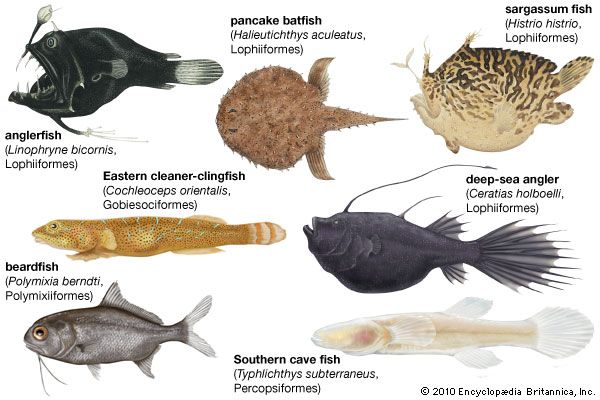
Which major fish families or orders are included within the paracanthopterygian superorder?
The superorder Paracanthopterygii is divided into five distinct orders of bony fishes. These groups are classified together based on shared characteristics, such as the structure of their caudal vertebrae, the placement of their pelvic fins, and a distinctive jaw musculature.23
The five orders included within the Paracanthopterygii are:
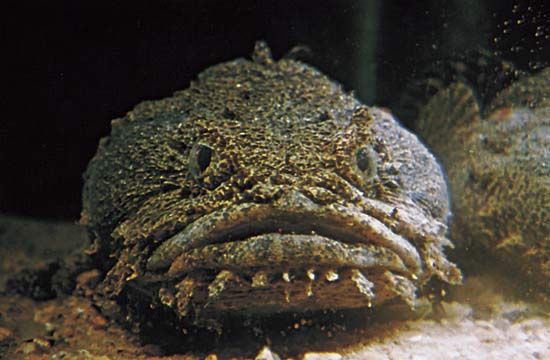
- Batrachoidiformes: Commonly known as toadfishes, this order contains approximately 78 species.2
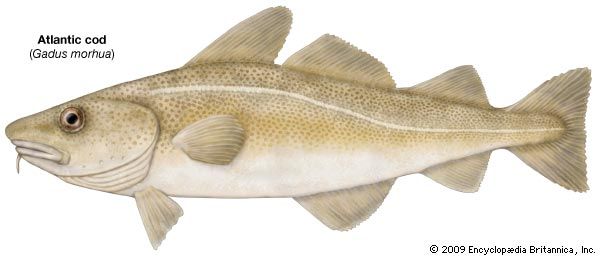
- Gadiformes: This order encompasses the codfishes, including commercially significant species like hakes, haddocks, pollocks, and whitings. It is the largest order in the superorder, with about 555 species.2
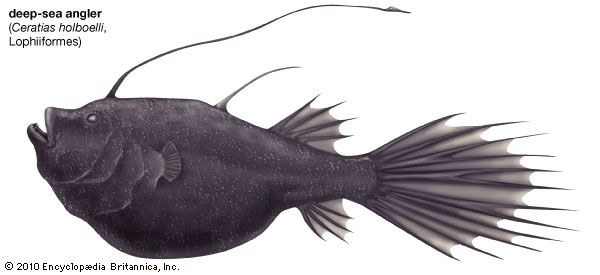
- Lophiiformes: This order consists of the anglerfishes, including goosefishes, and contains approximately 210 species.2
- Ophidiiformes: This group includes the pearlfishes and cusk-eels, comprising about 385 species.2
- Percopsiformes: Also known as trout-perches, this order contains about 9 species and is unique among the group for occurring exclusively in freshwater environments.2
While this classification is widely used, it remains provisional as researchers continue to study the interrelationships between these groups.1
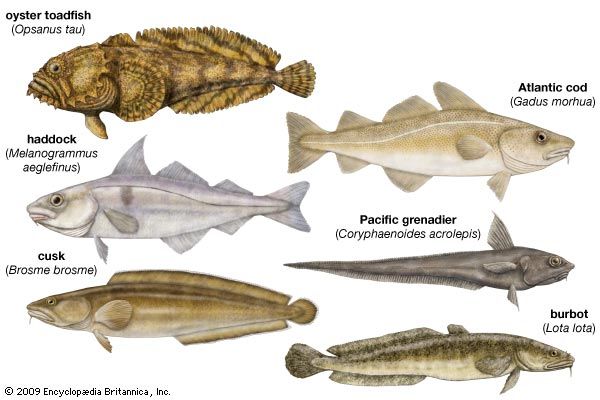
What are some common examples of paracanthopterygian fishes that people might encounter?
Many paracanthopterygian fishes are familiar to people, either as common seafood or as notable inhabitants of coastal and deep-sea environments. The most recognizable members of this group belong to the order Gadiformes, which includes several commercially important species found in North Atlantic waters.2
Common Examples
- Commercially Important Gadiforms: These are the most widely known paracanthopterygians and include true cods, hakes, haddocks, pollocks, and whitings.2
- Anglerfishes and Goosefishes: Members of the order Lophiiformes, such as the goosefish—also known as monkfish—are often encountered in markets and are recognized for their unique “fishing rod” dorsal spine used to lure prey.256
- Toadfishes: In shallow coastal waters, particularly along eastern North America, one might encounter the oyster toadfish. Other notable members include the midshipman, named for its light-producing organs.7
- Cusk-eels: While many are deep-water dwellers, some species like the kingklip are prized as food in regions like South Africa.8
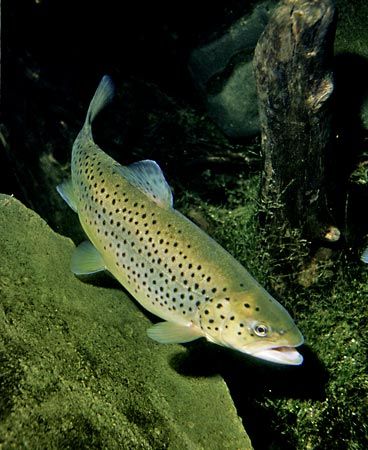
- Trout-perches: These small, dark-spotted freshwater fish, such as the trout-perch, are found in the rivers and lakes of North America.2910
How do paracanthopterygian fishes reproduce and what are their life cycles like?
The reproductive strategies and life cycles of paracanthopterygian fishes are remarkably diverse, reflecting the varied environments—from shallow coastal waters to the deep sea—that these species inhabit.
Reproductive Strategies
Most paracanthopterygian fishes are oviparous (egg-laying), typically utilizing external fertilization where eggs and sperm are released into the water column. However, reproductive behaviors vary significantly across the five orders:
- Egg-Laying and Parental Care: Many species, such as the oyster toadfish, lay their eggs in protected recesses, including crevices or even discarded human objects. In these cases, the male often guards the eggs and young for several weeks to ensure their survival. Similarly, some midshipman species attach their eggs to rocky surfaces, with the male providing protection.
- Pelagic Spawning: Many codfishes and anglerfishes are highly fecund, releasing vast quantities of eggs into the open water. These eggs and the resulting larvae typically drift as plankton, relying on ocean currents for dispersal.
- Live-Bearing: Some members of the order Ophidiiformes (such as certain cusk-eels) are viviparous, giving birth to live young. Males of some of these species produce specialized sperm cases called spermatophores to facilitate internal fertilization.
- Parasitic Mating: A unique reproductive adaptation is found in deep-sea anglerfishes, where the male may become a permanent parasitic appendage of the female, with their circulatory systems eventually fusing.
Life Cycles
The life cycles of these fishes are often tied to seasonal migrations and environmental shifts:
- Migration: Many codfishes undertake long-distance migrations, gathering in specific areas during late winter and early spring to spawn in response to water temperature changes.
- Developmental Stages: Larvae often occupy different ecological niches than adults. For example, young codfishes are frequently found in shallow, nearshore waters, moving to deeper habitats as they mature. In contrast, the Mediterranean pearlfish undergoes a complex metamorphosis, starting as a planktonic larva before seeking out a sea cucumber host to live in for the remainder of its life.
- Environmental Adaptation: While most paracanthopterygians are marine, the trout-perch (order Percopsiformes) is restricted to freshwater, spawning in shallow waters during the spring.
Sources
- paracanthopterygian — Encyclopædia Britannica
- paracanthopterygian - General features — Encyclopædia Britannica
- paracanthopterygian - Critical appraisal — Encyclopædia Britannica
- fish - Annotated classification — Encyclopædia Britannica
- cusk eel — Encyclopædia Britannica
- trout-perch — Encyclopædia Britannica
- trout-perch — Merriam-Webster
- anglerfish — Encyclopædia Britannica
- toadfish — Encyclopædia Britannica
- goosefish — Encyclopædia Britannica
- How do fish reproduce? — Encyclopædia Britannica
- protacanthopterygian - Life cycle and reproduction — Encyclopædia Britannica
- fish - Reproduction — Encyclopædia Britannica
- cod — Encyclopædia Britannica
- Reproductive behaviour - Fishes — Encyclopædia Britannica
- paracanthopterygian - Life cycle and reproduction — Encyclopædia Britannica
- pleuronectiform - Reproduction — Encyclopædia Britannica
- osteoglossomorph - Life cycle and reproduction — Encyclopædia Britannica
- cephalochordate - Reproduction and life cycle — Encyclopædia Britannica
Published on · 4 min read