Quaking Grass
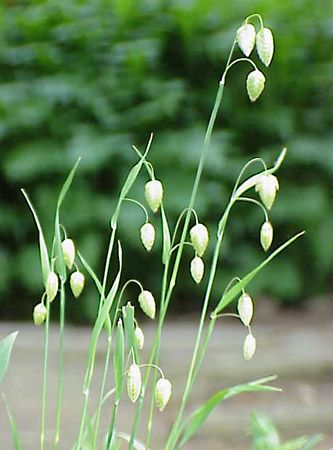
Quaking grass refers to any of the four species of slender annual or perennial grasses belonging to the genus Briza within the Poaceae family. Native to…
What is Quaking grass?
Quaking grass refers to any of the four species of slender annual or perennial grasses belonging to the genus Briza within the Poaceae family. Native to Eurasia, these plants are characterized by their open flower clusters and dry seedheads, which are held on long, slender stalks.12
The name “quaking grass” is derived from the plant’s distinctive habit of quivering or “quaking” in even the slightest breeze due to its pendulous, ovate spikelets. Because of this unique aesthetic, several species are commonly cultivated as ornamentals, including:12
- Big quaking grass (or rattlesnake grass, Briza maxima)1
- Perennial quaking grass (B. media)1
- Little quaking grass (or shivery grass, B. minor)1
What are the main characteristics of the Poaceae plant family?
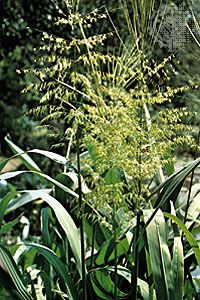
The Poaceae family, commonly known as the grass family, is one of the largest and most economically significant groups of monocotyledonous flowering plants. With over 11,700 species, they are found on every continent and dominate approximately 24 percent of the Earth’s vegetation.34
Morphological Characteristics
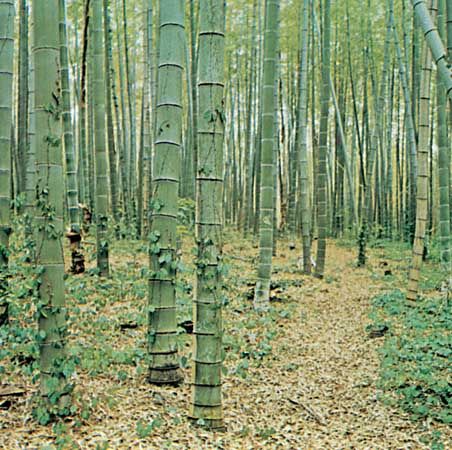
- Stems: Often called culms, stems are typically round, herbaceous, and hollow between nodes, though some are solid or woody (as in bamboo). They may grow erect or prostrate, spreading via underground rhizomes or above-ground stolons.56
- Leaves: Leaves are arranged in two vertical ranks and consist of a blade and a sheath that encircles the stem. They feature parallel venation and a small structure called a ligule at the junction of the blade and sheath.5
- Roots: Grasses possess fine, fibrous root systems rather than a central taproot.56
- Flowers and Inflorescence: Flowers are highly simplified and adapted for wind pollination, lacking petals and nectar. The primary unit of the inflorescence is the spikelet, which contains one or more florets protected by specialized scales (glumes, lemmas, and paleas).5
- Fruit: The fruit, known as a caryopsis or grain, is unique because the fruit wall is fused to the seed coat.5
Physiological and Ecological Significance
Grasses are categorized by their photosynthetic pathways: C-3 and C-4. C-4 grasses are particularly efficient in hot, tropical climates, allowing them to grow faster than their C-3 counterparts. Economically, Poaceae is the world’s most important food source, providing staple crops like rice, wheat, and corn, as well as essential materials like bamboo.537
How do ornamental grasses differ from wild grasses?
The distinction between ornamental grasses and wild grasses is primarily based on human intent and cultivation rather than fundamental biological differences. Both groups belong to the Poaceae family and share the same basic morphology, including round, hollow stems, parallel-veined leaves, and fibrous root systems.56
The primary differences are:
- Purpose and Cultivation: Ornamental grasses are specifically selected and grown for their aesthetic qualities, such as unique textures, colors, or flower structures, to enhance gardens and landscapes. In contrast, wild grasses grow naturally in various ecosystems, serving ecological roles like providing forage for wildlife, preventing soil erosion, and contributing to habitat structure.58
- Overlap in Species: Many species are not strictly “ornamental” or “wild” by nature; rather, they are categorized by how they are utilized. For example, certain grasses like fescue or pampas grass may be cultivated as ornamentals in a garden setting while also existing as wild populations in their native habitats.8
- Management: Ornamental grasses are often managed through horticultural practices, whereas wild grasses thrive without human intervention, sometimes being classified as weeds or invasive species if they disrupt local environments.58
What role do wind-pollinated plants play in an ecosystem?
Wind-pollinated plants, or anemophilous plants, play a distinct role in ecosystems by utilizing the wind as a primary agent for pollen dispersal rather than relying on animals. This strategy allows these plants to thrive in environments where insect pollinators may be scarce or where the effectiveness of scent-based attraction is diminished.910
Ecological Characteristics
- Resource Allocation: Unlike insect-pollinated species, wind-pollinated plants do not invest energy in producing nectar, fragrance, or showy petals. Instead, they allocate resources toward producing massive quantities of pollen to compensate for the inherent unpredictability of wind dispersal.911
- Structural Adaptations: These plants often feature inconspicuous, reduced flowers and specialized structures—such as long, branched stigmas—designed to maximize the surface area for capturing airborne pollen. Many species bloom early in the spring before leaves emerge, reducing physical barriers that could obstruct pollen movement.91011
- Population Dynamics: Because wind pollination is a relatively inefficient process, these plants often grow in dense, single-species populations to increase the statistical probability of successful fertilization.9
Common examples include many grasses, oaks, birches, and nettles, which serve as foundational components in various terrestrial habitats.9
Sources
- quaking grass — Encyclopædia Britannica
- quaking grass — Merriam-Webster
- Poaceae — Encyclopædia Britannica
- Poaceae - Characteristic morphological features — Encyclopædia Britannica
- grass — Encyclopædia Britannica
- list of plants in the family Poaceae — Encyclopædia Britannica
- Poales — Encyclopædia Britannica
- list of economically important members of the family Poaceae — Encyclopædia Britannica
- Pollination - Wind — Encyclopædia Britannica
- Angiosperm - Pollination — Encyclopædia Britannica
- Botanical Sex: 9 Alluring Adaptations — Encyclopædia Britannica
- Major types of pollinators — Encyclopædia Britannica
- Climate - Biosphere controls on surface friction and localized winds — Encyclopædia Britannica
Published on · 3 min read