Greenheart
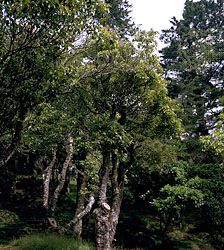
Greenheart (Chlorocardium rodiei) is a valuable timber tree belonging to the laurel family (Lauraceae). Native to the Guianas in South America, this large…
What is greenheart?
Greenheart (Chlorocardium rodiei) is a valuable timber tree belonging to the laurel family (Lauraceae). Native to the Guianas in South America, this large evergreen can reach heights of up to 40 meters (130 feet).12
The tree is primarily recognized for its exceptionally strong, dense, and dark green wood. Due to its high density and resistance to decay, the timber is predominantly used in Europe for demanding underwater applications, including ship construction and the pilings for wharves and bridges. Its significant weight generally makes it unsuitable for other types of woodworking. Additionally, the bark and fruits of the tree contain an alkaloid known as bebeerine, which was historically utilized for its fever-reducing properties.1
What other types of wood are known for being water-resistant?
Beyond greenheart, several other wood species are recognized for their durability and resistance to moisture and decay. While no wood is entirely immune to degradation, certain types are highly valued for their ability to withstand exposure to soil, water, and insects.3
Notable Water-Resistant Woods
- Teak (Tectona grandis): Widely considered one of the most valuable timbers, teak is prized for its extraordinary durability and dimensional stability. It is practically imperishable when kept under cover and has been used for centuries in shipbuilding, wharves, and bridges. Its heartwood is naturally resistant to termites, though it is not fully immune to marine borers.4
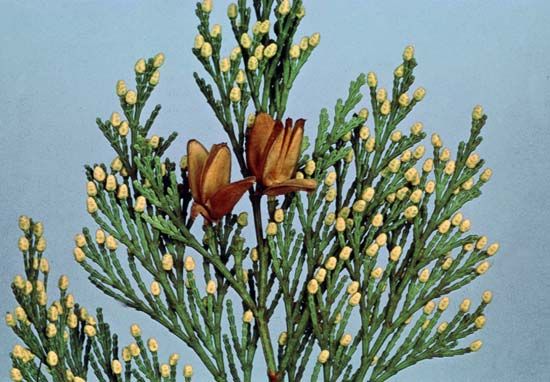
- Cedar: True cedars (Cedrus) and many other conifers commonly referred to as “cedars”—such as the giant arborvitae, incense cedar, and certain junipers—are known for their resinous, aromatic wood. This wood is durable even when in direct contact with soil or moisture, making it a popular choice for fence posts, outdoor structures, and closet linings.56
The natural resistance of these species is largely attributed to the presence of toxic extractives within the wood, which help delay decay. However, for extreme environments like seawater, even these durable woods may require additional preservative treatments to protect against marine borers.3
What are the unique characteristics of the laurel family of plants?
The Lauraceae family, or laurel family, is a diverse group of approximately 2,500 species of flowering plants within the order Laurales. These plants are primarily found in tropical and subtropical regions, with significant concentrations in Southeast Asia and Brazil.78
Unique Characteristics
- Aromatic Nature: Most species are strongly aromatic due to the presence of essential oil cavities in their leaves, wood, and bark. This fragrance can persist in the wood for decades after it is harvested.79
- Leaf Structure: The majority of species possess leathery, evergreen leaves that are typically arranged alternately or in whorls.79
- Floral Morphology: The flowers are generally small and appear in shades of green, yellow, or white. They are arranged in clusters, and their floral parts develop in multiples of three. Notably, the perianth is not differentiated into distinct sepals and petals.79
- Reproductive Features: The fruits are typically fleshy berries or drupes, often featuring a cupule at the base that resembles an acorn cap. The seeds contain a large embryo with little to no endosperm at maturity.79
The family includes economically significant plants such as avocado, cinnamon, and bay laurel, as well as various valuable timber trees.78
How do alkaloids like bebeerine function in nature?
While the precise biological purpose of alkaloids like bebeerine remains a subject of scientific study, they are generally understood to function as secondary compounds that provide plants with a chemical defense mechanism against herbivores and pathogens.1112
In nature, alkaloids often act as deterrents. When an animal, such as an insect, bites into a plant containing these compounds, the bitter taste or toxic properties trigger aversive behavior, effectively inhibiting further feeding. For example, bebeerine is a highly poisonous alkaloid found in the bark and fruits of the greenheart tree and other species within the laurel family. Its toxicity has historically been utilized by indigenous peoples in Brazil to create arrow poisons, demonstrating its potent effect on biological systems.1111312
Beyond defense, some evidence suggests that alkaloid concentrations may fluctuate in correlation with specific plant life cycles, such as increasing prior to seed formation, which implies they may play a role in reproductive processes. However, because these compounds can also cause irritation or dermatitis in humans who handle the wood, their presence serves as a potent, albeit sometimes hazardous, ecological adaptation.1112
Sources
- greenheart — Encyclopædia Britannica
- greenheart — Merriam-Webster
- wood - Degradation — Encyclopædia Britannica
- Did you know? — Merriam-Webster
- Teak — Encyclopædia Britannica
- cedar — Encyclopædia Britannica
- Lauraceae — Encyclopædia Britannica
- Laurales - Lauraceae — Encyclopædia Britannica
- Laurales - Distribution and abundance — Encyclopædia Britannica
- Laurales - Other families — Encyclopædia Britannica
- Chemoreception - Deterrents and repellents — Encyclopædia Britannica
- alkaloid — Encyclopædia Britannica
- Laurales - Lauraceae — Encyclopædia Britannica
Published on · 3 min read