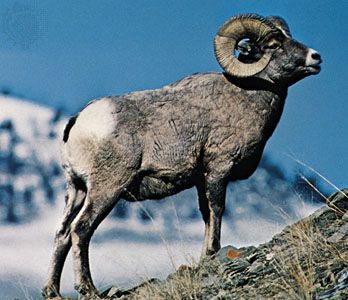
Snow Sheep
The snow sheep (Ovis nivicola) is a herbivore that consumes a varied diet consisting of lichens, grass, sedges, shrubs, moss, and mushrooms.
What is the diet of snow sheep and how does it change seasonally?
The snow sheep (Ovis nivicola) is a herbivore that consumes a varied diet consisting of lichens, grass, sedges, shrubs, moss, and mushrooms.1
While the provided information details the general composition of their diet, it does not explicitly describe how this diet changes on a seasonal basis. However, it is noted that these animals inhabit severe environments where they must undertake significant seasonal migrations—sometimes covering 80–120 km—to reach southern or eastern mountain slopes that serve as preferred wintering areas. These movements are likely driven by the need to access available forage during harsh winter conditions, characterized by extreme cold and heavy snowfall.1
What are the physical characteristics that distinguish snow sheep from other wild sheep species?
The snow sheep (Ovis nivicola) is a wild sheep species native to the mountain regions of eastern Siberia. While they share many traits with other wild sheep, they are distinguished by specific biological and physical characteristics:
- Genetic Profile: A primary scientific distinction is their diploid number of chromosomes, which is 52.1
- Size and Build: Snow sheep exhibit sexual dimorphism, with males (rams) being approximately 25 percent larger than females. The largest subspecies reach a height of about 1 metre (39 inches) at the withers and can weigh up to 150 kg (330 pounds).1
- Horns: The horns of the males are notably large and are described as being similar in appearance to those of the bighorn sheep.1
- Adaptations: Unlike many other wild sheep, snow sheep are uniquely adapted to survive in some of the most severe winter conditions on Earth, enduring temperatures as low as −60 °C (−76 °F) and strong winds, which necessitates extensive seasonal migrations to reach suitable wintering slopes.1
How have snow sheep adapted to survive in their harsh mountain environments?
Snow sheep (Ovis nivicola) have developed several critical strategies to survive the extreme conditions of their Siberian mountain habitats, where winter temperatures can plummet to −60 °C (−76 °F) and heavy snowfall and strong winds are common.1
- Seasonal Migration: To cope with harsh winters, snow sheep undertake significant seasonal movements. In regions like Sakha, they travel 80–120 km to reach southern or eastern mountain slopes, which serve as preferred wintering areas. Similar migrations of over 50 km have been documented in Kamchatka.1
- Habitat Selection: They occupy a range extending from the upper limits of the forested zone to the edge of vegetation at altitudes up to 2,000 metres (7,000 feet), allowing them to navigate between different elevations to find food and shelter.1
- Reproductive Timing: Births are timed to coincide with the arrival of spring, occurring about six months after the December–January rut. This ensures that lambs are born when the snow melts and fresh green vegetation becomes available, which is essential for their survival in a high-mortality environment.1
What role do snow sheep play in their ecosystem?
Snow sheep (Ovis nivicola) function as primary consumers within their high-altitude mountain ecosystems in eastern Siberia. By grazing on a diverse diet that includes lichens, grass, sedges, shrubs, moss, and mushrooms, they convert alpine vegetation into biomass that supports higher trophic levels.1
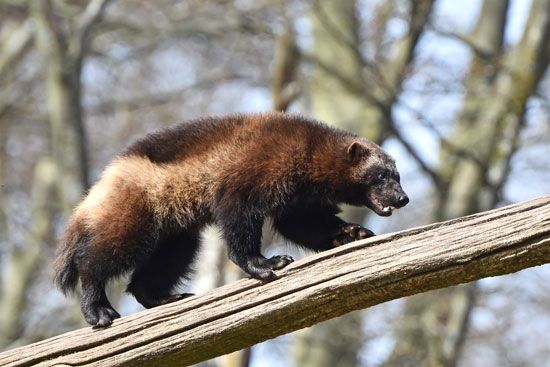
Their role in the food web is defined by their interactions with predators, primarily the wolf and occasionally the wolverine, which rely on them as a food source. Additionally, as grazers in a low-productivity environment, their presence is a natural component of the mountain landscape, though their impact is distinct from the potentially destructive effects of intensive agricultural grazing by domestic livestock, which can damage fragile alpine vegetation.15
Sources
- snow sheep — Encyclopædia Britannica
- bighorn sheep — Encyclopædia Britannica
- List of sheep — Encyclopædia Britannica
- Tundra - Alpine mammals — Encyclopædia Britannica
- Mountain ecosystem - Biological productivity — Encyclopædia Britannica
Published on · 3 min read