Virgin Islands
The provided search results do not identify specific plant or animal species that are exclusively unique (endemic) to the Virgin Islands. While the region…
What indigenous plants and animals are unique to the Virgin Islands?
The provided search results do not identify specific plant or animal species that are exclusively unique (endemic) to the Virgin Islands. While the region hosts a diverse array of flora and fauna, the available information focuses on general species rather than those found only in this archipelago.
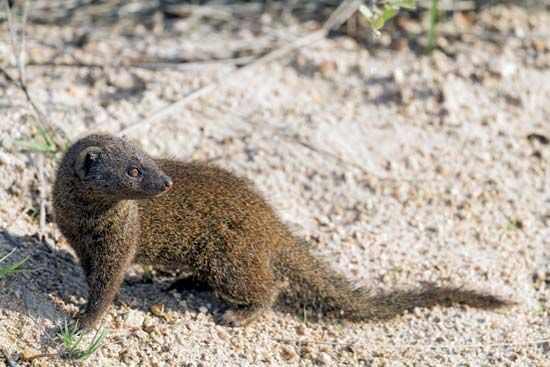
The Virgin Islands National Park is home to approximately 800 plant species, though many are introduced. Common vegetation includes orchids, hibiscus, frangipani, palms, and bay rum, alongside beach-dwelling plants like sea grapes and manchineel. The islands’ fauna includes various tropical birds, such as the ani and bananaquit, as well as lizards like geckos, anoles, and iguanas. The only native land mammal is the bat; notably, the mongoose was introduced by humans and has negatively impacted native populations. Additionally, endangered green and hawksbill sea turtles nest on the islands’ shores.1
How does the climate and geography of the Virgin Islands affect life on the islands?
The climate and geography of the Virgin Islands have profoundly shaped life on the islands, influencing everything from infrastructure to daily survival.
Geographic Impact
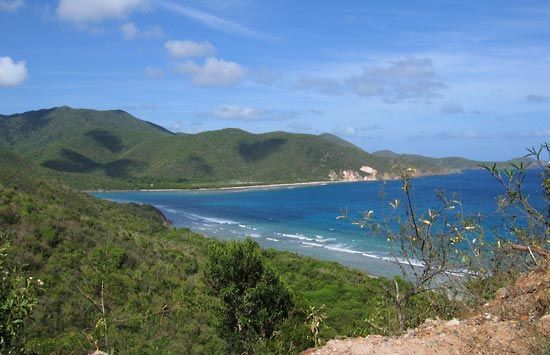
The islands are the peaks of submerged mountains rising from a submarine plateau. Their rugged, hilly terrain—particularly on St. Thomas and St. John—limits the amount of level, tillable land, which has historically influenced settlement patterns and agricultural potential. Conversely, the islands’ coastal geography, featuring sheltered bays and landlocked harbours like those in Charlotte Amalie and Coral Bay, has been vital for maritime activity and trade.24
Climate and Water Management
While the tropical climate is a major asset for the tourist industry, it presents significant challenges. Rainfall is erratic and often insufficient, making water scarcity a serious, ongoing issuewater scarcity](https://www.britannica.com/science/water-supply) a serious, ongoing issue. This has forced residents to become self-reliant:5
- Cisterns and Catchments: Nearly all buildings, both private and public, are equipped with their own water catchments to collect rainwater.65
- Modern Solutions: To meet growing industrial and population needs, the islands utilize saltwater-distillation plants and import water via barges.5
Additionally, the region is subject to periodic droughts and the threat of hurricanes, which occur primarily between August and October. These environmental realities necessitate constant adaptation in infrastructure and resource management.465
What are the Virgin Islands and where are they located in the Caribbean Sea?
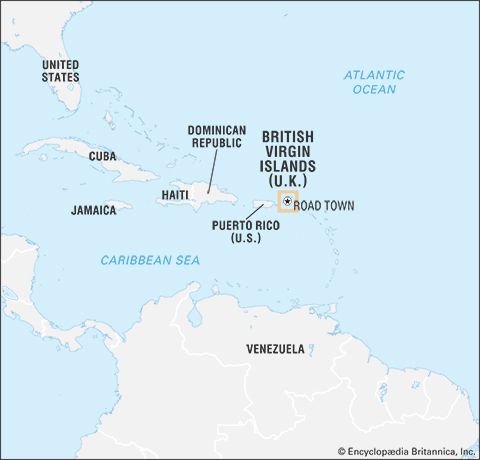
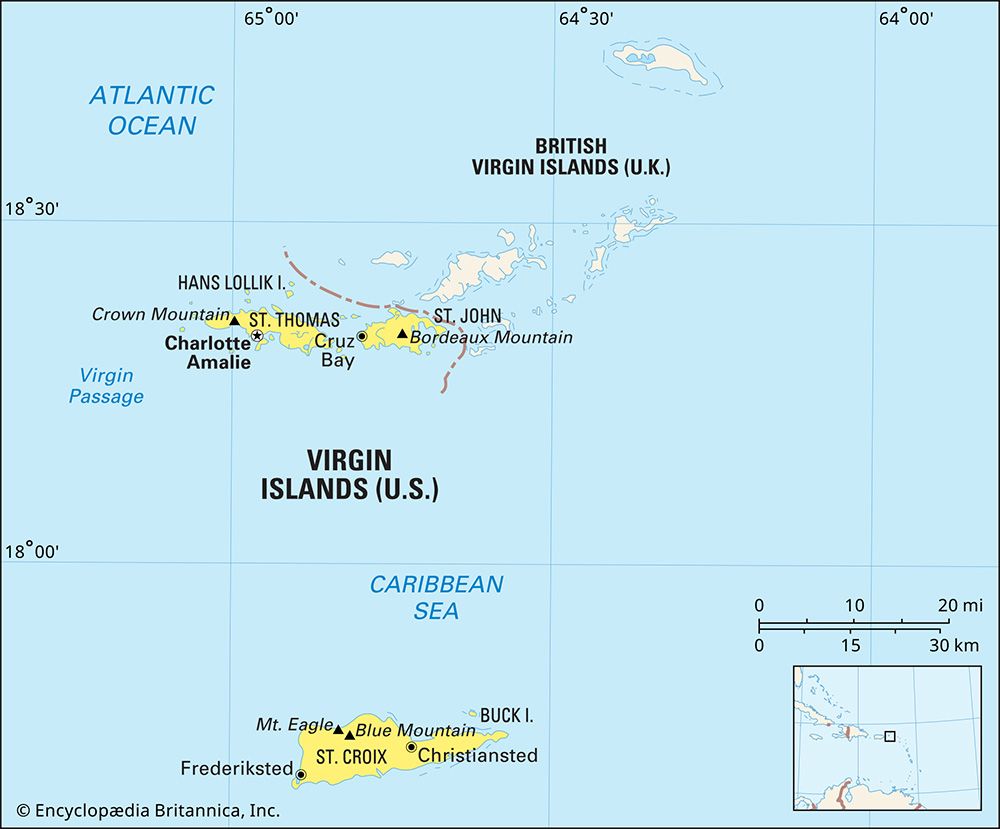
The Virgin Islands are a group of approximately 90 islands, islets, cays, and rocks located in the West Indies, situated about 40 to 50 miles (64 to 80 kilometres) east of Puerto Rico) east of Puerto Rico. They represent the northeastern extremity of the Greater Antilles and are positioned west of the Anegada Passage, a major channel that connects the Atlantic Ocean and the Caribbean Sea.910
The archipelago is divided into two administrative groups:
- British Virgin Islands: A British overseas territory consisting of four larger islands—Tortola, Anegada, Virgin Gorda, and Jost Van Dyke—along with 32 smaller islands and islets.910
- United States Virgin Islands: An unincorporated territory of the United States comprising three larger islands—St. Croix, St. John, and St. Thomas—and approximately 50 smaller islets and cays.98
Geologically, these islands are the peaks of submerged mountains rising from a submarine plateau.8
How has the population and demographics of the Virgin Islands changed over the past century?
Over the past century, the population and demographics of the Virgin Islands have undergone significant shifts driven primarily by migration and economic development.
Population Growth and Migration
The population of the Virgin Islands increased rapidly during the mid- to late 20th century, a trend largely fueled by substantial immigration. Unlike many regions where natural increase is the primary driver, population growth in both the U.S. and British Virgin Islands is heavily influenced by movement from the U.S. mainland, Puerto Rico, and the eastern Caribbean. As of 2026, the estimated population of the U.S. Virgin Islands is 76,900.13714
Demographic Composition
- Ethnic Diversity: The population remains primarily composed of individuals of African descent, reflecting a history of slavery. However, the number of residents of European descent has grown markedly since 1960 due to increased immigration from the United States and Great Britain.715
- Distinct Communities: On St. Thomas, the Chachas—descendants of French Huguenots from Saint-Barthélemy—maintain a distinct, clannish identity as a fisher-farmer community.7
- Language and Culture: While English is the official language, demographics are reflected in linguistic diversity, including the use of Virgin Islands Creole English and Spanish-speaking communities on St. Croix.71315
Sources
- Virgin Islands National Park — Encyclopædia Britannica
- United States Virgin Islands - Land — Encyclopædia Britannica
- Dominica - Plant and animal life — Encyclopædia Britannica
- Virgin Islands - Cultural life — Encyclopædia Britannica
- British Virgin Islands - Climate — Encyclopædia Britannica
- Virgin Islands - Climate — Encyclopædia Britannica
- Virgin Islands - The people of the Virgin Islands — Encyclopædia Britannica
- Virgin Islands - Relief — Encyclopædia Britannica
- Virgin Islands — Encyclopædia Britannica
- Virgin Islands - Settlement and history of the U.S. Virgin Islands — Encyclopædia Britannica
- Virgin Islands - Settlement and history of the British Virgin Islands — Encyclopædia Britannica
- British Virgin Islands — Encyclopædia Britannica
- Virgin Islands (U.S.): Country Facts — Encyclopædia Britannica
- United States Virgin Islands - People — Encyclopædia Britannica
- British Virgin Islands - People — Encyclopædia Britannica
- British Virgin Islands - Economy — Encyclopædia Britannica
Published on · 4 min read