Tetrameristaceae
The Tetrameristaceae family consists of three genera, which collectively include five species:
How many genera and species are included in the Tetrameristaceae family?
The Tetrameristaceae family consists of three genera, which collectively include five species:
These plants are characterized as woody trees and small shrubs, with members like Pelliciera functioning as mangroves in coastal regions, while the other genera are found in Southeast Asia and the Guiana Highlands of Venezuela.1
What are the main characteristics of the Tetrameristaceae plant family?
The Tetrameristaceae family, a member of the Ericales order, consists of woody trees and small shrubs that share several distinct botanical features.1
Key Characteristics
- Floral Structure: Members are defined by flowers that feature glands on the inner surfaces of the sepals, five stamens, and a single ovule within each part of the ovary.1
- Foliage: The plants typically possess spirally arranged leaves with short stalks.1
- Genera Variations:
- Pelliciera: Known as tea mangroves, these evergreen trees feature long, pointed terminal buds and leaves with asymmetrical bases. They produce large flowers and distinctive, sharply pointed, single-seeded fruits.1
- Tetramerista and Pentamerista: These smaller woody plants exhibit leaves with marginal glands and indistinct venation. They produce fleshy fruits that are likely dispersed by animals. Notably, Tetramerista displays glistening dots on the inner surfaces of its petals and sepals.1
How does the Tetrameristaceae family relate to other plant families in its taxonomic order?
Within the Ericales order, the Tetrameristaceae family is categorized as part of the Balsaminaceae group, which also includes the families Balsaminaceae and Marcgraviaceae.2
Molecular studies have identified eight distinct family groupings within the Ericales, an order that contains 22 families in total. While the exact evolutionary relationships between these groups remain somewhat unclear, the placement of Tetrameristaceae within the Balsaminaceae lineage is supported by both morphological and molecular data.2
Historically, the classification of these plants has shifted; for instance, the genus Pelliciera was previously treated as a separate family before being grouped within Tetrameristaceae by the Angiosperm Phylogeny Group (APG) classification systems. As a whole, the Ericales order is considered a basal asterid, characterized by generalized, unspecialized features such as radially symmetric flowers and often fused petals.32
What are the distinctive features of the flowers in the Tetrameristaceae family?
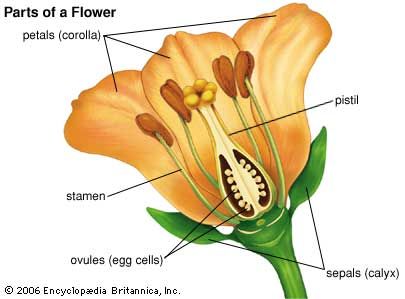
The flowers of the Tetrameristaceae family are defined by several consistent botanical features across its three genera. A primary characteristic is the presence of glands located on the inner surfaces of the sepals. Additionally, these flowers possess exactly five stamens and contain only a single ovule within each part of the ovary.41
Specific variations among the genera include:
- Pelliciera: These plants produce large flowers situated in the axils of the leaves (the point where the leaf stem joins the branch).41
- Tetramerista: The flowers of this genus are notable for having glistening dots on the inner surfaces of both the petals and the sepals.41
These floral traits, combined with the family’s placement within the Ericales order, help distinguish these woody plants from other related groups.42
Sources
- Tetrameristaceae — Encyclopædia Britannica
- Ericales — Encyclopædia Britannica
- Ericales - Ericaceae group — Encyclopædia Britannica
- Ericales - Tetrameristaceae — Encyclopædia Britannica
Published on · 2 min read