Thresher Shark
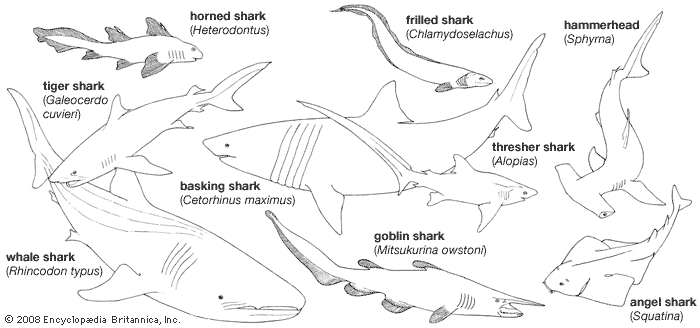
A thresher shark (genus Alopias) is any of three species of sharks in the family Alopiidae, easily recognized by their exceptionally long, scythelike tails…

What is thresher shark?
A thresher shark (genus Alopias) is any of three species of sharks in the family Alopiidae, easily recognized by their exceptionally long, scythelike tails, which can account for nearly half of their total body length. Found in tropical and temperate seas worldwide, these sharks feed on squid and schooling fish. They are known to use their elongated tails to herd prey into tight groups or to stun them, and they may also thrash the water to frighten fish.12
The most well-known species is the long-tailed thresher, or fox shark, which can grow up to 6 meters (20 feet) in length. While they are generally not considered dangerous to humans, their populations have faced significant declines due to commercial fishing and accidental bycatch. Consequently, some species, such as the bigeye thresher, have received legal protections in certain regions to support their conservation.134
How do other shark species hunt their prey?
Sharks employ a variety of hunting strategies tailored to their specific anatomy, diet, and environment. While many species are solitary predators, their methods for locating and capturing prey are highly sophisticated.
Sensory Detection
Sharks primarily locate food using a well-integrated system of senses:
- Smell: Most species have a highly developed sense of olfaction, allowing them to detect minute concentrations of substances like blood from great distances.56
- Electroreception: Sharks use ampullae of Lorenzini to detect the weak electrical signals emitted by living prey, which is often the final sense used before capture.76
- Vibration and Sound: The lateral line system detects water vibrations, while internal ears are sensitive to low-frequency sounds, helping sharks orient toward prey from afar.576
Hunting Techniques
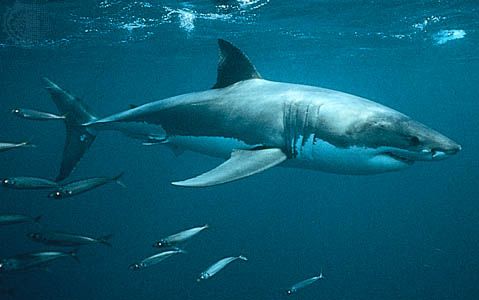
- Ambush: White sharks often hunt by surprise, rushing prey from below to deliver a massive, fatal bite. They may use a “bite and wait” strategy, allowing the prey to weaken before feeding.8
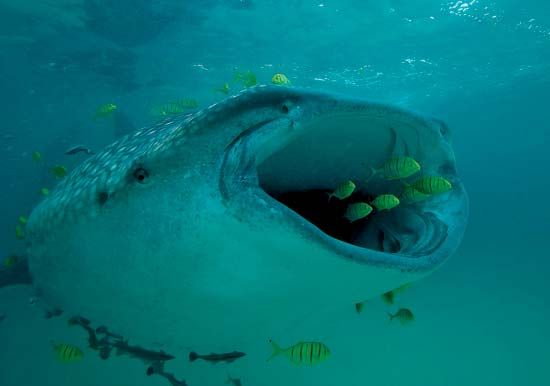
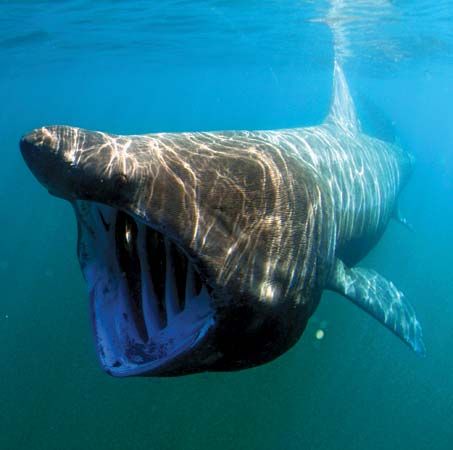
- Filter Feeding: The whale shark, basking shark, and megamouth shark use specialized gill structures to strain plankton and small organisms from the water.59
- Specialized Tools: Saw sharks and sawfishes use their bladelike snouts to slash at and stun prey.5
- Cooperative Herding: As noted previously, thresher sharks use their long tails to herd schooling fish into a concentrated mass.5
Why are some shark species protected from fishing?
Some shark species are protected from fishing primarily to prevent population collapse caused by overexploitation and the practice of shark finning. Because many sharks function as apex predators, their decline can negatively impact the health of entire marine ecosystems.3
Key reasons for these protections include:
- Vulnerability: Many sharks grow slowly and produce few young, making it difficult for their populations to recover once depleted.4
- Commercial Pressures: Sharks are often targeted for their fins, liver oil, and other products. Additionally, millions are killed annually as bycatch—accidental capture in gear meant for other fish.34
- Conservation Status: Numerous species are classified as endangered or threatened due to significant population crashes, such as the oceanic whitetip shark, which has seen its population plummet by nearly 98 percent.311
To address these threats, governments have implemented measures like the Shark Conservation Act and established marine protected areas to restrict fishing in critical habitats.123
What are the differences between the three thresher shark species?
The genus Alopias, commonly known as thresher sharks, consists of three species characterized by their exceptionally long, scythelike tails, which can account for nearly half of their total body length. These sharks are found in tropical and temperate seas worldwide and are known for using their tails to herd or stun schooling fish and squid.15
While the provided search results identify the long-tailed thresher (A. vulpinus)—also called the fox shark—as the best-known species, growing up to 6 meters (20 feet) and inhabiting the Atlantic and eastern Pacific oceans, the specific morphological or behavioral differences between it and the other two unnamed species are not detailed in the available Britannica records.1
Because the provided information does not distinguish between the three species beyond identifying the long-tailed thresher, I cannot provide a comprehensive comparison of all three at this time.
Sources
- thresher shark — Encyclopædia Britannica
- thresher shark — Merriam-Webster
- Off the Hook: 10 Sharks Protected from Fishing in American Waters — Encyclopædia Britannica
- Saving Sharks in the 2020s — Encyclopædia Britannica
- chondrichthyan - Sharks — Encyclopædia Britannica
- shark - Shark behaviour — Encyclopædia Britannica
- chondrichthyan - Senses — Encyclopædia Britannica
- whale shark — Encyclopædia Britannica
- white shark - Feeding habits — Encyclopædia Britannica
- 10 of the World’s Most Dangerous Fish - Great White Shark — Encyclopædia Britannica
- carcharhinid — Encyclopædia Britannica
- white shark - Conservation — Encyclopædia Britannica
- shark - Description and habits — Encyclopædia Britannica
Published on · 3 min read