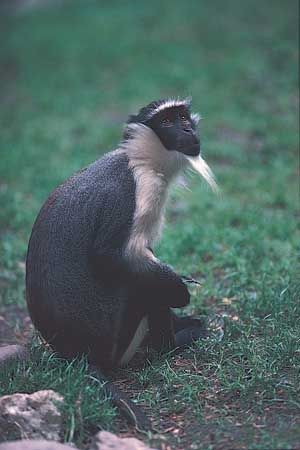
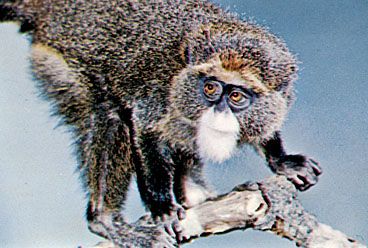
Vervet
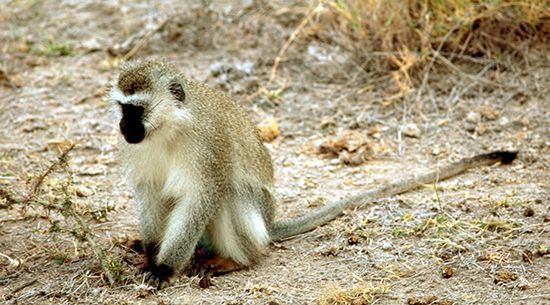
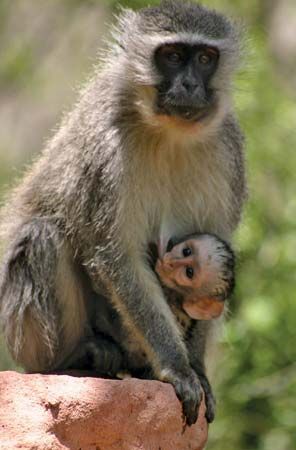
Vervet monkeys live in large social groups, or troops, typically composed of several males and 10 or more females along with their offspring. These societies…
What is the social structure of vervet monkey groups?
Vervet monkeys live in large social groups, or troops, typically composed of several males and 10 or more females along with their offspring. These societies are characterized by a male-dominated structure, though an age-related dominance hierarchy exists among and between members of both sexes.1
The troop is led by a dominant male who restricts the breeding and social interactions of subordinate males. Female members are often related to one another, and through their collective support, they can influence which male holds dominance. Social bonds are reinforced by long-term associations; offspring from different generations remain together for years, and elder females frequently assist their mothers in caring for younger siblings.1
Beyond their hierarchical structure, these monkeys exhibit sophisticated cooperative behaviors, such as cooperative foraging and a complex system of vocalizations used to alert the group to specific predators, which prompts collective defensive responses.1
How do vervet monkeys communicate with each other?
Vervet monkeys communicate using a sophisticated system of vocalizations designed to alert their troop to specific threats. These calls are highly specialized, allowing group members to identify the type of predator and respond with the appropriate survival strategy.1
For example:
- Large Felines: A specific call signals the presence of a predator like a leopard, prompting the group to climb into trees for safety.1
- Birds of Prey: A different call warns of aerial threats, directing the monkeys to hide in dense vegetation.1
- Snakes: A distinct alarm call is used when a snake is spotted in the grass, signaling the troop to swarm and kill the predator.1
Beyond vocal warnings, vervet monkeys also engage in cleaning behaviour, or mutual grooming. This physical interaction serves as a vital social tool, helping to cement bonds between individuals within the group.2
How long do vervet monkeys typically live in the wild versus in captivity?
In the wild, members of both sexes of vervet monkeys rarely live past 10–11 years of age. In contrast, individuals kept in captivity can live significantly longer, with the oldest recorded captive specimens reaching 31 years of age.1
What are the main predators of vervet monkeys?
Vervet monkeys are subject to predation by several large animals in their natural habitats. Their primary predators include:
- Leopards (Panthera pardus): These large felines are a significant threat, often prompting the monkeys to flee into trees for safety.1
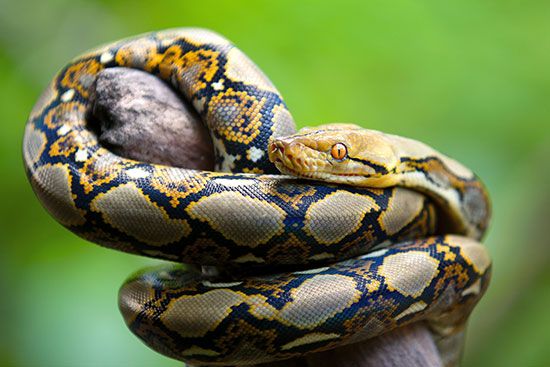
- Pythons: These large snakes are known predators of the monkeys.1
- Birds of prey: Various raptors pose a constant danger from the air, causing the monkeys to seek cover in dense vegetation.1
- Humans: People represent a major threat to these monkeys, both through direct hunting for bushmeat and through conflict with farmers who view them as pests.1
To mitigate these risks, vervet monkeys utilize a sophisticated system of vocalizations that allows them to identify specific threats and coordinate a collective response, such as hiding, climbing, or even mobbing a predator.1
Sources
- vervet — Encyclopædia Britannica
- Cleaning behaviour — Encyclopædia Britannica
- primate - Growth and longevity — Encyclopædia Britannica
- chimpanzee - Natural history — Encyclopædia Britannica
- feline - Natural history — Encyclopædia Britannica
Published on · 2 min read