Wallaroo
A wallaroo is a kangaroo-like marsupial native to Australia, belonging to the genus Macropus within the family Macropodidae. They are closely related to…
What is wallaroo?
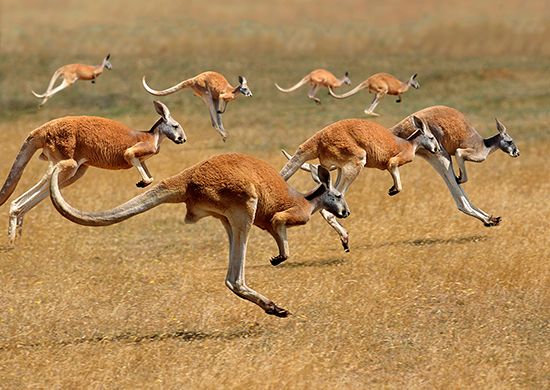
A wallaroo is a kangaroo-like marsupial native to Australia, belonging to the genus Macropus within the family Macropodidae. They are closely related to kangaroos and wallabies, generally appearing smaller and stockier than the larger kangaroo species.123
There are two primary species recognized as wallaroos:
- The wallaroo, or euro (M. robustus): This species inhabits hilly country throughout mainland Australia, excluding the far north. Males are typically black and females are reddish, though coloration can vary.3
- Woodward’s, or black, wallaroo (M. bernardus): A smaller species that replaces the common wallaroo in the far north of Australia.3
Additionally, the antilopine kangaroo (M. antilopinus) is sometimes referred to as the antilopine wallaroo due to its general appearance, though it is more slenderly built. The term “wallaroo” itself originates from the Dharuk language of the Port Jackson area.32
How do wallaroos differ physically from kangaroos and wallabies?
Wallaroos, kangaroos, and wallabies all belong to the family Macropodidae, meaning they share fundamental traits like powerful hind legs for hopping and long, thick tails for balance. However, they differ in size and physical build:31
- Wallaroos: Generally smaller and stockier than the large kangaroo species. They possess a larger rhinarium (the hairless skin on the nose) compared to the red kangaroo. Their coloration often shows sexual dimorphism, with males typically being black and females reddish, though this varies.25
- Kangaroos: These are the largest members of the family. For example, the red kangaroo is the most powerful macropodid, featuring a convex face, longer arms, and a bald patch on the nose. Gray kangaroos are more uniformly colored with haired noses.5
- Wallabies: These are typically middle-sized or small members of the family. While some, like the brush wallabies, are built similarly to large kangaroos, others are much smaller and stockier, such as the scrub wallabies, which have shorter hind limbs and pointy noses.67
What specific habitats do wallaroos prefer in Australia?
Wallaroos are specifically adapted to rugged environments within Australia. Their habitat preferences are as follows:
- Common Wallaroo (Euro): This species (Macropus robustus) is characteristically found in hilly country throughout mainland Australia, with the exception of the far north.1
- Woodward’s (Black) Wallaroo: This smaller species (M. bernardus) occupies the far north of Australia, where it replaces the common wallaroo.1
Unlike some kangaroo species that prefer open plains or lightly forested country, the wallaroo’s preference for hilly and rocky terrain distinguishes its ecological niche within the family Macropodidae.1
What are some other unique marsupials found in Australia?
Australia is home to a diverse array of marsupials that have evolved to fill various ecological niches, often exhibiting striking parallels to placental mammals elsewhere through convergent evolution.9
Beyond the well-known kangaroos and wallabies, other unique Australian marsupials include:
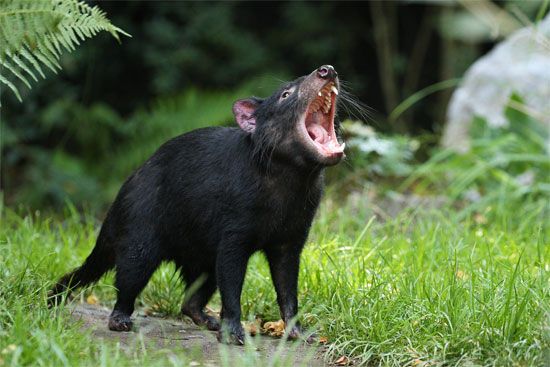
- Tasmanian Devil: A stocky, carnivorous marsupial known for its powerful jaws and scavenging habits. It is the largest living carnivorous marsupial.109
- Wombats: Heavily built, burrowing herbivores with rodentlike teeth that grow continuously. They are known for their thick bones and rearward-opening pouches.11
- Sugar Glider: A small, nocturnal, arboreal possum equipped with a membrane that allows it to make long, gliding leaps between trees.129
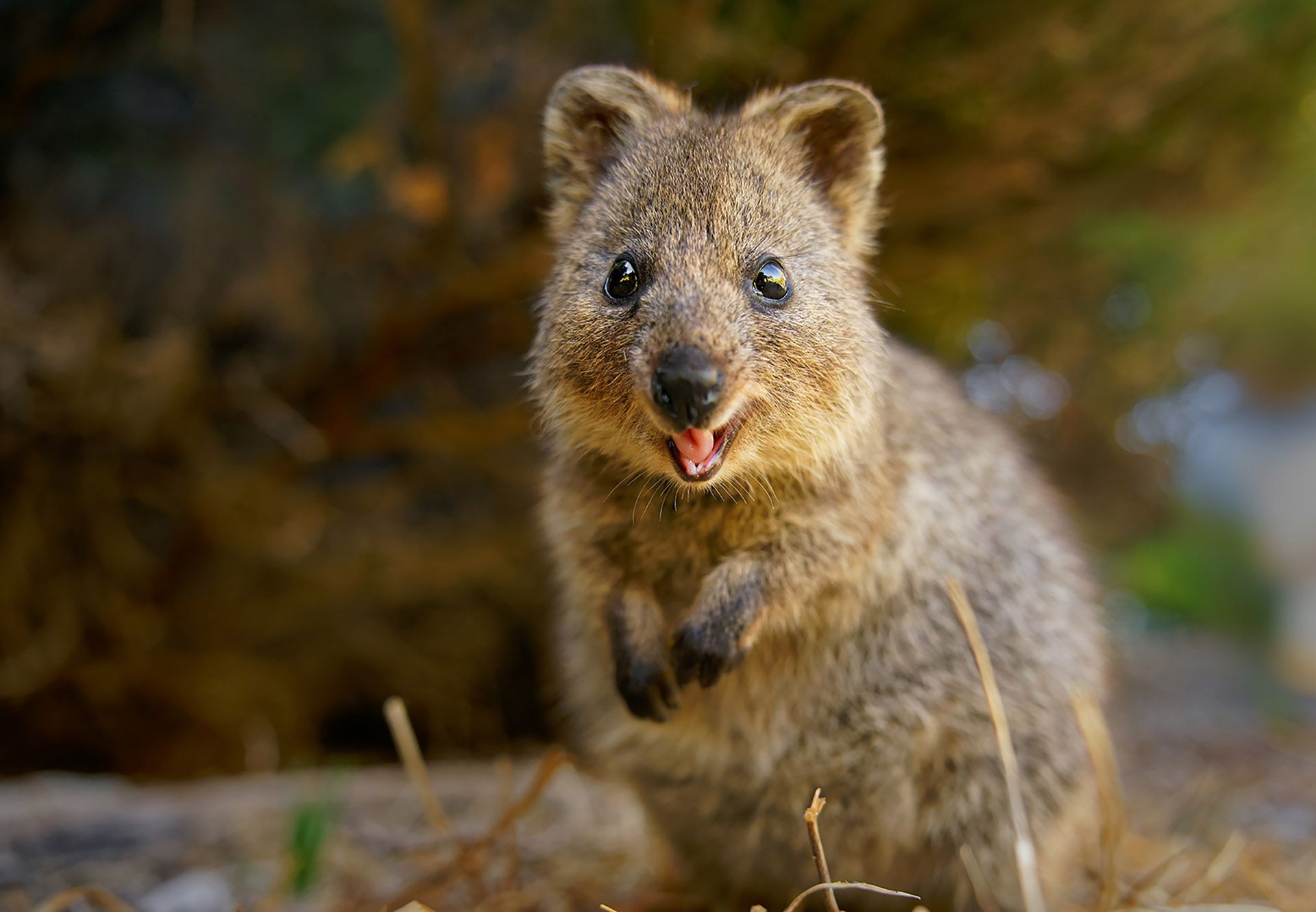
- Quokka: A medium-sized, vulnerable wallaby species found in southwestern Australia, known for its hunched posture and ability to climb trees to access food.13
- Numbat: A specialized marsupial that uses a long, wormlike tongue to feed on termites and ants.9
Sources
- wallaroo — Encyclopædia Britannica
- kangaroo - Descriptions of selected species — Encyclopædia Britannica
- Did you know? — Merriam-Webster
- What do kangaroos eat? — Encyclopædia Britannica
- wallaby — Encyclopædia Britannica
- kangaroo - Common features — Encyclopædia Britannica
- Macropodidae — Merriam-Webster
- kangaroo - Behaviour — Encyclopædia Britannica
- sugar glider — Merriam-Webster
- Tasmanian devil — Encyclopædia Britannica
- marsupial - Paleontology and recent history — Encyclopædia Britannica
- wombat — Encyclopædia Britannica
- marsupial — Encyclopædia Britannica
- quokka — Encyclopædia Britannica
- South Australia - Plant and animal life — Encyclopædia Britannica
Published on · 3 min read