Quokka
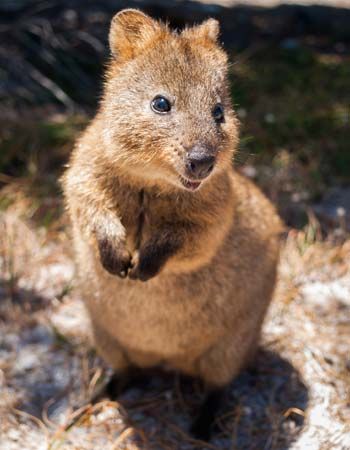
The quokka (Setonix brachyurus) is a medium-sized, stocky marsupial belonging to the kangaroo family, Macropodidae. Native to the scrublands, woodlands, and…
What is quokka?
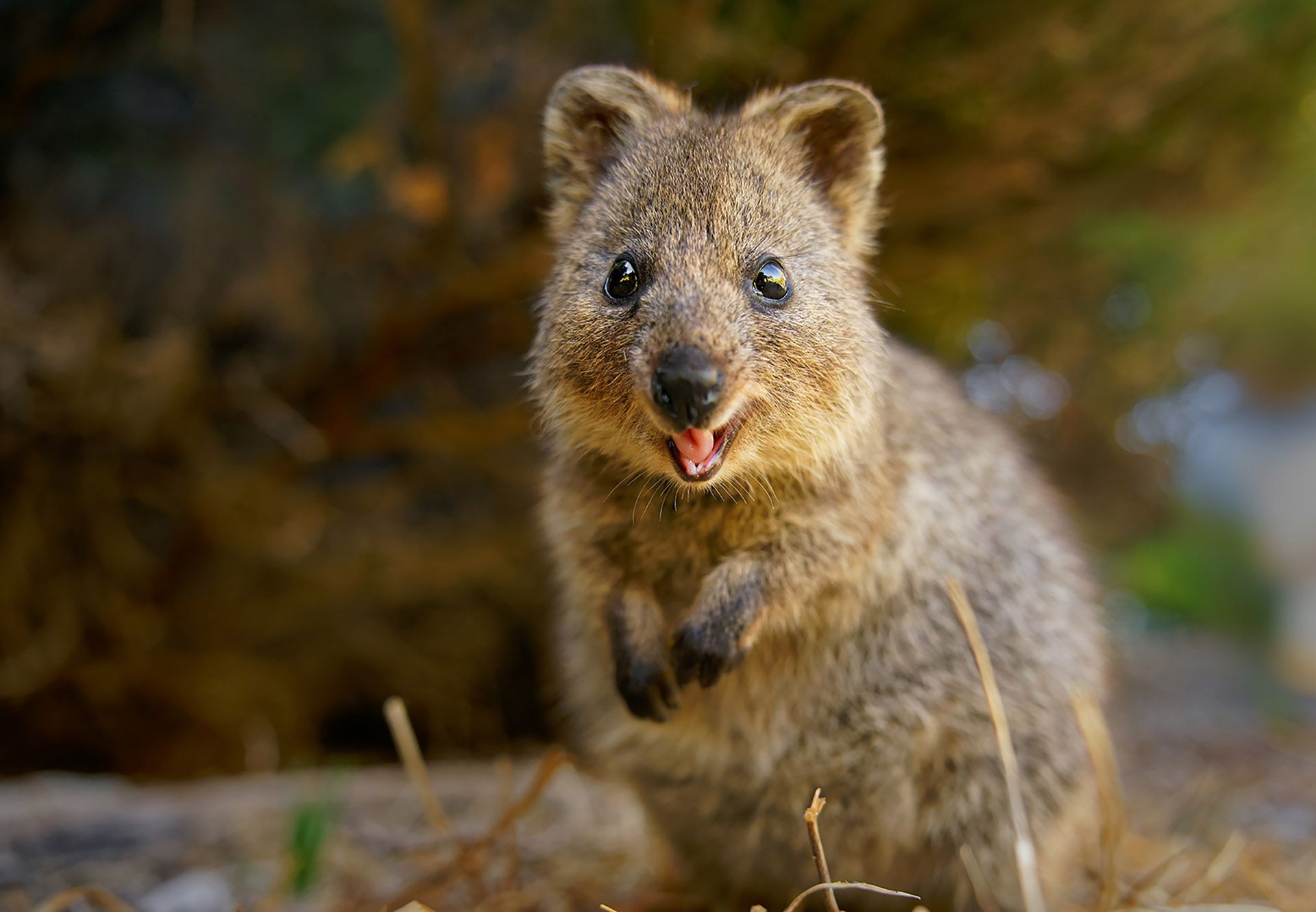
The quokka (Setonix brachyurus) is a medium-sized, stocky marsupial belonging to the kangaroo family, Macropodidae. Native to the scrublands, woodlands, and wetlands of southwestern Western Australia, it is the only species in the genus Setonix.12
Physically, quokkas are distinguished by their brown and gray fur, lighter undersides, short tails, and a characteristic hunched posture. These nocturnal herbivores feed on grasses, leaves, and succulent vegetation. While they primarily forage at ground level, they are capable of climbing trees to access food or evade predators.1
Since 1996, the International Union for Conservation of Nature has listed the quokka as a vulnerable species. Their populations face significant threats from habitat fragmentation, climate change, and predation by invasive species such as feral cats, dogs, and foxes.1
What other types of marsupials live in Australia?
Australia is home to the largest and most diverse population of marsupials in the world, with approximately 200 species inhabiting the continent and its neighboring islands. These animals have adapted to fill a wide variety of ecological niches, often showing striking parallels to placental mammals found elsewhere.3
Major Groups of Australian Marsupials
- Macropodids: This family includes kangaroos, wallabies, tree kangaroos, and the quokka. They are generally characterized by well-developed hind limbs used for hopping.34
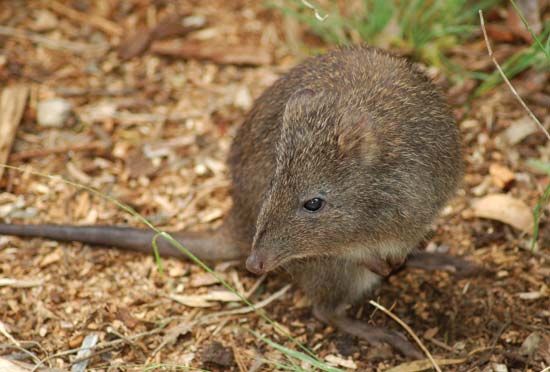
- Rat Kangaroos: Comprising the families Potoroidae and Hypsiprymnodontidae, these rabbit-sized or smaller marsupials include bettongs and potoroos.54
- Possums and Gliders: This diverse group includes the koala, brushtail possums, and various gliders that can soar between trees.36
- Dasyurids: A group of primarily carnivorous marsupials that includes the Tasmanian devil, quolls, and dunnarts.3
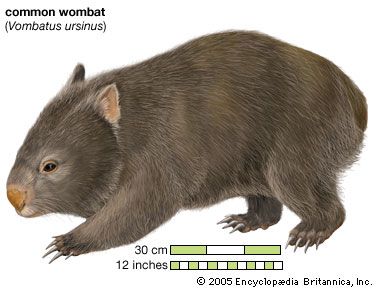
- Other Specialized Marsupials: This category includes the wombat, known for its burrowing habits, the numbat, which feeds on termites, the bilby, and the marsupial mole.36
How do quokkas survive in their environment?
Quokkas survive in their environment through a combination of specialized behaviors and habitat adaptations. As nocturnal herbivores, they forage at ground level for grasses, leaves, and succulent vegetation within their scrubland, woodland, and wetland habitats1. To access food sources or evade predators, they are capable of climbing trees.9
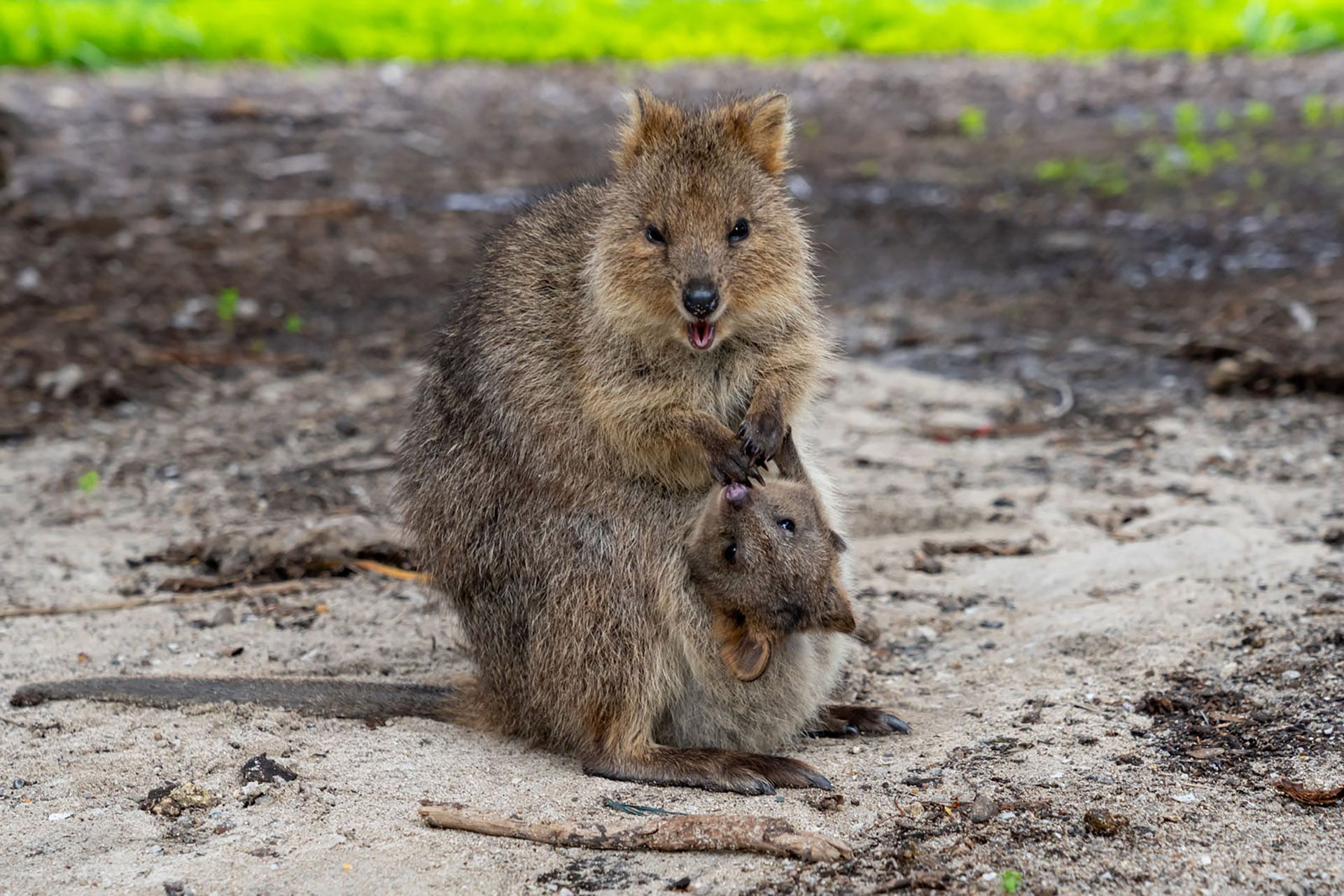
Their survival is also supported by a reproductive strategy that helps maintain population numbers; quokkas are promiscuous, and females can produce one to two offspring per year. Despite these adaptations, the species faces significant survival challenges. They are preyed upon by native animals such as eagles, dingoes, and snakes, as well as invasive species like cats, dogs, and foxes, which pose a major threat on the Australian mainland. Furthermore, habitat fragmentation and climate change have contributed to their status as a vulnerable species.19
What are the main differences between wallabies and kangaroos?
The primary difference between kangaroos and wallabies is size. Both animals belong to the family Macropodidae, but the term “kangaroo” is generally reserved for the largest members of the family, while “wallaby” refers to the small- to medium-sized species.1011
Key distinctions include:
- Size and Build: Kangaroos are the largest macropodids, with some species like the red kangaroo standing up to 2 metres tall. Wallabies are significantly smaller; for example, brush wallabies typically have a head and body length of 45 to 105 cm.1211
- Dietary Habits: While both are herbivores, larger kangaroos are primarily grazers that feed on grass in open plains. Wallabies tend to be more selective, often focusing on browsing leaves and shrubs rather than grazing on grass.127
- Classification: “Kangaroo” specifically refers to the eastern gray, western gray, and red kangaroos, as well as the wallaroo. Wallabies encompass a wider variety of smaller species, including rock wallabies, nail-tailed wallabies, and hare wallabies, each adapted to specific environments like rocky terrain or brushlands.1011
Sources
- quokka — Encyclopædia Britannica
- quokka — Merriam-Webster
- marsupial — Encyclopædia Britannica
- marsupial - Paleontology and recent history — Encyclopædia Britannica
- rat kangaroo — Encyclopædia Britannica
- Australia - Animal life — Encyclopædia Britannica
- wallaby — Encyclopædia Britannica
- kangaroo — Encyclopædia Britannica
- quokka: Top Questions — Encyclopædia Britannica
- kangaroo - Descriptions of selected species — Encyclopædia Britannica
- Did you know? — Merriam-Webster
- kangaroo - Behaviour — Encyclopædia Britannica
- What do kangaroos eat? — Encyclopædia Britannica
Published on · 3 min read