West Siberian Plain
The West Siberian Plain is a vast region of the Earth's crust characterized by prolonged subsidence. Geologically, it is composed of horizontal deposits that…
How was the West Siberian Plain formed geologically?
The West Siberian Plain is a vast region of the Earth’s crust characterized by prolonged subsidence. Geologically, it is composed of horizontal deposits that have accumulated over the last 65 million years.1
The structure of the plain consists of Cenozoic sediments layered over significant thicknesses of Mesozoic material and folded bedrock. The formation of the region’s surface features varies by location:2
- Northern Region: This area was subjected to multiple periods of glaciation during the Quaternary Period, which spans the last 2.6 million years.2
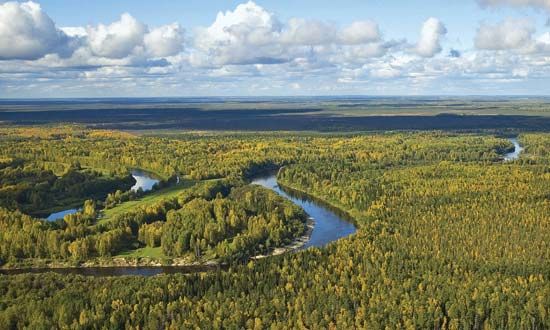
- Southern Region: The landscape here is dominated by glaciofluvial and fluvial deposits. While glacial activity left behind occasional low hills and ridges as far south as the Ob-Irtysh confluence, the plain remains exceptionally flat and featureless with poor drainage.21
The region is notable for its stability, as the absence of significant seismic activity and its subdued relief indicate a lack of active tectonism. Additionally, the lowland is underlain by extensive oil and natural gas deposits.31
How does the permafrost in the northern part of the West Siberian Plain affect the region’s ecology and human activities?
Permafrost in the northern West Siberian Plain significantly shapes both the natural environment and human development.
Ecological Impact
Thawing permafrost triggers a dangerous positive feedback loop. As the ground warms, it releases methane—a potent greenhouse gas—from decomposing organic matter, which further accelerates global temperature increases and subsequent thawing. This process also mobilizes heavy metals and toxic pollutants previously trapped in the ice. When transported by meltwater into rivers, these substances increase water pH and cause severe declines in fish and insect populations, damaging aquatic ecosystems.4
Human Activities and Engineering
Permafrost poses substantial challenges to infrastructure and industry:
- Construction: Thawing ice-rich ground leads to surface subsidence, threatening roads, buildings, and pipelines. Engineers must use specialized techniques, such as elevating structures on piles or using thermal devices to maintain ground stability.56
- Agriculture: Thawing can destroy cultivated fields, often forcing the abandonment of land or its conversion to pasture.7
- Resource Extraction: Planning for petroleum exploration and pipeline maintenance requires precise knowledge of permafrost distribution to prevent structural failure caused by heat transfer or frost heaving.86
What are the geographical boundaries and size of the West Siberian Plain?
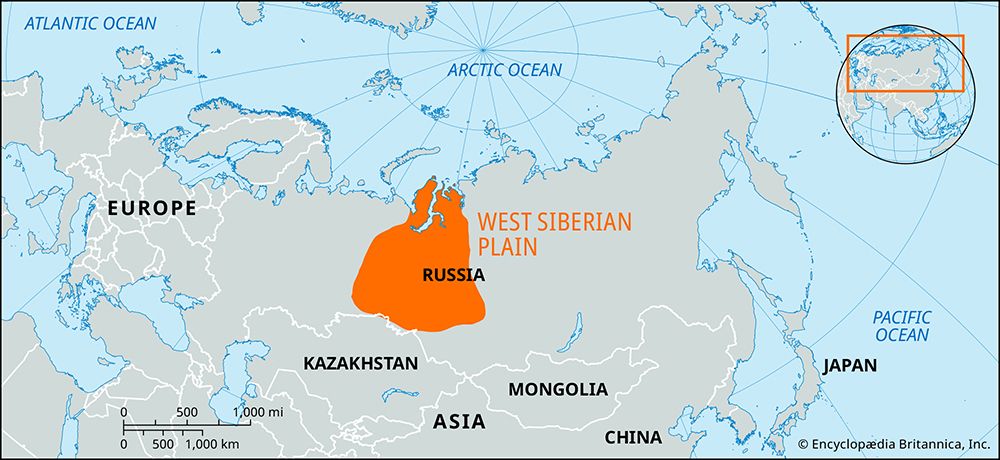
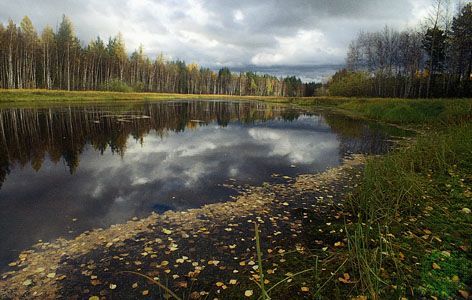
The West Siberian Plain is one of the world’s largest continuous flatlands, covering an area of approximately 1,200,000 square miles (3,000,000 square km) in central Russia.1
Its geographical boundaries are defined as follows:
- West: The Ural Mountains1
- East: The Yenisey River valley1
- North: The Kara Sea1
- South: The Torghay Plateau, the Kazakh Uplands, and the Altai Mountains1
The region is characterized by its exceptionally flat terrain and is primarily drained by the Ob and Irtysh rivers.1
What role does the West Siberian Plain play in Russia’s economy?
The West Siberian Plain is a cornerstone of the Russian economy, primarily serving as the nation’s most vital energy hub. Its role is defined by several key sectors:
Energy Production
The region is the most important source of crude oil and natural gas in Russia, with the fields underlying its northern taiga and tundra zones contributing approximately two-thirds of the country’s total output. Extensive pipeline networks connect these production sites to domestic industrial centers and international markets across Europe.19
Industrial and Manufacturing Centers
Major cities located within or on the periphery of the plain, such as Omsk, Novosibirsk, and Barnaul, serve as significant hubs for manufacturing and industry. These cities are linked by critical infrastructure, including the Trans-Siberian Railroad, which facilitates the movement of goods.1
Agriculture and Hydroelectricity
- Agriculture: The southern steppe zone of the Ob basin is a major producer of spring wheat, playing a key role in Russia’s agricultural output.1
- Hydroelectricity: The region possesses immense hydroelectric potential. Large power stations, such as the one at Novosibirsk, utilize the Ob and Irtysh rivers to generate electricity, which is often transmitted to the European region of Russia.19
Sources
- West Siberian Plain — Encyclopædia Britannica
- Asia - North Asia — Encyclopædia Britannica
- Asia - Cenozoic events in Stable Asia — Encyclopædia Britannica
- permafrost - General issues — Encyclopædia Britannica
- permafrost - Agriculture — Encyclopædia Britannica
- permafrost - Climatic change — Encyclopædia Britannica
- permafrost - Offshore structures — Encyclopædia Britannica
- permafrost - Structures on piles — Encyclopædia Britannica
- Ob River - Economy — Encyclopædia Britannica
- Russia - Agriculture — Encyclopædia Britannica
- Asia - Petroleum and natural gas — Encyclopædia Britannica
- Russia - Resources and power — Encyclopædia Britannica
- Siberia — Encyclopædia Britannica
- Volga-Ural Petroleum and Gas Province — Encyclopædia Britannica
Published on · 3 min read