Wheatear
A wheatear (genus Oenanthe) is a group of approximately 20 species of thrushes belonging to the family Muscicapidae, though some classifications place them…
What is Wheatear?
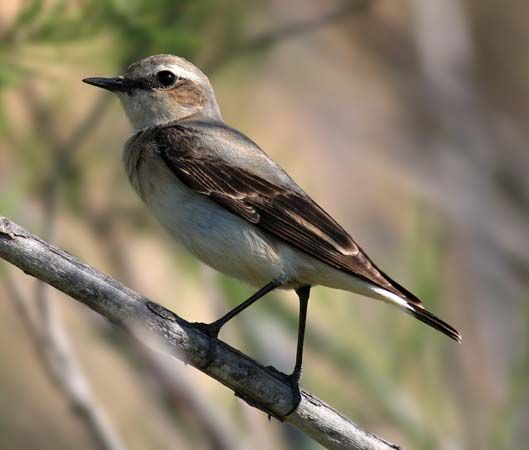
A wheatear (genus Oenanthe) is a group of approximately 20 species of thrushes belonging to the family Muscicapidae, though some classifications place them in Turdidae.1
These birds are typically 15 cm (6 inches) long and are known for their pied plumage, body-bobbing, and tail-wagging habits. Most species feature black, white, or gray coloration, often with a distinctive white rear—the source of the name “wheatear”—and T-shaped tail markings.1
Wheatears are strong-flying residents of open, rocky regions across Eurasia and Africa. The common wheatear is particularly notable for its extensive range, breeding in Alaska, Iceland, Greenland, and northeastern Canada. These birds are migratory, with some populations traveling annually from the Western Hemisphere to winter in warmer regions of Asia and Africa.12
How do birds navigate during long-distance migration?
Birds navigate during long-distance migration using a combination of celestial cues, magnetic sensitivity, and, for shorter distances, familiar landmarks. Their ability to orient themselves is categorized into two types: compass orientation (maintaining a constant direction) and true navigation (goal orientation toward a specific location).3
Celestial Navigation
Birds utilize celestial bearings to determine their position. During the day, they use the Sun as a compass, compensating for its movement across the sky using an internal clock. Theories suggest they may gauge the Sun’s horizontal angle or its arc to determine latitude and longitude. Migrants traveling at night rely on stars, using the arrangement of the night sky to maintain their bearings.3
Magnetic and Topographical Cues
Birds are believed to possess a sensitivity to both the intensity and direction of the Earth’s magnetic field, which acts as a navigational aid. Additionally, birds use landmarks such as mountain ranges, coastlines, and vegetation zones to orient themselves, particularly when returning to specific breeding sites.34
What are the main differences between thrushes and other bird families?
Thrushes, belonging to the family Turdidae, are distinguished from other songbird families by several specific physical and developmental traits.
Key Characteristics of Thrushes
- Leg Structure: A primary diagnostic feature of true thrushes is the “booted” tarsus, where the lower leg is covered in front by a single long scale rather than multiple smaller ones.6
- Plumage and Molt: Young thrushes typically exhibit spotted plumage in their first year, and the species undergo a single annual molt.6
- Physical Build: They are generally characterized by slender bills and stout legs. While they are not typically brightly colored, many species feature patches of red, yellow, or blue on otherwise plain plumage.76
- Nesting: Most thrushes construct open, cup-shaped nests, though some chat-thrushes may occupy cavities.6
Distinctions from Related Families
Thrushes are closely related to Old World warblers and flycatchers, with which they share evolutionary links. Unlike many flycatchers, which are specialized for capturing insects on the wing, thrushes are more varied in their foraging, consuming insects, fruit, and occasionally earthworms or snails.68
Why do some birds choose to migrate while others stay in one region?
The decision for a bird to migrate or remain sedentary is primarily driven by the need to exploit fluctuating food resources and survive seasonal changes in productivity.10
Why Some Birds Migrate
Migration allows birds to inhabit regions where food is abundant during specific seasons, such as the Arctic tundra during summer, while avoiding the scarcity of winter. This behavior is an evolutionary adaptation; natural selection favored populations that moved to more favorable conditions rather than perishing during harsh weather. Migrants often travel to areas where they can maximize survival for their young, such as nesting in the Arctic to take advantage of high food production and lower predator densities.101112
Why Some Birds Stay
Conversely, many species are sedentary because their local environment provides sufficient resources year-round, or they have adapted to survive local conditions. Sedentary behavior is common in regions where productivity remains relatively constant.1210
Physiological and Environmental Triggers
Migration is governed by a complex interplay of:
- Internal Rhythms: The pituitary gland prepares birds for migration by regulating hormones that control fat accumulation and metabolic changes.132
- Environmental Cues: While internal cycles prepare the bird, external factors like day length, temperature, and food availability initiate the actual departure.132
Sources
- Wheatear — Encyclopædia Britannica
- Migration - Origin and evolution of migration — Encyclopædia Britannica
- Migration - Birds — Encyclopædia Britannica
- Migration - Navigation and orientation — Encyclopædia Britannica
- Migration - Other animals — Encyclopædia Britannica
- Thrush — Encyclopædia Britannica
- Turdidae — Encyclopædia Britannica
- Ground thrush — Encyclopædia Britannica
- Flycatcher — Encyclopædia Britannica
- Migration - Physiological stimulus of migration — Encyclopædia Britannica
- Migration - Ecological significance of migration — Encyclopædia Britannica
- Migration - In Europe — Encyclopædia Britannica
- How do birds know when to fly south? — Encyclopædia Britannica
Published on · 3 min read