Whinchat
The whinchat (Saxicola rubetra) is a small Eurasian thrush belonging to the chat-thrush group within the family Turdidae. Measuring approximately 13…
What is Whinchat?
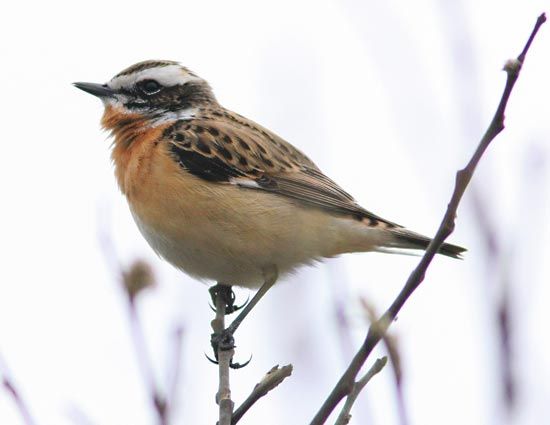
The whinchat (Saxicola rubetra) is a small Eurasian thrush belonging to the chat-thrush group within the family Turdidae. Measuring approximately 13 centimeters (5 inches) in length, this bird is characterized by its brown-streaked upper plumage and buff-colored underparts, accented by distinctive white patches on its eyebrows, wings, and tail.12
The species derives its name from its preferred habitat: swampy meadows known in England as “whins”. It is known for its flycatcher-like behavior and a brief, metallic song. As a member of the order Passeriformes, it is typically found in grassy meadow environments.12
What are some other birds in the chat-thrush family?
The chat-thrush group, often classified as the subfamily Saxicolinae, includes approximately 190 species within the Turdidae family. These birds are generally smaller, more colorful, and have more slender legs than typical thrushes.3
Notable birds within this diverse group include:
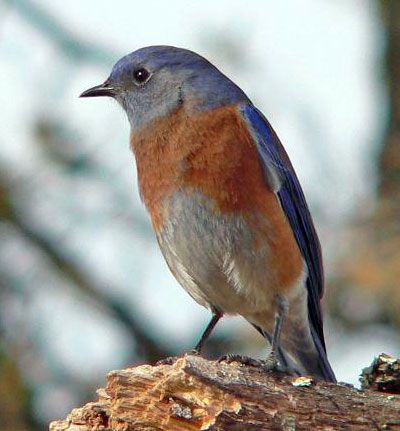
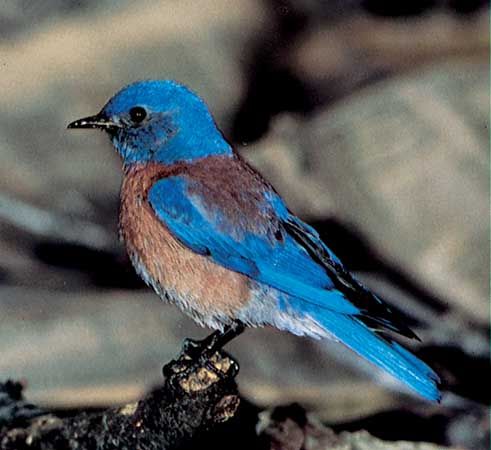
- Bluebird
- Bluethroat
- Forktail
- Magpie-robin
- Nightingale
- Redstart
- Robin
- Wheatear
- Stonechat
Many of these species are known for their habit of flicking their wings and tails, and some exhibit behaviors similar to flycatchers or warblers. While they are found globally, they are most prevalent in tropical regions, particularly in Africa.3
How do migratory patterns affect the whinchat?
While the provided search results do not detail specific migratory patterns for the whinchat, they explain that migration in birds is a complex physiological process governed by internal rhythms and environmental factors.2
Like other migratory species, the whinchat’s life cycle is influenced by the pituitary gland, which responds to changes in day length to prepare the bird for travel. This preparation includes metabolic shifts, such as the deposition of fat in body tissues to provide energy for flight. While internal cycles prepare the bird, actual departure is often triggered by ecological conditions, including food availability, temperature, and weather patterns.2
Migration is an evolutionary adaptation shaped by natural selection, allowing birds to exploit favorable breeding grounds while retreating from seasonal food shortages or harsh weather. Because the whinchat is a member of the chat-thrush group, it likely follows these established biological and environmental triggers to navigate its annual cycle.672
What does it mean for a bird to have flycatcher-like habits?
To have “flycatcher-like” habits refers to a specific method of insect hunting known as “hawking.” Birds that exhibit this behavior typically wait on a perch and then dart out rapidly to seize insects while in flight.8910
This feeding strategy is characteristic of both the Old World flycatchers (family Muscicapidae) and the New World tyrant flycatchers (family Tyrannidae). Beyond the act of hawking, birds with these habits often share specific physical adaptations that aid in capturing prey on the wing:810
- Bill Structure: Their bills are typically broad, flattened, and slightly hooked, which helps in grasping insects.10
- Sensory Bristles: Many possess bristles at the base of the bill, which are believed to assist in the capture of insects.10
- Perching Behavior: Arboreal species that utilize this method often have relatively weak legs and feet, and they frequently maintain an upright posture while waiting on their perch.10
While this behavior is a defining trait for many flycatchers, it is a specialized adaptation that allows these birds to efficiently exploit aerial insect populations.910
Sources
- whinchat — Merriam-Webster
- Whinchat — Encyclopædia Britannica
- Chat-thrush — Encyclopædia Britannica
- Turdidae — Encyclopædia Britannica
- Saxicola — Merriam-Webster
- Migration - Physiological stimulus of migration — Encyclopædia Britannica
- Migration - Origin and evolution of migration — Encyclopædia Britannica
- Flycatcher — Encyclopædia Britannica
- Passeriform - Size range and structural diversity — Encyclopædia Britannica
- Tyrant flycatcher — Encyclopædia Britannica
- Bird - Feeding habits — Encyclopædia Britannica
- Feeding behaviour - Types of food procurement — Encyclopædia Britannica
Published on · 2 min read