Why Are Bloodhounds Used as Police Dogs?
Bloodhounds are highly valued in police work primarily due to their extraordinary sense of smell. They possess between 230 million and 300 million scent…
Why are bloodhounds used as police dogs?
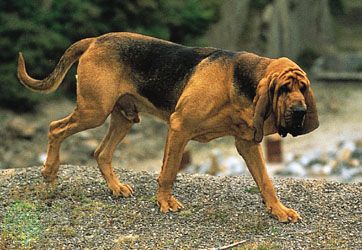
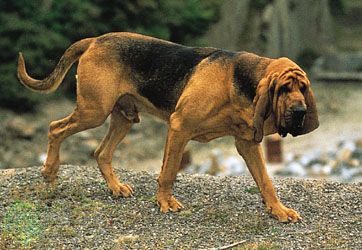
Bloodhounds are highly valued in police work primarily due to their extraordinary sense of smell. They possess between 230 million and 300 million scent receptors—roughly 40 times more than humans—which is the highest count of any dog breed. This olfactory power allows them to track scents across vast distances and difficult terrain with remarkable accuracy.12
Their physical anatomy further supports this capability; their long ears and loose facial skin help stir up, trap, and hold scent particles close to their nose. Beyond their physical traits, Bloodhounds are known for being relentless and focused trackers that are difficult to distract once they are on a trail. Their calm, deliberate temperament makes them well-suited for the methodical nature of law enforcement and search-and-rescue operations. Their tracking precision is so well-regarded that they were the first animal whose evidence was deemed admissible in U.S. courts.12
How do a dog’s scent receptors compare to those of other animals?
A dog’s sense of smell is significantly more acute than that of many other animals, a difference rooted in the size of their olfactory epithelium and the number of olfactory receptor cells they possess.3
While humans have roughly 10 to 40 million olfactory receptor cells, some dogs have as many as 1 billion, and their olfactory epithelium can cover an area of approximately 170 cm², compared to just 5–10 cm² in humans. Other animals show even less development in this area; for instance, oxen have fewer than 30 million receptor cells and an epithelial area of only 1–4 cm².3
The processing power of these receptors is further enhanced by the olfactory bulb, which contains structures called glomeruli that converge signals from receptor cells to maximize sensitivity. Dogs possess up to 5,000 glomeruli, significantly more than the 2,000 found in rabbits or the 1,800 in mice. This high degree of convergence allows dogs to detect chemicals at extremely low concentrations, far surpassing the capabilities of many other terrestrial vertebrates.34
What other dog breeds are commonly used for search and rescue?
Beyond the Bloodhound, several other breeds are frequently utilized for search and rescue operations due to their intelligence, stamina, and physical capabilities.
Commonly used breeds include:
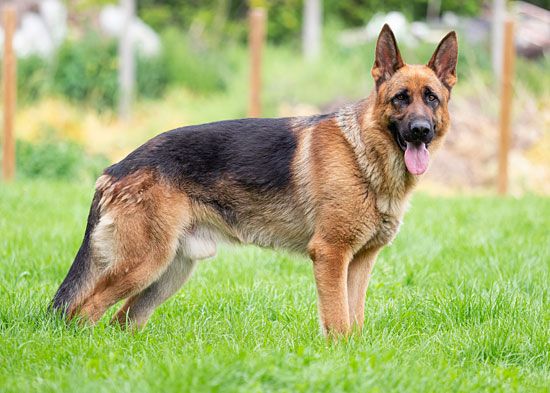
- German Shepherd: Highly valued for their alertness and trainability, they are frequently employed by police and military forces for tracking, search and rescue, and detection work.10
- St. Bernard: Historically renowned as a pathfinder and rescue dog, this breed is well-suited for challenging environments.11
- Newfoundland: Noted for its lifesaving abilities, particularly in water rescue, thanks to its webbed feet and water-resistant coat.11
- Bernese Mountain Dog: Originally bred for hauling and draft work, this breed is also recognized for its role in rescue operations.1211
- Siberian Husky, Alaskan Malamute, and Samoyed: These breeds, often associated with sledding and hauling, are also included among those used for rescue tasks.11
- Portuguese Water Dog: Another breed categorized within the working group for its rescue capabilities.1211
How does the history of the St. Hubert Hound influence modern dog breeding?
The history of the St. Hubert Hound, developed by monks in 8th- and 9th-century Belgium, serves as a foundational model for modern dog breeding. Often cited as one of history’s earliest organized breeding programs, the monks at the Saint Hubert Monastery selectively refined these large scent hounds to honor their patron saint, St. Hubert, the patron saint of hunters.2
This legacy influences modern breeding in several key ways:
- Standardization: The practice of refining the breed for specific traits—such as scenting ability and physical endurance—established the concept of the breed standard. This tradition continued into the 19th century, when breeders like Edwin Brough helped formalize the Bloodhound standard in the United States.2
- Functional Heritage: The St. Hubert Hound is widely considered the ancestor from which most modern scent-hunting hounds derive. Its historical reputation for relentless tracking remains the benchmark for contemporary working dogs used in law enforcement and search-and-rescue operations.2
- Aristocratic Lineage: The breed’s historical status as a tribute to royalty solidified its reputation as a distinguished, high-value animal, a perception that continues to shape the prestige associated with purebred lineage today.2
Sources
- Why are bloodhounds used as police dogs? — Encyclopædia Britannica
- Bloodhound — Encyclopædia Britannica
- dog - Senses — Encyclopædia Britannica
- Why do dogs have wet noses? — Encyclopædia Britannica
- Chemoreception - Terrestrial vertebrates — Encyclopædia Britannica
- 7 Questions About Mammals Answered — Encyclopædia Britannica
- olfactory receptor — Encyclopædia Britannica
- Chemoreception - Smell — Encyclopædia Britannica
- olfactory bulb — Encyclopædia Britannica
- Why are German shepherds police dogs? — Encyclopædia Britannica
- Belgian Malinois — Encyclopædia Britannica
- working dog — Encyclopædia Britannica
- dog - Working dogs — Encyclopædia Britannica
- German Shepherd — Encyclopædia Britannica
Published on · 3 min read