Why Are Reptiles Cold-blooded?
Reptiles are considered cold-blooded, or ectothermic, because they do not generate their own internal body heat like mammals or birds do. Instead, their body…
Why are reptiles cold-blooded?
Reptiles are considered cold-blooded, or ectothermic, because they do not generate their own internal body heat like mammals or birds do. Instead, their body temperature fluctuates in direct relation to their environment.1234
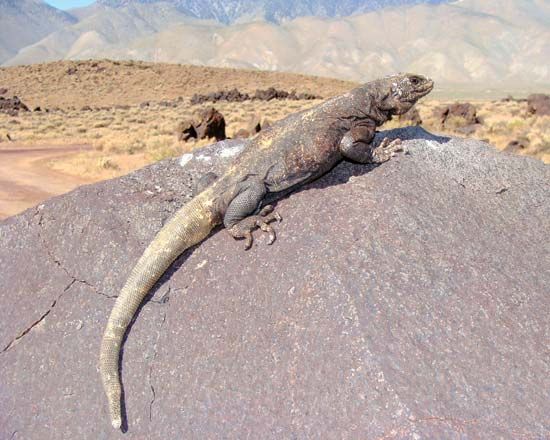
Because they rely on external sources for warmth, reptiles utilize behavioral thermoregulation to maintain optimal temperatures. This includes moving between sun and shade, basking on warm surfaces, or adjusting their body posture to control heat absorption and loss.14
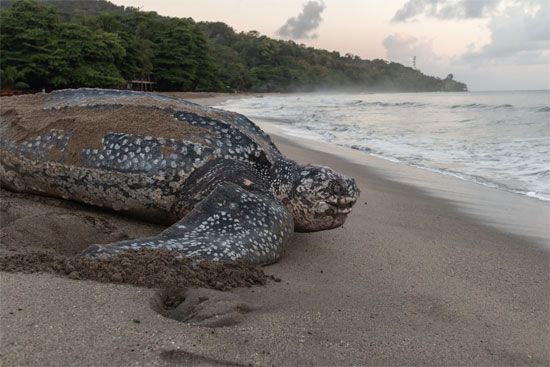
This physiological strategy is highly energy-efficient. By not burning calories to produce internal heat, reptiles maintain a lower metabolic rate and require less food than warm-blooded animals of a similar size. This adaptation allows them to survive in environments where food resources may be scarce. While most modern reptiles are ectothermic, it is worth noting that the leatherback sea turtle is a notable exception with a near-endothermic physiology.12
What are the main differences between ectotherms and endotherms?
The primary distinction between ectotherms and endotherms lies in how they regulate their body temperature and generate heat. While the terms “cold-blooded” and “warm-blooded” are often used, they are imprecise; scientists prefer these more accurate physiological classifications.15
Key Differences
Feature
Ectotherms
Endotherms
Heat Source
Rely on external sources (sun, heated surfaces)
Generate heat internally via metabolism
Metabolic Rate
Generally low
High
Energy Needs
Low; energy-efficient
High; requires frequent food intake
Temperature Stability
Fluctuates with the environment
Remains relatively constant
Activity Levels
Limited by external temperatures
Can remain active in cold environments
Physiological Strategies
- Ectotherms: These animals, including reptiles, amphibians, and most fishes, use behavioral thermoregulation—such as basking or seeking shade—to manage their temperature. In extreme conditions, they may use biochemical adaptations like cryoprotectants to prevent freezing7.619
- Endotherms: Primarily birds and mammals, these animals use internal sensors to trigger heat-production (like shivering) or heat-loss (like sweating or panting) mechanisms. While metabolically expensive, this allows them to maintain independence from external environmental temperatures.175
How do reptiles survive in very cold climates?
Reptiles survive in cold climates primarily by utilizing brumation, a state of winter dormancy similar to hibernation in mammals. Because they are ectothermic, they cannot generate their own body heat and must rely on external environments to avoid freezing.107
Strategies for Survival
- Seeking Refuges: To survive, reptiles must find locations where the temperature remains above freezing. The most common niche is underground, at a depth where the soil provides insulation against the minimum surface temperature.10
- Brumation: During this period of torpor, a reptile’s metabolic activity decreases significantly, its heartbeat slows, and its breathing rate drops. Unlike true hibernation, brumating reptiles may stir occasionally to drink water, though they often go months without food, relying on stored fat reserves.1017
- Communal Denning: Because suitable frost-free sites are limited, many reptiles—sometimes over 100 individuals—will share the same winter den to conserve heat and space.10
- Biochemical Adaptations: Some species can alter their body chemistry to prevent the formation of ice crystals in their cells and tissues. This often involves the use of cryoprotectants, such as sugars or salts, which lower the freezing point of body fluids.11
Despite these adaptations, the distribution of reptiles is strictly limited by temperature. They cannot survive in regions where the subsoil is permanently frozen, and they require sufficiently long summers to complete their life cycles.1012
Why do some reptiles like leatherback sea turtles have near-endothermic traits?
The leatherback sea turtle (Dermochelys coriacea) is unique among modern reptiles for possessing a near-endothermic physiology, which allows it to thrive in colder waters than other sea turtles.153
Rather than relying solely on external heat sources like typical ectotherms, the leatherback utilizes several specialized adaptations to produce and maintain body heat:
- Large Body Size: Its massive size—reaching up to 900 kg—helps the turtle retain heat more effectively, a phenomenon known as gigantothermy.15
- Insulation: A thick layer of fat beneath its leathery skin provides essential insulation against cold ocean temperatures.15
- Vascular Heat Exchange: The turtle possesses a specialized network of blood vessels that acts as a heat exchanger. This system transfers heat produced in the limbs to the blood in the veins before it returns to the heart, effectively warming the blood and maintaining core temperature.15
These adaptations allow the leatherback to remain active in diverse marine environments, ranging from tropical nesting beaches to cold, high-latitude feeding grounds.15
Sources
- Why are reptiles cold-blooded? — Encyclopædia Britannica
- Cold-bloodedness — Encyclopædia Britannica
- reptile — Encyclopædia Britannica
- Thermoreception - Environment and thermoreception — Encyclopædia Britannica
- dinosaur - Ectothermy and endothermy — Encyclopædia Britannica
- dinosaur - Clues to dinosaurian metabolism — Encyclopædia Britannica
- Ectotherm — Encyclopædia Britannica
- Endotherm — Encyclopædia Britannica
- Biosphere - Temperature — Encyclopædia Britannica
- Dormancy - Effects of temperature — Encyclopædia Britannica
- reptile - Thermal relationships — Encyclopædia Britannica
- Sit, Shake, Pronk: 8 Words for Quirky Animal Behaviors | Brumation — Merriam-Webster
- reptile - Distribution and ecology — Encyclopædia Britannica
- Arctic - Animals of the land and fresh water — Encyclopædia Britannica
- leatherback sea turtle — Encyclopædia Britannica
Published on · 3 min read