Wolf Snake
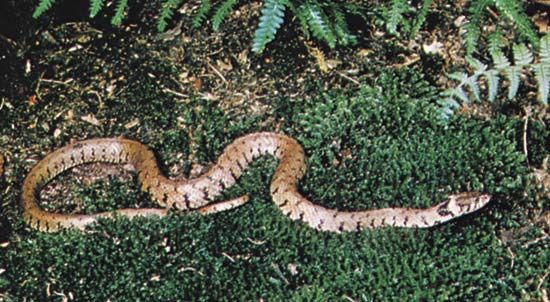
A wolf snake is a nonvenomous member of the Colubridae family, named for the large, elongated teeth found in both of its jaws. These snakes are categorized…
What is wolf snake?
A wolf snake is a nonvenomous member of the Colubridae family, named for the large, elongated teeth found in both of its jaws. These snakes are categorized into different genera based on their geographic location:12
- Asian wolf snakes: These belong to the genera Cercaspis (found in Sri Lanka) and Lycodon (widespread throughout Southeast Asia). The common wolf snake (Lycodon aulicus) is a small, brown, nocturnal species that feeds on geckos, frogs, and lizards.12
- African wolf snakes: These are placed in the genus Lycophidion. A notable example is the Cape wolf snake (Lycophidion capense), a small, metallic-sheened snake found from Egypt to South Africa that primarily hunts lizards.1
Despite their intimidating name and specialized teeth, these snakes are harmless to humans.12
Why are they called wolf snakes?
Wolf snakes are named for the large, elongated teeth found in both their upper and lower jaws, which resemble the prominent teeth of a wolf.21
Despite this intimidating dental feature, these snakes are nonvenomous members of the Colubridae family and are considered harmless to humans. The name applies to various species across different regions, including the Asian wolf snakes of the genus Lycodon and the African wolf snakes of the genus Lycophidion.21
What are the main differences between Asian and African wolf snakes?
The primary differences between Asian and African wolf snakes lie in their classification and geographic distribution. While both are nonvenomous members of the Colubridae family named for their large, wolf-like teeth, they belong to distinct genera:1
- Asian Wolf Snakes: These are categorized into the genera Cercaspis, which contains a single species found in Sri Lanka, and Lycodon, which includes approximately 26 species throughout Southeast Asia. A representative species is the common wolf snake (Lycodon aulicus), a small, brown, nocturnal snake that feeds on geckos, frogs, and lizards.1
- African Wolf Snakes: These are placed in the genus Lycophidion, which consists of 18 species. A well-known example is the Cape wolf snake (Lycophidion capense). This species is found from Egypt to South Africa, is characterized by a metallic sheen, and primarily hunts lizards.1
How do nonvenomous snakes protect themselves from predators?
Nonvenomous snakes employ a variety of defensive strategies to survive encounters with predators, ranging from passive concealment to active displays of aggression.
Avoidance and Concealment
The most common defense is avoidance, where snakes attempt to crawl away into undergrowth at the first sign of danger. When flight is not possible, many rely on camouflage. Their color patterns—such as blotches, spots, or stripes—disrupt their body outline, allowing them to blend into their natural surroundings. For example, slender vine snakes often resemble the plants in their habitat.567
Defensive Displays and Mimicry
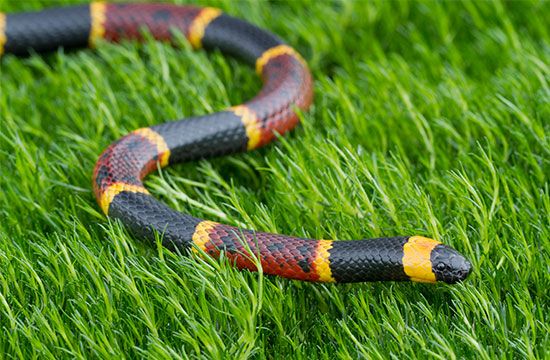
Some nonvenomous snakes use aposematism, or warning coloration, to signal danger. By mimicking the bright, ringed patterns of venomous species like the coral snake, harmless snakes like the milk snake can deter predators that have learned to avoid dangerous prey. Others may expose brightly colored undersides or produce defensive noises, such as hissing or vibrating their tails against dry leaves to mimic the sound of a rattlesnake.765
Aggressive Defense
If these methods fail, some nonvenomous snakes may strike or bite. While some species strike with their mouths closed, others, such as the water snakes, are known to bite viciously in self-defense.8
Sources
- wolf snake — Encyclopædia Britannica
- wolf snake — Merriam-Webster
- Lycodidae — Merriam-Webster
- lycophyte - General features — Encyclopædia Britannica
- reptile - Display of colour — Encyclopædia Britannica
- reptile - Striking and biting — Encyclopædia Britannica
- snake - Coloration — Encyclopædia Britannica
- reptile - Avoidance and noise — Encyclopædia Britannica
- reptile - Clinging and climbing — Encyclopædia Britannica
Published on · 2 min read