Freaky Fluorescent Frog Found
In March 2017, a team of Argentine and Brazilian scientists discovered that the polka-dot tree frog (Hypsiboas punctatus) is naturally fluorescent, making it…
What is Freaky Fluorescent Frog Found?
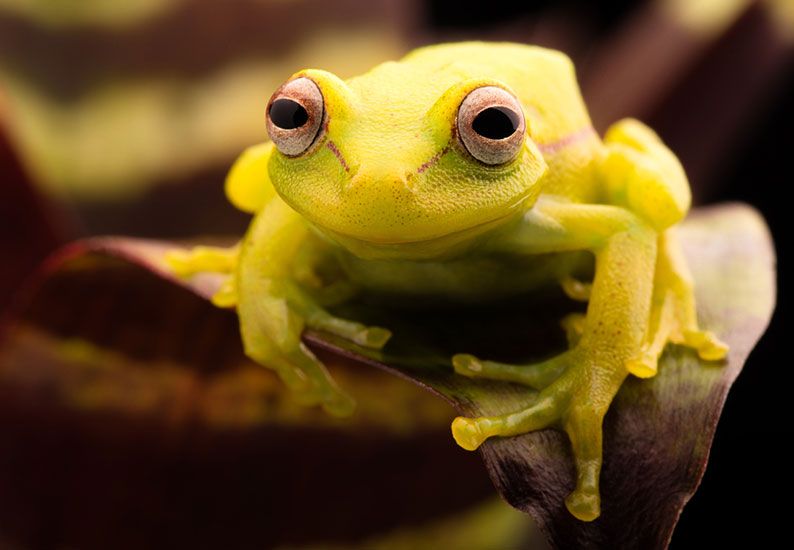
In March 2017, a team of Argentine and Brazilian scientists discovered that the polka-dot tree frog (Hypsiboas punctatus) is naturally fluorescent, making it the first known amphibian to exhibit this trait.1
While the frog appears as a drab green with reddish, yellow, or white spots under normal conditions, it glows a bright fluorescent green when exposed to ultraviolet light. This phenomenon occurs because the frog absorbs light and reemits it at a longer wavelength. The molecules responsible for this glow were previously observed only in plants, and the frog’s fluorescence is remarkably bright, shining at about 18 percent of the intensity of the full moon.1
Unlike bioluminescent creatures, such as fireflies, which generate their own light through chemical reactions, the polka-dot tree frog relies on the absorption and reemission of external light.12
What is the difference between biofluorescence and bioluminescence?
While both biofluorescence and bioluminescence involve the emission of light by living organisms, they are fundamentally different processes regarding their mechanisms and energy sources.
Bioluminescence
Bioluminescence is a form of chemiluminescence where an organism produces its own light through a chemical reaction. This process typically involves the oxidation of a light-emitting molecule called luciferin in the presence of an enzyme known as luciferase. Because this reaction converts chemical energy directly into radiant energy with high efficiency, it generates very little heat and is often referred to as “cold light.” Examples include the flickering of fireflies and the glowing of certain deep-sea fish and bacteria.5672
Biofluorescence
Biofluorescence is not a chemical process. Instead, it occurs when an organism absorbs light of a shorter wavelength (such as ultraviolet light) and reemits it at a longer, visible wavelength, causing the organism to glow. Unlike bioluminescence, which is self-generated, biofluorescence requires an external light source to be visible. This trait has been observed in various animals, including platypuses, opossums, and certain corals.8
Why do some animals use flash colors to confuse predators?
Animals use flash colors—patches of bright color visible only during motion—as a defensive strategy to distract or confuse predators. When an animal is at rest, these bright areas are typically obscured, allowing the creature to blend into its environment through concealing coloration.
When a predator approaches, the sudden reveal of these vivid patterns can startle the pursuer or disrupt its ability to track the prey. Once the animal stops moving and hides the bright patch, the predator may lose sight of its target entirely.103
This mechanism serves several functions:
- Confusion: The sudden appearance of bright colors or patterns, such as the golden orange flanks of certain tree frogs, can disorient a predator during an attack.3
- Species Recognition: These displays may also assist in identifying members of the same species.3
- Warning: Some organisms, such as tiger moths, use flash areas of warning coloration to signal that they are protected or unpalatable once they are molested.11
Are there other mammals besides platypuses that glow under UV light?
Yes, several other mammals exhibit biofluorescence under ultraviolet (UV) light. While the platypus was the first monotreme discovered to possess this trait, researchers have identified it in a variety of other species across different mammalian groups.2
Known biofluorescent mammals include:
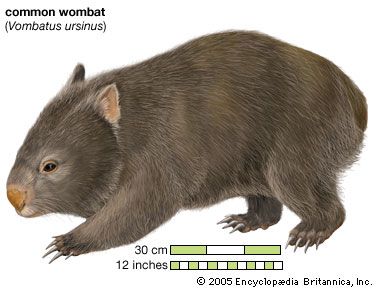
- Marsupials: Both opossums and wombats have been observed glowing under UV light.2
- Placental Mammals: Flying squirrels are known to exhibit this phenomenon.2
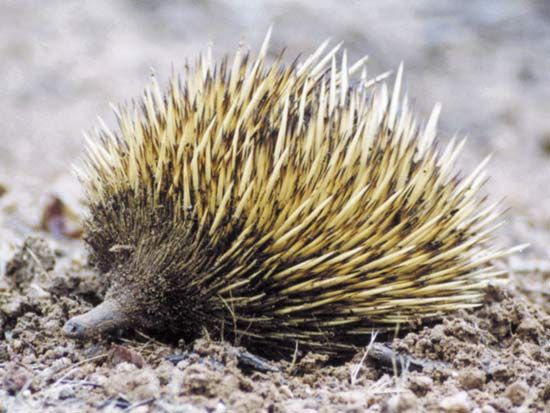
- Other Monotremes: Beyond the platypus, the echidna also displays biofluorescent properties.2
The widespread occurrence of biofluorescence across these diverse lineages has led some experts to hypothesize that it may be an ancestral trait in mammals. While the exact function remains a subject of study, it is suggested that the ability to absorb and reemit UV light may assist in camouflage against predators that can perceive UV radiation or facilitate communication between individuals.2
Sources
- Freaky Fluorescent Frog Found — Encyclopædia Britannica
- Do platypuses glow under UV light? — Encyclopædia Britannica
- frog and toad - Coloration — Encyclopædia Britannica
- 7 Awesome Frog Species of the Tropics — Encyclopædia Britannica
- Bioluminescence: Top Questions — Encyclopædia Britannica
- Marine bioluminescence — Encyclopædia Britannica
- Bioluminescence — Encyclopædia Britannica
- luminescence - Chemiluminescence and bioluminescence — Encyclopædia Britannica
- chemiluminescence — Encyclopædia Britannica
- flash color — Merriam-Webster
- coloration - Optical functions: combination of concealing and advertising coloration — Encyclopædia Britannica
- coloration - Disruptive coloration — Encyclopædia Britannica
- mimicry - Combination of warning systems with concealing coloration — Encyclopædia Britannica
Published on · 3 min read