Why Are There No Penguins at the North Pole?
Penguins are not found at the North Pole primarily because their evolutionary history and ecological adaptations have confined them to the Southern…
Why are there no penguins at the North Pole?
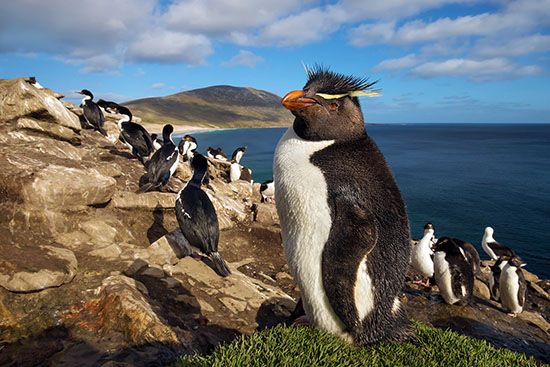
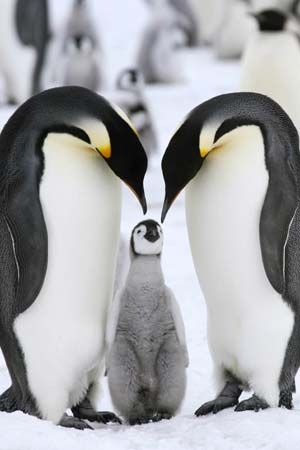
Penguins are not found at the North Pole primarily because their evolutionary history and ecological adaptations have confined them to the Southern Hemisphere. Fossil evidence indicates that penguin ancestors evolved in the Southern Hemisphere approximately 60 million years ago, leading them to specialize in the cold waters and food sources of that region.12
Several factors explain why they never migrated to the Arctic:
- Flightlessness: As flightless birds, penguins lack the mobility to traverse the vast distances and tropical barriers required to reach the Northern Hemisphere.13
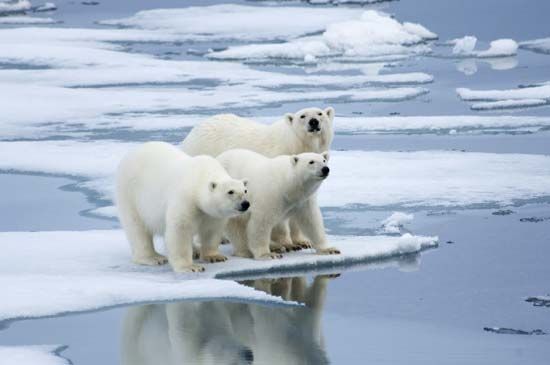
- Predation: The Arctic is home to land predators such as polar bears, which would pose a significant threat to penguins. In contrast, the absence of such mammalian land predators in Antarctica has historically provided a safe haven for them.12
- Specialization: Penguins are highly adapted to the specific seasonal and environmental conditions of the Southern Hemisphere.1
What are the main differences between the Arctic and Antarctic ecosystems?
The primary difference between the Arctic and Antarctic ecosystems lies in their fundamental geography: the Arctic is an ocean surrounded by land, while Antarctica is a continent surrounded by ocean. This structural difference drives significant variations in their climates and biological compositions.5
Climatic Differences
While both regions experience extreme cold, Antarctica is significantly colder than the Arctic. The Arctic Ocean acts as a heat source that moderates temperatures, whereas the high elevation and reflective ice cover of the Antarctic continent intensify its polar climate. Furthermore, during the Antarctic winter, the freezing of the surrounding sea effectively doubles the size of the continent, pushing the oceanic heat source nearly 1,800 miles away from the central polar plateau.5
Ecosystem and Biodiversity
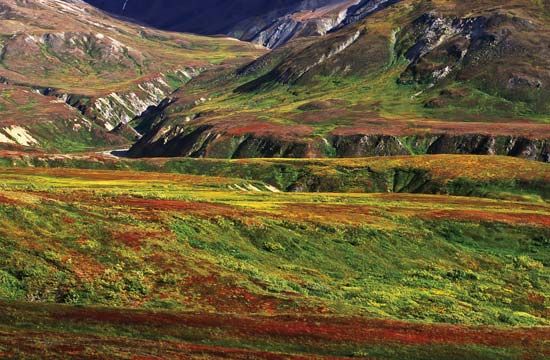
- Arctic: The Arctic is characterized by a “tree line,” with regions north of it featuring tundra vegetation like grasses, sedges, and low shrubs. Its ecosystem is influenced by the proximity of landmasses, allowing for a variety of terrestrial animals, including polar bears, caribou, and musk oxen.678
- Antarctic: Antarctica is the world’s coldest desert, with very little precipitation and almost no vegetation. Its ecosystem is almost entirely marine-focused, centered on the Southern Ocean. The food web is heavily dependent on krill, which support large populations of whales, seals, and seabirds. Unlike the Arctic, Antarctica lacks native terrestrial mammals, and its isolation has resulted in a high degree of endemism among its marine species.59
Both regions are currently experiencing rapid climatic change, with warming temperatures affecting permafrost in the Arctic and ice shelf stability in Antarctica.510
How do penguins protect themselves from predators in the Southern Hemisphere?
Penguins in the Southern Hemisphere face different threats depending on whether they are at sea or on land, and they have developed specific strategies to mitigate these risks.
Predation at Sea
In the ocean, penguins are vulnerable to large marine predators. The principal enemies of penguins at sea are the leopard seal and the killer whale, also known as the orca.13
Predation on Land
On land, the risk of predation varies by location:
- Antarctic Colonies: In coastal colonies, the primary predators of eggs and chicks are birds, specifically skuas, sheathbills, and the giant petrel.13
- Other Continents: On the Australian, African, and South American continents, predation is significantly limited because many penguins have adopted nocturnal habits and nest in burrows, which helps them hide from gulls and humans.13
The absence of large mammalian land predators in Antarctica has historically provided a safe haven for penguin colonies, a stark contrast to the Arctic, where species like polar bears would pose a constant threat.14
Are there any other flightless birds that live in different parts of the world?
Yes, there are several flightless birds found across the globe, many of which evolved in isolated environments where they faced few or no natural predators.1617
The Ratites
The most well-known group of flightless birds are the ratites, which are characterized by their large size and lack of a keel on the sternum—a structure typically used for flight muscle attachment. These include:1617
- Ostrich: Found in Africa, it is the world’s largest living bird and can reach speeds of up to 72.5 km (45 miles) per hour to escape predators.1817
- Rhea: Native to South America.1617
- Emu: Found in Australia.1719
- Cassowary: Also native to Australia and nearby regions.1617
- Kiwi: A small, flightless bird native to New Zealand.1617
Other Flightless Species
Beyond the ratites, flightlessness has evolved in various other bird families, often on islands:
- Penguins: Unlike ratites, penguins have retained a keel, which has evolved to support their paddlelike wings for swimming.1719
- Rails: Many species within the rail family, such as the weka and takahe of New Zealand, are flightless.1620
- Extinct Species: History records several notable flightless birds that were driven to extinction by human activity and introduced predators, including the dodo of Mauritius, the great auk of the North Atlantic, the moas of New Zealand, and the massive elephant birds of Madagascar.161721
Sources
- Why are there no penguins at the North Pole? — Encyclopædia Britannica
- Antarctica - Birds — Encyclopædia Britannica
- Gentoo penguin — Encyclopædia Britannica
- penguin — Encyclopædia Britannica
- Antarctica - Sea life — Encyclopædia Britannica
- Antarctica - Climate of Antarctica — Encyclopædia Britannica
- Alaska - Climate of Alaska — Encyclopædia Britannica
- Arctic - Marine fauna — Encyclopædia Britannica
- Arctic - Animal life — Encyclopædia Britannica
- Arctic — Encyclopædia Britannica
- Polar ecosystem - Polar environments — Encyclopædia Britannica
- Polar ecosystem - Development and structure of populations and communities — Encyclopædia Britannica
- How do penguins stay warm? — Encyclopædia Britannica
- penguin - Reproduction — Encyclopædia Britannica
- coloration - Background matching — Encyclopædia Britannica
- Bird - Flightlessness — Encyclopædia Britannica
- New Zealand - Plant and animal life — Encyclopædia Britannica
- Ostrich — Encyclopædia Britannica
- Flightless bird — Encyclopædia Britannica
- Bird: Top Questions — Encyclopædia Britannica
- Bird - Locomotion — Encyclopædia Britannica
Published on · 4 min read