Bottle Tree
A bottle tree refers to any of the approximately 30 species of trees belonging to the genus Brachychiton. These trees are part of the mallow family…
What is bottle tree?
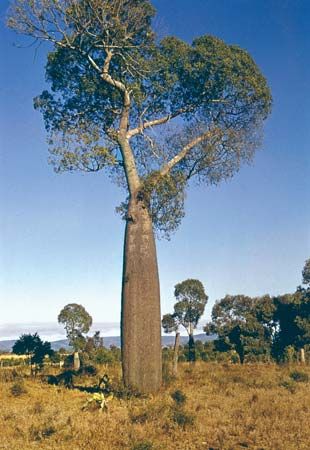
A bottle tree refers to any of the approximately 30 species of trees belonging to the genus Brachychiton. These trees are part of the mallow family (Malvaceae) and are primarily native to Australia.1
The name “bottle tree” is derived from the distinctive, swollen shape of the trunk. These trees can reach heights of up to 18 meters (60 feet) and are frequently grown as ornamentals in warm climates around the world. While the term is most commonly associated with Brachychiton, it has historically been used to describe certain trees within the Sterculia genus as well.21
How does the bottle tree store water in its trunk?
The bottle tree is known for its swollen trunk, which serves as a reservoir for water, an adaptation characteristic of succulent plants1. While the provided search results confirm that the tree’s name is derived from this distinctively shaped, water-storing trunk, they do not detail the specific biological mechanism or internal tissue structure used to retain that moisture.123
Generally, succulent plants store water within thick, fleshy tissues in their stems to survive in semiarid environments or regions with distinct dry seasons.2
What are some other unique tree adaptations for dry climates?
Trees and other plants in dry, or xeric, environments have evolved a variety of ingenious adaptations to survive water scarcity and minimize transpiration. These xerophytic strategies generally focus on either preventing water loss or maximizing storage.
Leaf Adaptations
To reduce water loss, many dry-climate plants feature specialized leaf structures:
- Reduced Surface Area: Many species have minute leaves or lack them entirely, such as cacti, which minimizes the area available for evaporation6.
- Protective Coatings: Leaves are often covered in thick epicuticular wax or dense, hairy trichomes that help keep the surface cool and protect against drying air currents.34
- Stomatal Control: Plants may have sunken stomata to shield them from the wind. Furthermore, many succulents utilize crassulacean acid metabolism, a photosynthetic pathway that allows them to open their stomata only at night, significantly reducing daytime water loss.453
- Deciduous Habits: Some trees drop their leaves during drought periods to nearly eliminate water loss until conditions improve.63
Structural and Physiological Adaptations
- Water Storage: Succulents store water in thick, fleshy stems or leaves to sustain them through dry seasons.56
- Root Systems: Many dry-climate plants develop deep or broad root systems to maximize water uptake from the soil.5
What is the cultural significance of bottle trees in folklore?
The term “bottle tree” in your query appears to conflate two distinct concepts. In botany, a bottle tree refers to specific Australian trees of the genera Brachychiton and Sterculia, named for their swollen, water-storing trunks rather than any role in folklore.1
Conversely, the term is sometimes used in cultural contexts to describe a decorative garden structure—often a dead tree or wooden post adorned with colorful glass bottles—intended to ward off evil spirits or capture malevolent entities. However, the provided search results do not contain information regarding this specific folkloric tradition; they focus instead on the history of glassmaking and the evolution of perfume bottles. Consequently, I cannot provide details on the cultural significance of bottle trees in folklore based on the available data.
Sources
- bottle tree — Merriam-Webster
- bottle tree — Encyclopædia Britannica
- Succulent — Encyclopædia Britannica
- Tree - Tree roots — Encyclopædia Britannica
- Xerophyte — Encyclopædia Britannica
- Transpiration — Encyclopædia Britannica
- Tree - Leaf adaptations — Encyclopædia Britannica
- Plant - Stems — Encyclopædia Britannica
- industrial glass - The ancient world — Encyclopædia Britannica
- perfume bottle — Encyclopædia Britannica
Published on · 2 min read