Botany
Botany is a broad scientific discipline that frequently intersects with other fields to address complex biological questions.

How does botany intersect with other scientific fields, such as genetics and ecology?
Botany is a broad scientific discipline that frequently intersects with other fields to address complex biological questions.
Intersection with Genetics
Botany and genetics are deeply linked, particularly through plant breeding, where genetic principles are applied to improve crops for human use. Modern techniques allow scientists to engineer plants to acquire beneficial traits, such as increased drought tolerance, pest resistance, or improved nutrient efficiency. Furthermore, fields like cytogenetics and population genetics provide taxonomists with insights into how new plant species arise and maintain their individuality.123
Intersection with Ecology
Plant ecology serves as a meeting ground for various sciences, utilizing biophysical tools and computer simulations to study how plants interact with their environment. Ecologists analyze energy flow and nutrient cycling within ecosystems, often adapting methodologies from plant physiology to field conditions. This interdisciplinary approach helps researchers understand plant community structures, species dominance, and survival adaptations in hostile environments.45
Beyond these, botany relates to fields such as chemistry—leading to chemotaxonomy—as well as medicine, agriculture, and even humanistic studies like archaeology.63

Who are some of the most influential botanists in history, and what were their contributions?
Throughout history, several botanists have fundamentally shaped our understanding of the plant kingdom through their groundbreaking research and methodologies.
- Theophrastus: Often credited as the founder of botany, this Greek philosopher established the early foundations of plant morphology and classification in his treatises De causis plantarum and De historia plantarum around 300 BCE.9
- Carolus Linnaeus: His 1753 work, Species Plantarum, remains a cornerstone of modern taxonomy. He introduced binomial nomenclature, a standardized system for naming organisms that remains the global scientific standard.910
- Gregor Mendel: Through his experiments with garden peas, Mendel discovered the fundamental laws of inheritance. His work established the existence of discrete hereditary units (genes) and provided a prototype for genetics that is still used today.11
- Sir Joseph Dalton Hooker: A pioneer in plant geography, Hooker was instrumental in applying evolutionary theory to botany. He was a close associate of Charles Darwin and co-authored the massive Genera Plantarum.12
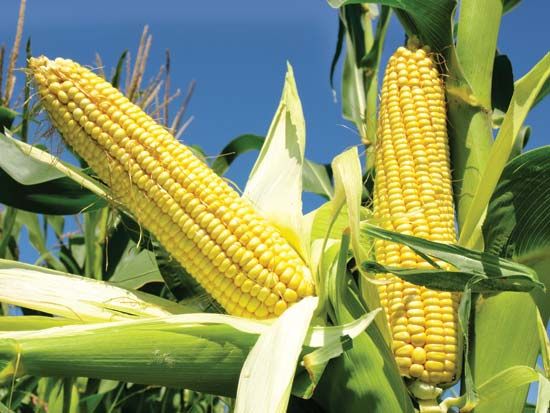
- Barbara McClintock: A 20th-century geneticist who revolutionized our understanding of the genome through her study of corn. She discovered “jumping genes,” or transposons, proving that genetic information is not stationary, an achievement for which she was awarded the Nobel Prize in 1983.13

How does climate change affect plant life and biodiversity?
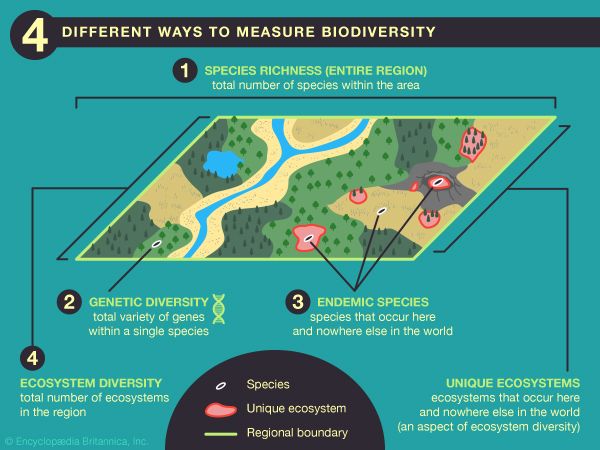
Climate change significantly impacts plant life and global biodiversity by altering the environmental conditions to which species have historically adapted. Because plants rely on specific temperature, moisture, and seasonal patterns for growth, rapid climatic shifts often outpace their natural adaptive capacity.141516
Impacts on Plant Life
- Phenological Shifts: Rising temperatures in temperate regions are causing earlier leaf production and earlier greening of vegetation, which can disrupt the timing of critical ecological interactions.14
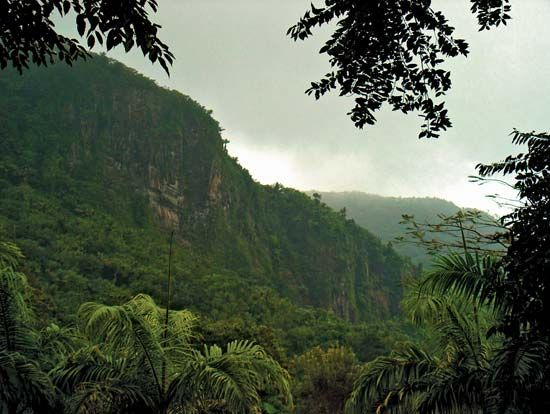
- Habitat Loss and Migration: As optimal climate conditions shift, many plants face displacement. Specialist species in fragile habitats, such as tropical cloud forests, are particularly vulnerable as their required moisture levels move to higher, less accessible elevations.14
- Increased Stressors: Changes in precipitation and increased drought frequency heighten the risk of wildfires and pest infestations, further threatening plant health.1714
Consequences for Biodiversity
- Extinction Risks: If global temperatures rise by 1.5 to 2.5 °C, a large fraction of plant and animal species will face an increased risk of extinction. Higher warming scenarios could lead to species loss estimates as high as 40 percent, causing destructive changes to food webs and ecosystem functions.14
- Pollinator Decline: Global warming contributes to the decline of bees, which are essential for the reproduction of many plant species. The loss of these pollinators threatens plant reproductive success and alters habitat composition.18
How do plants reproduce, and what are the differences between sexual and asexual reproduction in plants?
Plants utilize both sexual and asexual reproduction to ensure the survival and propagation of their species. These two methods differ significantly in their genetic outcomes and environmental requirements.
Sexual Reproduction
Sexual reproduction involves the fusion of male and female gametes to form a zygote, which develops into a new individual. This process relies on meiosis to reduce the chromosome number, ensuring that offspring possess a unique combination of genetic material from two parents. In flowering plants, this typically occurs within flowers, where pollen (carrying male nuclei) is transferred to the stigma of a pistil. Because it promotes genetic variation through recombination, sexual reproduction is essential for a population’s ability to adapt to changing environmental conditions.2021222324
Asexual Reproduction
Asexual, or vegetative reproduction, does not involve the union of sex cells or meiosis. Instead, it relies on the plant’s ability to regenerate tissues from structures such as rhizomes, bulbs, tubers, or cuttings. This method produces offspring that are genetically identical clones of the parent. While it lacks the genetic diversity provided by sexual reproduction, it allows for rapid population growth and can bypass environmental limitations, such as the need for water required by the motile sperm of some primitive plants.22252124
Alternation of Generations
Many plants exhibit an alternation of generations, cycling between a sexual gametophyte phase and an asexual sporophyte phase. The dominance of these phases varies; for instance, the sporophyte is the dominant generation in angiosperms and gymnosperms, whereas the gametophyte is dominant in bryophytes.2627
Sources
- Botany - Other subdisciplines — Encyclopædia Britannica
- genetic engineering - Applications — Encyclopædia Britannica
- Botany - Ecological aspects — Encyclopædia Britannica
- ecology - Historical background — Encyclopædia Britannica
- genomics — Encyclopædia Britannica
- genetics — Encyclopædia Britannica
- Botany - Taxonomic aspects — Encyclopædia Britannica
- Plant breeding — Encyclopædia Britannica
- Barbara McClintock — Encyclopædia Britannica
- genetics - The work of Mendel — Encyclopædia Britannica
- Botany - Historical background — Encyclopædia Britannica
- Sir Joseph Dalton Hooker — Encyclopædia Britannica
- Carolus Linnaeus - Binomial nomenclature — Encyclopædia Britannica
- Climate change - Effects of climate change — Encyclopædia Britannica
- Global warming - Environmental consequences of global warming — Encyclopædia Britannica
- Pleistocene Epoch - Migration of plants and animals — Encyclopædia Britannica
- What’s the Difference Between Weather and Climate? — Encyclopædia Britannica
- Vegetable farming - Climate — Encyclopædia Britannica
- What Would Happen If All the Bees Died? — Encyclopædia Britannica
- horticulture - Vegetative propagation — Encyclopædia Britannica
- sexual reproduction — Encyclopædia Britannica
- Alternation of generations — Encyclopædia Britannica
- Plant - Flowers — Encyclopædia Britannica
- Reproduction - Reproduction of organisms — Encyclopædia Britannica
- lower vascular plant - Reproduction — Encyclopædia Britannica
- Plant - Asexual reproduction — Encyclopædia Britannica
- Sex - Sexual and nonsexual reproduction — Encyclopædia Britannica
Published on · 4 min read