Carpet Shark
Carpet sharks (order Orectolobiformes) exhibit a wide range of sizes across their approximately 40 species. While many species are large, there is…
What is the average size range of carpet sharks, and how does this vary among different species?
Carpet sharks (order Orectolobiformes) exhibit a wide range of sizes across their approximately 40 species. While many species are large, there is significant variation within the order.1
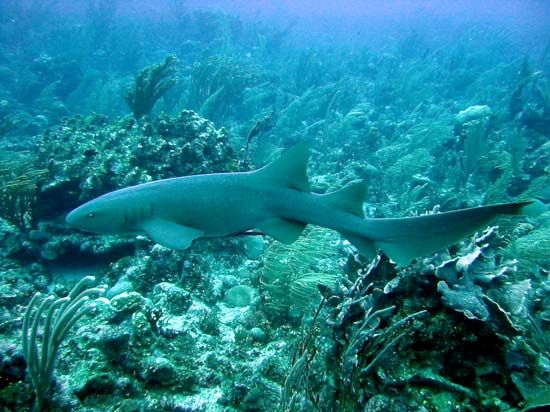
The most notable example of size disparity is the whale shark, which is the largest living fish; it averages about 12 metres (39 feet) in length and can grow up to 18 metres (59 feet). In contrast, other members of the order are much smaller. For instance, some nurse sharks, such as Ginglymostoma cirratum, reach lengths of more than 4 metres (13 feet).12
The order includes seven families, such as the Hemiscylliidae (bamboo and epaulette sharks) and the Orectolobidae (wobbegongs), which generally occupy different ecological niches as bottom-feeders. Because of this diversity, there is no single “average” size for the entire order, as it spans from relatively modest bottom-dwelling species to the massive, plankton-feeding whale shark.123
Are there any conservation concerns for carpet sharks, and if so, what efforts are being made to protect them?
Many species of carpet sharks face significant conservation challenges, primarily due to human activity. The International Union for Conservation of Nature (IUCN) classifies numerous species as threatened, largely because they are frequently caught as bycatch in commercial fishing operations or targeted by recreational and local anglers.1
Specific conservation statuses for these sharks include:
- Critically Endangered: The shorttail nurse shark (Pseudoginglymostoma brevicaudatum).1
- Endangered: The whale shark, zebra shark, Pacific nurse shark, and Indonesian bamboo shark.1
- Vulnerable: The blue-gray carpet shark (Colclough’s shark).1
The decline of these populations is a serious ethical concern, as the removal of these predators can disrupt marine food chains and lead to ecological instabilityfood chains](https://www.britannica.com/science/food-chain) and lead to ecological instability. While some countries have enacted laws to prohibit harmful practices like finning, the accidental capture of sharks in fishing nets remains a persistent threat. Protecting these species is essential for maintaining the health of our oceans and ensuring the survival of these unique marine animals.145
What are the main characteristics that distinguish carpet sharks from other shark species?
Carpet sharks (order Orectolobiformes) are distinguished from other sharks by several unique physical and behavioral traits:
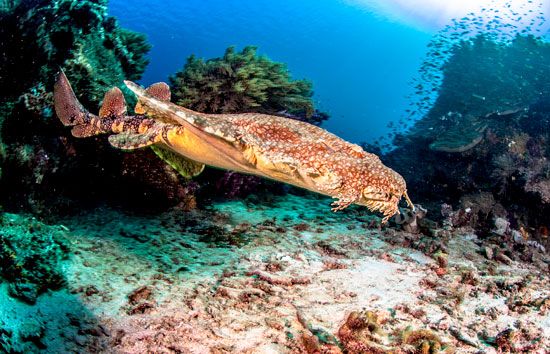
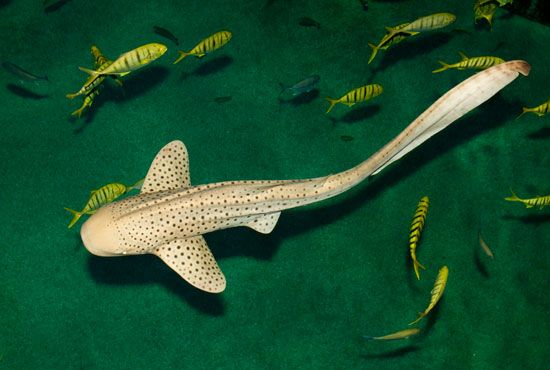
- Distinctive Markings: They are named for their mottled, intricate skin patterns that resemble carpet designs, which serve as effective camouflage for their bottom-dwelling lifestyle.71
- Barbels: Most species possess barbels—fleshy, tactile sensory organs—located near their nostrils or on their throat, which help them navigate and locate prey.71
- Dorsal Fins: They possess two dorsal fins that lack the spines found in many other shark orders.7
- Morphology: Some species, such as the tasseled wobbegong, feature unusual skin lobes or “beards” around the head and chin, further aiding in camouflage.1
- Behavior: Many are bottom-feeders that lie motionless on the seabed to ambush mollusks and crustaceans, though the order also includes the massive, filter-feeding whale shark.71
While they are generally not considered dangerous to humans, these sharks exhibit diverse reproductive strategies, with some species laying eggs and others bearing live youngeggs](https://www.britannica.com/science/egg-biology) and others bearing live young.1
How many different species of carpet sharks are there, and what are some examples?
There are approximately 40 species of carpet sharks belonging to the order Orectolobiformes. These sharks are categorized into seven distinct families, ranging from the diverse Hemiscylliidae family to groups containing only a single species, such as the Rhincodontidae and Stegostomatidae.1
Examples of carpet sharks include:
- Whale shark: The world’s largest living fish, known for its massive size and filter-feeding habits.1
- Zebra shark: A strikingly marked species belonging to the monotypic family Stegostomatidae.1
- Wobbegongs: Members of the family Orectolobidae, such as the ornate wobbegong and the tasseled wobbegong, known for their unique skin lobes and camouflage.1
- Nurse sharks: A family that includes species like the shorttail nurse shark and the Pacific nurse shark.1
- Bamboo and Epaulette sharks: Species within the Hemiscylliidae family, which is the largest family in the order.1
- Other notable species: The necklace carpet shark and the barbelthroat carpet shark.1
Sources
- carpet shark — Encyclopædia Britannica
- shark - Description and habits — Encyclopædia Britannica
- Orectolobidae — Merriam-Webster
- white shark - Conservation — Encyclopædia Britannica
- chondrichthyan - Danger to human life — Encyclopædia Britannica
- chondrichthyan - Distribution and abundance — Encyclopædia Britannica
- carpet shark — Merriam-Webster
- wobbegong — Merriam-Webster
Published on · 3 min read