Catkin
A catkin (also known as an ament) is an elongated cluster of single-sex flowers that typically lacks petals and features scaly bracts. These structures…
What is catkin?
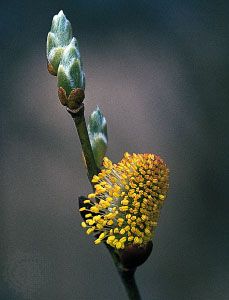
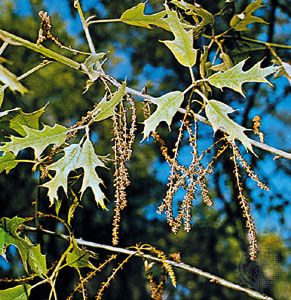
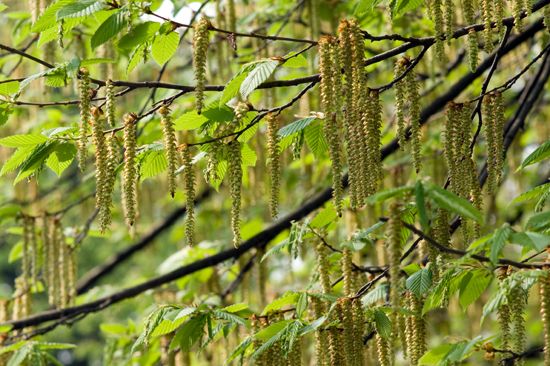
A catkin (also known as an ament) is an elongated cluster of single-sex flowers that typically lacks petals and features scaly bracts. These structures, which may be erect or pendulous, are often inconspicuous and derive their name from their soft, furry appearance, which resembles a cat’s tail.12
Many trees and shrubs, such as willows, birches, and oaks, produce catkins. Because these plants often rely on wind to carry pollen from male to female flowers, the catkin serves as a specialized inflorescence for wind pollination. Depending on the species, a plant may be monoecious, bearing both male and female flowers on the same individual, or dioecious, with male and female flowers on separate plants. For instance, pussy willows are well-known for their woolly male catkins, which often appear before the leaves as a sign of spring.13
How does wind pollination work for trees with catkins?
Wind pollination, or anemophily, is a specialized process used by many trees that bear catkins. Because these plants lack showy petals, fragrance, and nectar to attract insects, they rely on the movement of air to transfer pollen from male to female flowers.45
To maximize efficiency in a process that is inherently wasteful, these trees have evolved several key adaptations:
- Inflorescence Structure: Catkins are often pendulous or positioned high on the plant, allowing them to move easily in the breeze. This movement shakes the pollen loose from the anthers, scattering it into the air pollen loose from the anthers, scattering it into the air.41
- Timing: Many catkin-bearing trees bloom before their leaves emerge in the spring, which prevents foliage from obstructing the wind-driven dispersal of pollen.4
- Pollen Characteristics: The pollen grains are small, smooth, and dry, which helps them remain airborne and travel significant distances.41
- Receptive Stigmas: Female flowers often feature long, branched, or lobed stigmas covered in sticky trichomes, providing a larger surface area to capture passing pollen grains.41
What is the difference between monoecious and dioecious plants?
The primary difference between monoecious and dioecious plants lies in the distribution of their reproductive structures across the individual plant.
Dioecious Plants
In dioecious species, individual plants are strictly single-sex. This means one plant will produce only “male” (staminate) flowers, while a separate individual of the same species will produce only “female” (pistillate) flowers. This strategy inherently prevents self-pollination and ensures genetic outcrossing, as pollen must be transferred between two distinct plants. Examples of dioecious plants include willows, ginkgo, and cannabis.67
Monoecious Plants
In monoecious plants, a single individual possesses both male and female reproductive structures. This can occur in two ways:
- Bisexual Flowers: The plant produces flowers that contain both male (stamens) and female (pistils) parts within the same bloom. Many common plants, such as roses and lilies, follow this pattern.6
- Unisexual Flowers: The plant produces separate male and female flowers, but both types are found on the same individual plant. Examples include birches, squashes, and corn.6
While monoecious plants have the potential for self-pollination, many have evolved mechanisms—such as timing differences in flower maturation—to encourage cross-pollination instead.78
Why do some plants produce flowers without petals?
Some plants produce flowers without petals because they rely on wind pollination rather than animal pollinators. In these species, the showy petals, fragrances, and nectar typically used to attract insects or birds are unnecessary and would serve no functional purpose.45
Instead of investing energy into developing these attractive structures, wind-pollinated plants focus their resources on adaptations that facilitate the dispersal and capture of pollen in the air. Key characteristics of these petal-less flowers include:49
- Inconspicuous Appearance: Because they do not need to lure pollinators, these flowers are often small, greenish, or otherwise inconspicuous.45
- Efficient Pollen Release: Many of these plants produce catkins—pendulous, flexible inflorescences that move easily in the breeze to shake pollen loose.49
- Enhanced Capture: To catch wind-borne pollen, female flowers often feature long, branched, or sticky stigmas that provide a large surface area for pollen collection.49
- Strategic Timing: Blooming often occurs before leaves emerge in the spring, ensuring that foliage does not obstruct the movement of pollen through the air.4
Common examples of plants that have evolved these petal-less, wind-pollinated flowers include grasses, birches, oaks, and hazels4.10
Sources
- catkin — Encyclopædia Britannica
- 'Pistil,' 'Stamen,' and Other Flower Part Name Origins | Catkin — Merriam-Webster
- willow — Encyclopædia Britannica
- Pollination - Wind — Encyclopædia Britannica
- Angiosperm - Pollination — Encyclopædia Britannica
- Do Plants Have Sexes? — Encyclopædia Britannica
- Pollination - Structural — Encyclopædia Britannica
- Cross-pollination — Encyclopædia Britannica
- Angiosperm - The corolla — Encyclopædia Britannica
- Flower — Encyclopædia Britannica
- Plant reproductive system - Angiosperms — Encyclopædia Britannica
Published on · 3 min read