Chickweed
Chickweed refers to two primary species of small-leaved plants belonging to the pink family (Caryophyllaceae). These plants are characterized by their…
What is chickweed?
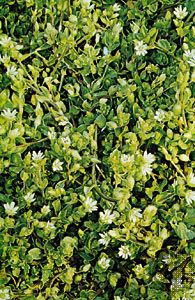
Chickweed refers to two primary species of small-leaved plants belonging to the pink family (Caryophyllaceae). These plants are characterized by their delicate, white, star-shaped flowers.1
The two main types include:
- Common chickweed (Stellaria media): A native of Europe that has become widely naturalized. It is an annual that can grow up to 45 cm (18 inches) tall, though it often spreads as a low-growing weed in lawns. It is edible, frequently used in salads, and serves as food for birds like canaries.1
- Mouse-ear chickweed (Cerastium fontanum): A mat-forming perennial also native to Europe. It is distinguished by its hairy, slightly sticky leaves and stems, and it typically grows in pastures, lawns, and cultivated fields.1
Both species are considered widespread, low-growing weeds found throughout many temperate regions.12
What are some other plants in the pink family?
The Caryophyllaceae family, commonly known as the pink or carnation family, includes approximately 100 genera and 2,200 species of flowering plants. Beyond chickweed, many members are valued as garden ornamentals or cut flowers.
Notable plants in this family include:
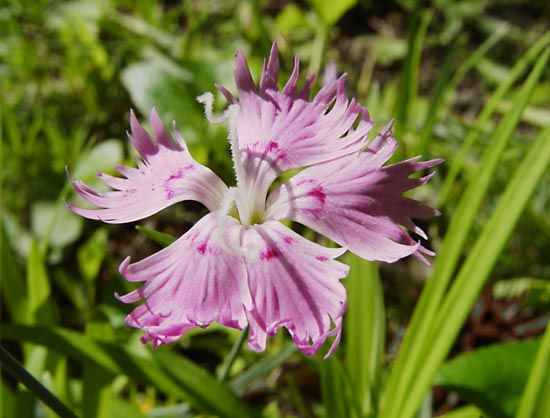
- Dianthus: This genus includes the popular carnation (D. caryophyllus), the garden favorite sweet William (D. barbatus), and the cottage or grass pink (D. plumarius).
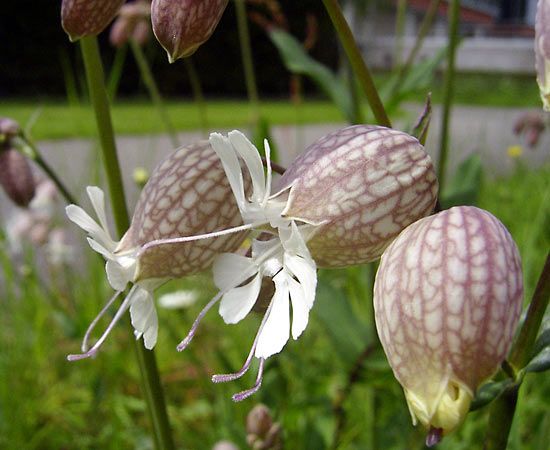
- Silene: The largest genus in the family, often called campion or catchfly. It includes about 900 species, such as the showy bladder campion (S. vulgaris).
- Gypsophila: Widely known for baby’s breath, which is highly important to the floral industry for its delicate, misty flowers.
- Other Genera: The family also encompasses soapwort (Saponaria), which contains about 40 species, and sandwort (Arenaria).
These plants are primarily found in north temperate regions and are diverse in their habits, ranging from annuals to perennials.34
How do annual plants differ from perennial plants?
The primary difference between annual and perennial plants lies in the duration of their life cycles and their growth patterns.
- Annuals: These plants complete their entire life cycle—from germination to flowering, seed production, and death—within a single growing season. Because they do not survive to the next year, they must be replanted each season if you wish to maintain them in a garden. Examples include many common vegetables like corn and beans, as well as garden flowers such as marigolds and zinnias.789
- Perennials: These plants live for an indefinite number of years. While their aerial parts (the stems and leaves) may die back to the ground at the end of each growing season in temperate climates, the plant survives through subterranean structures such as bulbs, rhizomes, or tubers. They regrow and rebloom year after year from these perennating parts.79
In short, while annuals are designed to complete their growth in one season, perennials are adapted to persist and return over multiple years.7
What are some common edible weeds found in gardens?
Several common garden weeds are edible and can be incorporated into your diet. Here are a few notable examples:
- Common chickweed (Stellaria media): This low-growing annual is a member of the pink family. It is widely naturalized and can be eaten raw or cooked as a vegetable, making it a popular addition to salads.1
- Common purslane (Portulaca oleracea): Often called pusley, this fleshy annual is a widespread weed known for its persistence in dry soil. A specific variety, P. oleracea sativa, is cultivated in some regions as a potherb.11
- Common sorrel (Rumex acetosa): Belonging to the buckwheat family (Polygonaceae), this plant is frequently found in pastures and gardens and is recognized as an edible weed.12
It is important to exercise caution when foraging, as many other common garden plants can be toxic. For instance, while some members of the Polygonaceae family are edible, others like Japanese knotweed are considered invasive, and certain plants like pokeberry are poisonous plants like pokeberry are poisonous. Always ensure you have correctly identified any plant before consuming it.1113
Sources
- chickweed — Encyclopædia Britannica
- chickweed — Merriam-Webster
- Caryophyllaceae — Encyclopædia Britannica
- Caryophyllales — Encyclopædia Britannica
- pink — Encyclopædia Britannica
- Caryophyllales - Characteristic morphological features — Encyclopædia Britannica
- Is That Plant 'Perennial' or 'Annual'? — Merriam-Webster
- Annual — Encyclopædia Britannica
- Angiosperm - General features — Encyclopædia Britannica
- Climate classification - Empirical classifications — Encyclopædia Britannica
- Caryophyllales - Polygonaceae — Encyclopædia Britannica
- poison - Plant poisons (phytotoxins) — Encyclopædia Britannica
- purslane — Encyclopædia Britannica
Published on · 3 min read