Antarctic Peninsula
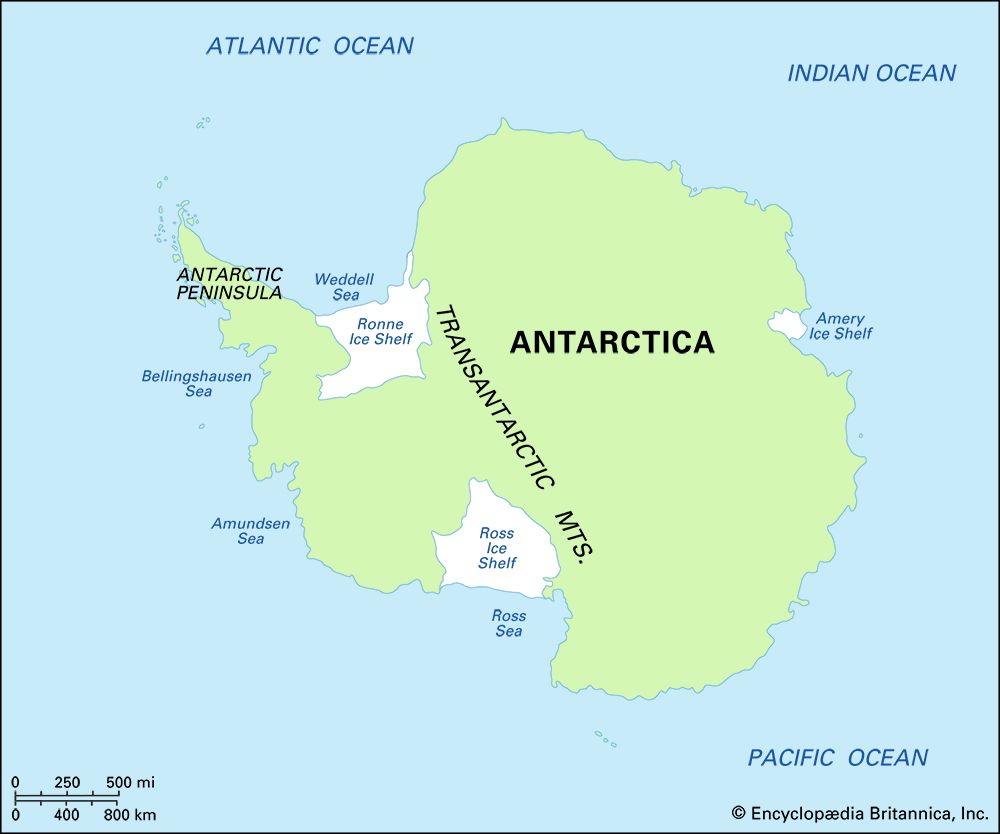
The Antarctic Peninsula is an 800-mile (1,300-km) northward extension of Antarctica that reaches toward the southern tip of South America. Formerly known as…
What is Antarctic Peninsula?
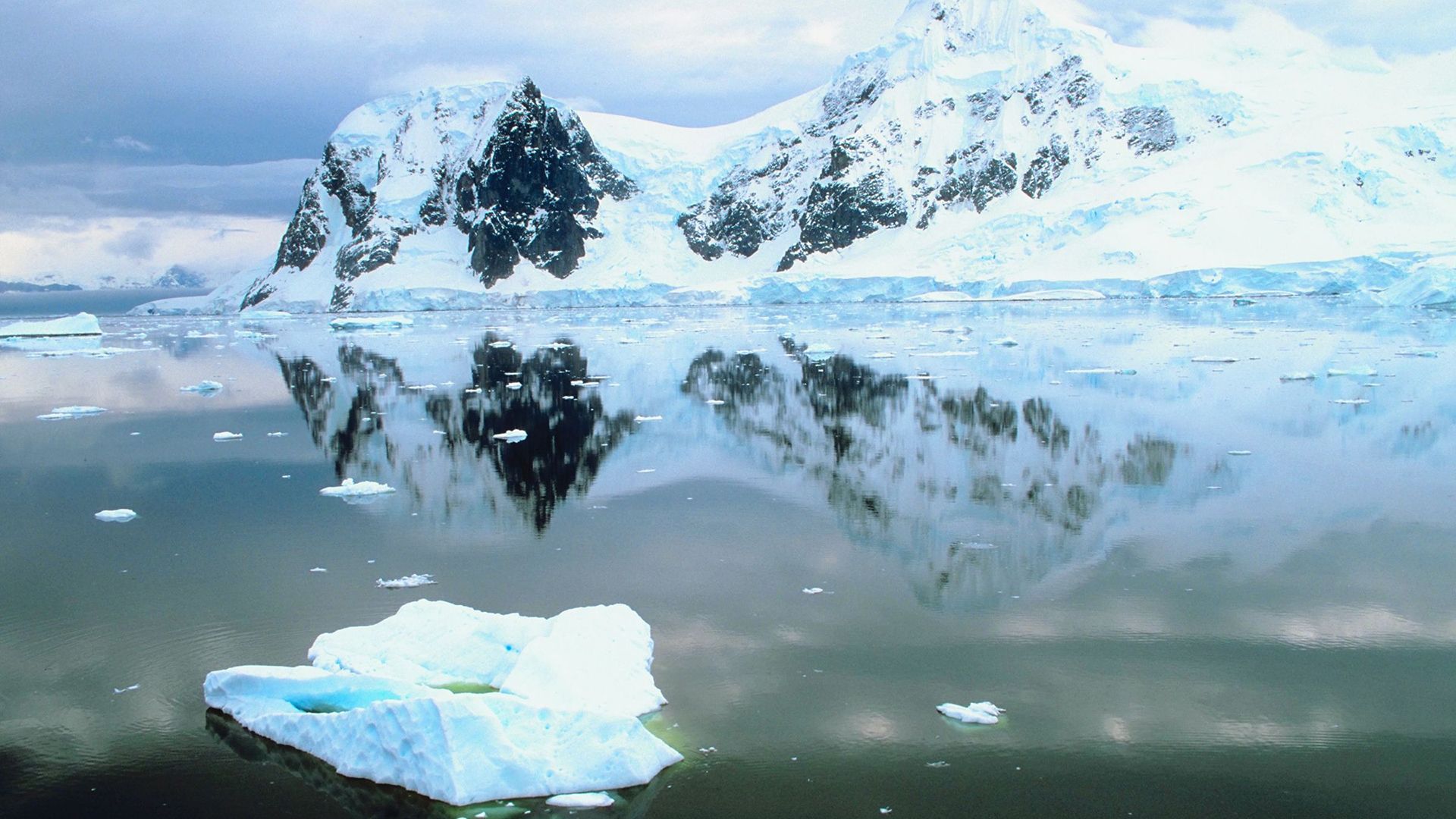
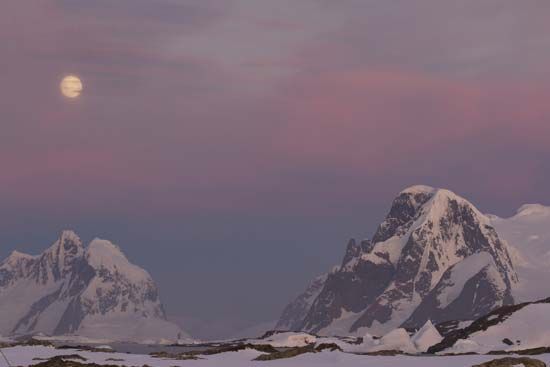
The Antarctic Peninsula is an 800-mile (1,300-km) northward extension of Antarctica that reaches toward the southern tip of South America1. Formerly known as the Palmer Peninsula, this mountainous, ice-covered region is claimed by the United Kingdom, Chile, and Argentina.12
Geographically, the peninsula features the 10,446-foot (3,184-meter) Mount Jackson and is bordered by Marguerite Bay to the west and the Bransfield Strait to the north, which separates it from the South Shetland Islands1. Due to maritime influences, it is the warmest part of the continent, though it has experienced significant warming and ice shelf disintegration in recent decades. Many nations maintain research stations on the peninsula and its adjacent islands to study the unique polar environment.31
What kind of wildlife lives on the Antarctic Peninsula?
The Antarctic Peninsula serves as a vital habitat for a diverse array of wildlife, largely supported by the nutrient-rich waters surrounding the continent. Because the region lacks mammalian land predators, its coasts provide a haven for immense seabird rookeries and marine life.46
Birds
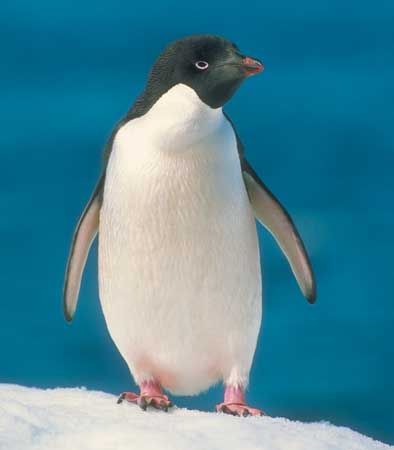
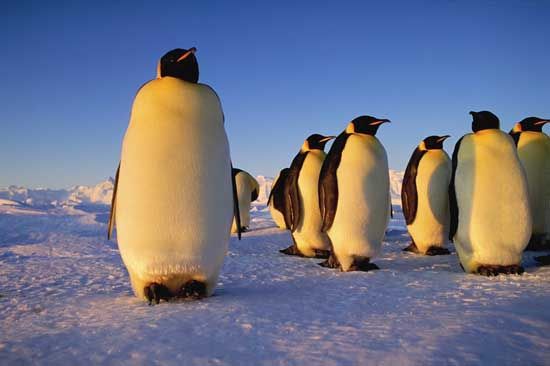
While many species inhabit the region, penguins are the most iconic. The Adélie and emperor penguin are found along the Antarctic coastline, while the habitats of the king, chinstrap, gentoo, rockhopper, and macaroni penguins extend as far south as the northern Antarctic Peninsula. Other birds in the region include petrels, albatrosses, cormorants, gulls, sheathbills, and skuas.6
Marine Mammals
The peninsula’s waters are home to various pinnipeds and cetaceans:
- Seals: The Weddell seal, crabeater seal, leopard seal, and Ross seal are common in the Antarctic zone.4
- Whales: The region hosts baleen whales—such as the blue whale, humpback whale, and minke whale—which feed on abundant krill. Toothed whales, including the killer whale and sperm whale, are also present.4
How does climate change affect the ice shelves in Antarctica?
Climate change significantly impacts Antarctic ice shelves by driving retreat and disintegration, particularly in the Antarctic Peninsula region.910
Mechanisms of Instability
- Rising Temperatures: Increased regional air temperatures have led to surface melting. In some cases, meltwater pools on the surface and infiltrates crevasses. As this water refreezes, it expands, causing the ice to fracture—a process known as frost wedging.1110
- Physical Stress: The loss of ice front stability, combined with ocean wave activity and warm, gusty winds known as foehns, contributes to the weakening and eventual calving of large icebergs.91112
- Structural Collapse: The disintegration of shelves like the Larsen Ice Shelf (specifically sections A and B) and the Wilkins Ice Shelf demonstrates how the loss of a shelf’s mass can destabilize the remaining structure, as these shelves often act as natural dams that slow the flow of glaciers into the sea.912
While calving is a natural process, the accelerated retreat observed in recent decades is widely regarded by scientists as a symptom of global warming.911
Why do multiple countries claim parts of the Antarctic Peninsula?
Multiple countries have historically claimed parts of the Antarctic Peninsula due to a combination of early exploration, national pride, and strategic interests. During the first half of the 20th century, nations such as the United Kingdom, Argentina, and Chile established formal claims based on historical treaties, geographical contiguity, and the physical occupation of sites through the construction of bases and weather stations.15
These claims were often driven by the desire to secure influence over vital sea routes, such as the Drake Passage, and to assert sovereignty over territory discovered by national explorers. For instance, the British maintained a presence to back their claims, while Argentina and Chile increased their activities in response to ensure their own territorial interests were recognized.15
However, these competing claims are currently held in abeyance under the Antarctic Treaty, signed in 1959. Article IV of the treaty prohibits new claims and prevents current activities from being used as a basis for asserting or supporting past or future claims, effectively setting aside territorial disputes to prioritize peaceful scientific cooperation.1617
Sources
- Antarctic Peninsula — Encyclopædia Britannica
- Antarctica - History of Antarctica — Encyclopædia Britannica
- Antarctic Peninsula — Merriam-Webster
- Antarctica - Sea life — Encyclopædia Britannica
- Antarctica - Climate of Antarctica — Encyclopædia Britannica
- Antarctica - Birds — Encyclopædia Britannica
- Weddell seal — Encyclopædia Britannica
- How do penguins stay warm? — Encyclopædia Britannica
- A Trillion Tonnes of Antarctica Fell into the Sea — Encyclopædia Britannica
- iceberg - Impacts on ice sheets and sea level — Encyclopædia Britannica
- iceberg - Antarctic icebergs — Encyclopædia Britannica
- Antarctica - The surrounding seas — Encyclopædia Britannica
- Antarctica - Glaciation — Encyclopædia Britannica
- Wilkins Ice Shelf — Encyclopædia Britannica
- Antarctica - National rivalries and claims — Encyclopædia Britannica
- Antarctica - The Antarctic Treaty — Encyclopædia Britannica
- British Antarctic Territory — Encyclopædia Britannica
- Antarctica - Post-IGY research — Encyclopædia Britannica
Published on · 3 min read