Open Habitat
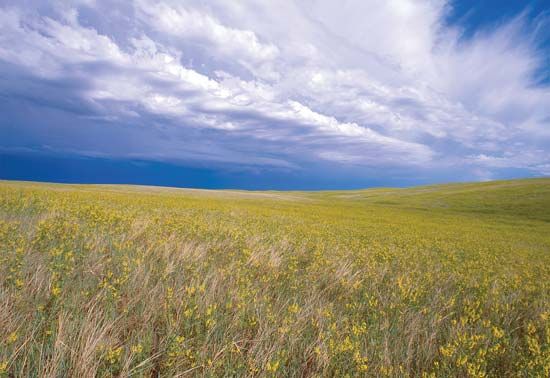
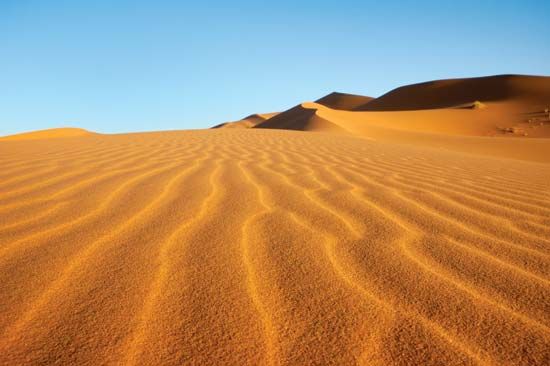
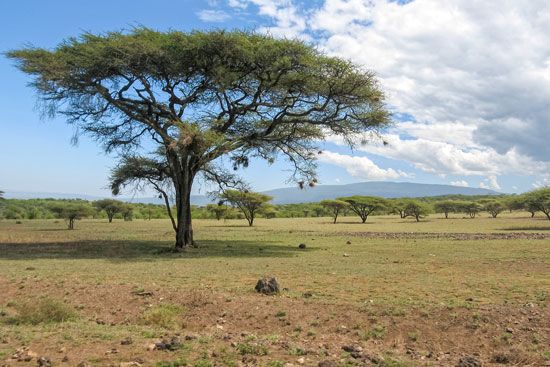
Organisms in open habitats—areas lacking tree cover such as grasslands and deserts—have evolved specific strategies to manage exposure to wind, intense…
How do plants and animals adapt to survive in open habitats?
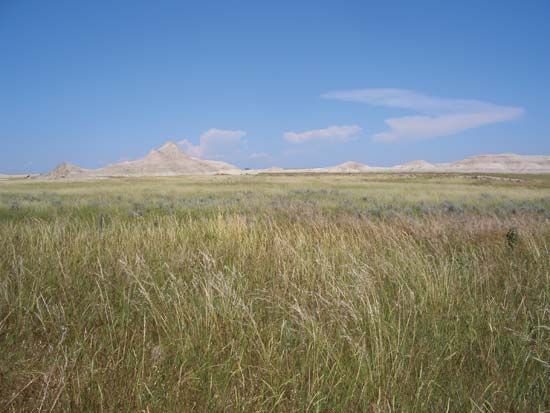
Organisms in open habitats—areas lacking tree cover such as grasslands and deserts—have evolved specific strategies to manage exposure to wind, intense light, and limited moisture.1
Plant Adaptations
Plants in these environments often remain short to minimize water loss from wind-driven evaporation short to minimize water loss from wind-driven evaporation. In savannas, many grasses survive dry periods as dormant buds near the soil surface or as annuals that produce seeds quickly. Trees may develop deep root systems to access groundwater or drop their leaves during dry seasons to reduce transpirational loss. Some species, particularly in arid regions, are sclerophyllous, possessing tough, thickened leaves that retain moisture.123
Animal Adaptations
Animals face seasonal food scarcity and environmental exposure. Many mammals and birds are migrants, moving to areas where food is more abundant. To cope with physical exposure, many species have evolved thick, waterproof, or windproof fur or feathers. Others utilize claws to excavate burrows, while many invertebrates spend their lives underground to escape surface extremes. Additionally, animals employ avoidance behaviour, such as rapid fleeing or protective reflexes, to survive predation in environments where cover is scarce.2145
What types of ecological succession can occur in open habitats?
Ecological succession in open habitats—such as grasslands, deserts, or newly exposed landscapes—follows two primary pathways determined by the severity of environmental disturbance.789
Primary Succession
Primary succession occurs in essentially lifeless areas where no soil exists to support life, such as on newly formed volcanic islands, sand dunes, or rock surfaces left by retreating glaciers.789
- Colonization: Pioneer species, such as lichens, mosses, and microorganisms, are the first to arrive.10
- Soil Formation: These pioneers break down rock through chemical and physical processes and add organic matter upon death, gradually creating the first layers of soil.10
- Development: As soil quality improves, grasses and shrubs take root, eventually being replaced by taller, shade-tolerant species as the community structure becomes more complex and stable.810
Secondary Succession
Secondary succession occurs in areas where a biological community previously existed but was partially removed by a disturbance—such as a wildfire, flood, or human activity like farming—that did not render the environment completely lifeless.7911
- Persistence: Because the soil remains intact, it often retains a bank of seeds and nutrients, allowing for faster recovery than in primary succession.711
- Recolonization: Weedy species and insects from surrounding areas typically recolonize the site first, followed by a predictable sequence of intermediate species.711
- Stability: If left undisturbed, the community may eventually reach a climax community, a relatively stable state dominated by prominent species.10912
In some open habitats, such as wetlands or prairies, periodic disturbances like fire or flooding are essential to maintaining biodiversity, a concept known as pulse stability.1314
How do open habitats differ from closed habitats in terms of ecological characteristics?
Open and closed habitats differ primarily in their structural complexity and the resulting environmental conditions for the organisms that inhabit them.
Key Differences
- Structural Composition: Open habitats, such as grasslands, deserts, and tundra, are defined by a lack of tree cover. In contrast, “closed” habitats like forests feature a dense canopy of trees where crowns often touch, creating a distinct barrier.117
- Environmental Exposure: Because they lack a canopy, open habitats are more directly exposed to wind, rain, and light. This increased exposure leads to higher rates of evaporation, making water a more limiting resource. Closed habitats, conversely, use their canopy to block wind and reduce light reaching the ground, which helps retain moisture and creates a more humid microclimate.1
- Adaptations: Plants in open areas tend to be shorter to minimize water loss. Animals in these regions often evolve specialized features, such as thick, windproof fur or feathers, or appendages like claws for excavating burrows to escape surface extremes.1
What are some keystone species found in open habitats, and what roles do they play?
In ecology, a keystone species is an organism that exerts a disproportionately large influence on its community relative to its abundance. By controlling populations or providing critical resources, these species maintain the structure and biodiversity of their ecosystems.1819
In open habitats like prairies and savannas, several species act as keystones through distinct ecological roles:
- Apex Predators: Predators such as the gray wolf serve as keystone species by regulating the populations of large herbivores like deer and elk. By hunting these animals and triggering avoidance behaviors, wolves prevent overgrazing, which helps maintain the health and diversity of the plant community.10
- Ecosystem Engineers: The American badger acts as a keystone species in tallgrass prairies by digging for rodent prey. These activities create localized disturbances—specifically mounds of bare dirt—that provide essential habitats for “fugitive” plant species that would otherwise be unable to establish themselves in the dense grassland.20
- Large Herbivores: In savanna ecosystems, large mammals like elephants can function as keystone species. By consuming and destroying woody plants, they prevent “bush encroachment,” effectively maintaining the open, grass-dominated structure of the savanna that supports a wide variety of other species.21
Sources
- open habitat — Encyclopædia Britannica
- Savanna - Population and community development and structure — Encyclopædia Britannica
- Savanna - Flora — Encyclopædia Britannica
- Avoidance behaviour - Fleeing and escape — Encyclopædia Britannica
- Avoidance behaviour - Warning behaviour — Encyclopædia Britannica
- Avoidance behaviour — Encyclopædia Britannica
- What Is the Difference Between Primary and Secondary Ecological Succession? — Encyclopædia Britannica
- ecological succession: Top Questions — Encyclopædia Britannica
- pioneer species — Encyclopædia Britannica
- ecological disturbance - Disturbance and biodiversity in prairie landscapes — Encyclopædia Britannica
- ecological disturbance - Ecological opportunities provided by disturbances — Encyclopædia Britannica
- ecological succession — Encyclopædia Britannica
- secondary succession — Encyclopædia Britannica
- climax — Encyclopædia Britannica
- plant - Succession and zonation — Encyclopædia Britannica
- Wetland - Community structure and ecosystem development — Encyclopædia Britannica
- plant - Plant geography — Encyclopædia Britannica
- keystone species — Encyclopædia Britannica
- Grassland - Biota — Encyclopædia Britannica
- apex predator — Encyclopædia Britannica
- community ecology - Keystone species — Encyclopædia Britannica
- gray wolf - Pack behaviour — Encyclopædia Britannica
Published on · 4 min read