Eastern Desert
The Eastern Desert, which spans parts of Egypt, Sudan, and Eritrea, is home to various nomadic tribal groups, most notably the Beja people, as well as tribes…
Are there any unique cultural practices or traditions associated with the people living in the Eastern Desert region?
The Eastern Desert, which spans parts of Egypt, Sudan, and Eritrea, is home to various nomadic tribal groups, most notably the Beja people, as well as tribes such as the Huwayṭāt, Maʿāzah, ʿAbābdah, and Bishārīn.123
These groups have historically maintained unique cultural practices centered on their pastoralist lifestyle:
- Economic Life: Many inhabitants are nomadic, relying on herding camels, sheep, and goats, or engaging in trade with coastal fishing communities and mining or petroleum camps.23
- Social Structure: Their society is typically tribal and patriarchal. Among the Beja, authority is held by the heads of kin groups, and ancestry is traced through the father’s line.1
- Marriage and Kinship: Marriage customs often emphasize endogamy, with a man traditionally expected to marry his father’s brother’s daughter. Livestock is commonly presented to the bride’s family as part of these arrangements.1
- Religious and Cultural Identity: While many Beja converted to Christianity in the 6th century, the majority have been Muslim since the 13th century.1
What are the main geological features of the Eastern Desert?
The Eastern Desert is a geologically diverse region characterized by a transition from rolling plateaus to rugged mountain chains. Its primary geological features include:
- Plateau Systems: The northern portion of the desert is dominated by a limestone plateau that extends from the Mediterranean coastal plain toward the Nile. South of Qina, this transitions into a sandstone plateau, both of which are deeply scored by wadis (dry seasonal stream beds) that make the terrain difficult to traverse.41011
- Red Sea Hills: Located 50 to 85 miles east of the Nile, these rugged, north–south-trending mountain chains form the desert’s most prominent relief. These hills are geologically complex, composed of ancient igneous and metamorphic rocks, including granite. Several peaks exceed 6,000 feet, with the highest, Mount Shāʿib al-Banāt, reaching 7,175 feet (2,187 meters).41011
- Coastal Plain: East of the mountain chains, the terrain levels out into a narrow coastal plain along the Red Sea, which is fringed by nearly continuous coral reefs.1011
- Mineral Wealth: The region is rich in natural resources, including gold, uranium, manganese, asbestos, and phosphate, as well as significant onshore and offshore oil fields.411
What flora and fauna can be found in the Eastern Desert ecosystem?
The Eastern Desert supports a surprisingly varied ecosystem, particularly within its wadis and mountainous regions, despite the region’s overall aridity.1415
Flora
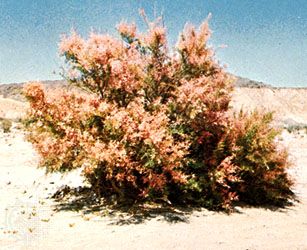
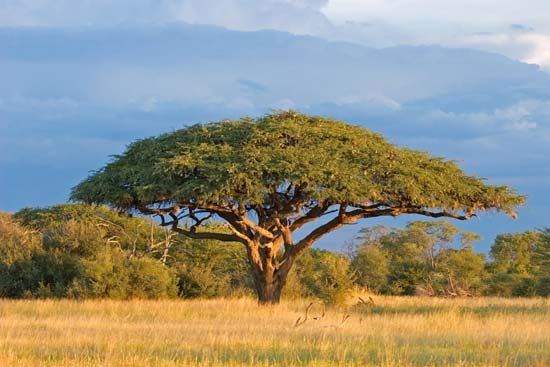
The vegetation of the Eastern Desert is characterized by drought-resistant species adapted to sparse rainfall. Common plants include:
- Trees and Shrubs: Tamarisk, acacia, and markh (a leafless, thornless tree) are prevalent.14
- Succulents and Herbs: The landscape features a wide variety of thorny shrubs, small succulents, and aromatic herbs.14
- Habitat Variation: This growth is notably more diverse in the wadis of the Red Sea Hills and the mountains in the southeast, such as the ʿIlbah (Elba) Mountains.14
Fauna
The desert is home to several species of mammals, birds, and reptiles that have adapted to the harsh environment:14
- Mammals: Notable species include the Dorcas gazelle, the fennec (a small desert fox), the Nubian ibex, and the Egyptian hare. Carnivores include the Egyptian jackal and the Egyptian mongoose.14
- Birds: The region hosts resident desert birds and serves as a corridor for many migratory species. Birds of prey, such as the lanner falcon, kestrel, lammergeier, and golden eagle, are found in the Eastern Desert and the Sinai Peninsula.14
- Reptiles and Insects: Various lizards, including the large monitor, are present, alongside poisonous snakes like vipers and the Egyptian cobra. Scorpions are also common in these desert regions.14
What is the Eastern Desert of Egypt, and where is it located?
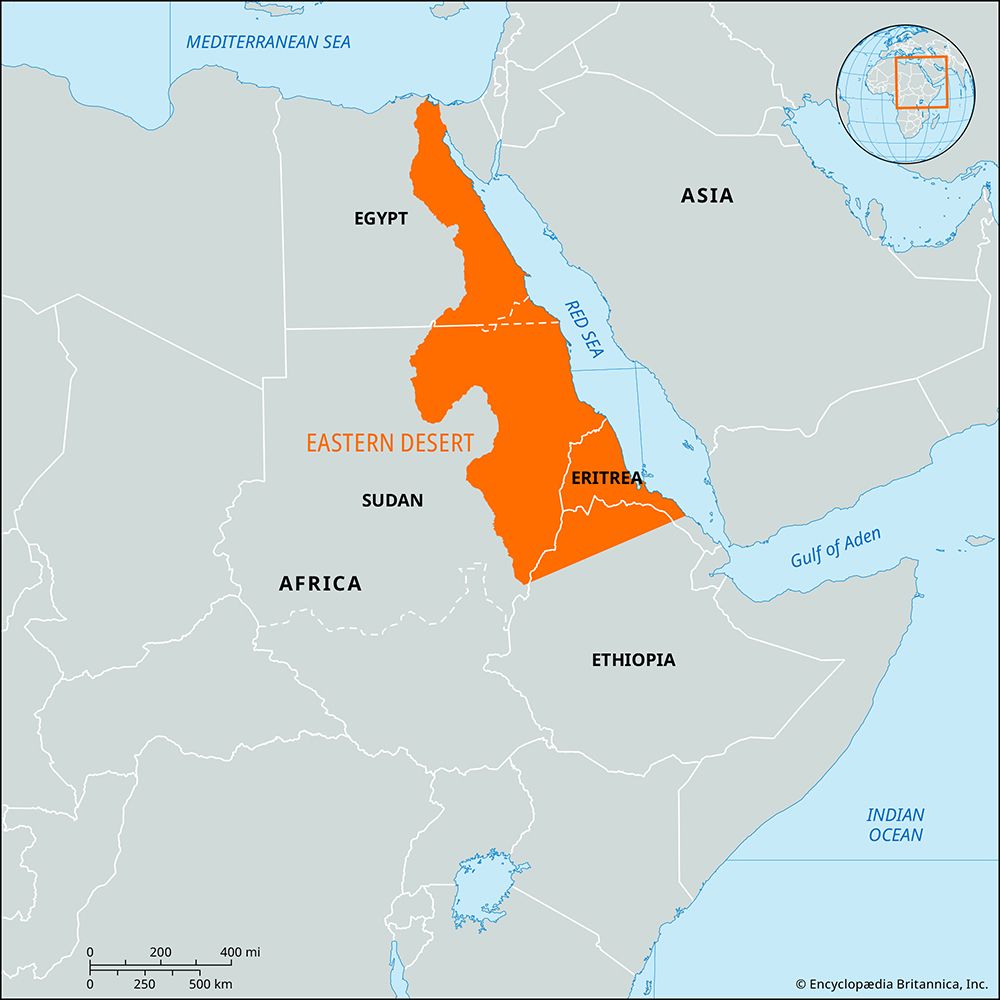
The Eastern Desert is a vast, arid region in eastern Egypt covering approximately 85,690 square miles (221,940 square km). It is one of the country’s four primary physiographic regions, distinct from the Western Desert and the Sinai Peninsula.421
Geographically, the desert originates southeast of the Nile River delta and extends southeastward into northeastern Sudan, Eritrea, and northern Ethiopia. It spans the area between the Nile River valley to the west and the Gulf of Suez and the Red Sea to the east.421
The terrain is characterized by a rolling sandy highland that rises from the Nile valley and merges into the Red Sea Hills, a series of rugged, volcanic mountain chains. Unlike the Western Desert, the Eastern Desert is extensively dissected by wadis—the dry beds of seasonal streams. It is a region of significant economic importance, containing major oil fields and deposits of minerals such as gold, phosphate, and manganese.421
Sources
- Beja — Encyclopædia Britannica
- Bedouin — Encyclopædia Britannica
- camel - Cultural significance — Encyclopædia Britannica
- Eastern Desert — Encyclopædia Britannica
- Islamic arts - Arab countries — Encyclopædia Britannica
- Arabian Desert - People of the Arabian Desert — Encyclopædia Britannica
- Egypt - Settlement patterns — Encyclopædia Britannica
- Native American dance - The Southwest — Encyclopædia Britannica
- Sudan - Production and technology — Encyclopædia Britannica
- Egypt - The Eastern Desert — Encyclopædia Britannica
- Red Sea - Geology — Encyclopædia Britannica
- Al-Baḥr al-Aḥmar — Encyclopædia Britannica
- Africa - Pleistocene and Holocene developments — Encyclopædia Britannica
- Sahara - Animal life — Encyclopædia Britannica
- Takla Makan Desert - Plant and animal life — Encyclopædia Britannica
- Egypt - Plant and animal life — Encyclopædia Britannica
- Arabian Desert - Animal life — Encyclopædia Britannica
- Desert - Population and community development and structure — Encyclopædia Britannica
- Sahara: Top Questions — Encyclopædia Britannica
- Sahara - Climate of the Sahara — Encyclopædia Britannica
- Egypt - Relief — Encyclopædia Britannica
- Egypt - Climate — Encyclopædia Britannica
Published on · 4 min read