Giant Reed
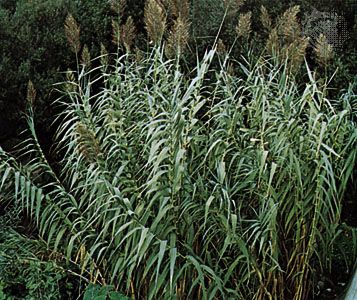
Giant reed (Arundo donax) is a tall perennial grass belonging to the Poaceae family. Typically reaching heights of 1.8 to 7 meters (6 to 23 feet), it grows…
What is Giant reed?
Giant reed (Arundo donax) is a tall perennial grass belonging to the Poaceae family1. Typically reaching heights of 1.8 to 7 meters (6 to 23 feet), it grows in dense clumps and spreads aggressively through underground rhizomes.1
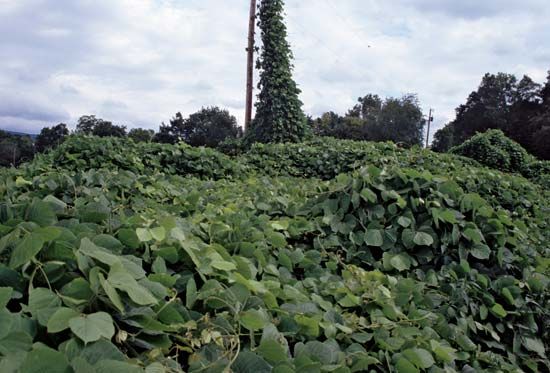
While native to eastern Asia, it has been widely introduced to regions including the Mediterranean, the Caribbean, and southeastern North America, where it is often classified as an invasive species. The plant thrives in wetlands and riparian habitats, where it can form vast monocultures.1
The woody, canelike stems of the giant reed are historically significant for their use in manufacturing flutes and organ pipes, and they remain a primary source of reeds for various woodwind instruments. Additionally, its straplike leaves are sometimes used for matting.1
How do invasive species negatively impact local ecosystems?
Invasive species negatively impact local ecosystems by disrupting the natural balance, often leading to a significant reduction in biodiversity. Because these nonnative organisms often lack natural predators in their new environments, they can establish large populations and gain a competitive advantage over indigenous species.3
The ecological damage manifests in several critical ways:
- Resource Competition: Invasive species may outcompete native organisms for essential resources such as food, water, and living space, often replacing them entirely and potentially causing localized extinction.3
- Predation: Invasive predators can be so efficient at hunting that they cause native prey populations to collapse.3
- Disease Transmission: Many invasive plants and animals act as disease vectors, introducing parasites and pathogens that further destabilize the ecosystem.3
It is a fundamental ethical imperative to protect native ecosystems from these disruptions, as the loss of biodiversity threatens the biological resources upon which human communities depend. Efforts to mitigate these impacts through habitat restoration and monitoring are essential for environmental stewardship.34
What are rhizomes and how do they help plants spread?
A rhizome is a horizontal, typically subterranean plant stem that functions as a vital organ for food storage and vegetative reproduction. Unlike roots, rhizomes possess nodes with reduced leaves and internodes, which allow them to produce new shoot and root systems.56
Rhizomes help plants spread and survive through several mechanisms:
- Vegetative Propagation: Rhizomes enable plants to reproduce asexually. As the rhizome grows horizontally, it sends up new shoots from its nodes, effectively expanding the plant colony. Many species, including bamboos, sugarcane, and bananas, rely on this method for propagation.56
- Resource Storage: These stems store starches and proteins, providing the energy necessary for the plant to survive unfavorable conditions like droughts or harsh winters.56
- Perennation: By remaining underground, the rhizome allows the plant to perennate, or survive an annual unfavorable season, ensuring the plant can regenerate when conditions improve.5
What are some other types of plants used to make musical instruments?
Beyond the use of reeds and various woods, many other plant materials are essential in the construction of musical instruments worldwide. Instrument makers often select specific plants based on their acoustic properties, durability, and symbolic significance within their culture.78
Plant Materials in Instrument Construction
- Bamboo: This versatile grass is widely used for its hollow, resonant structure. It serves as the primary material for various flutes, such as the Chinese di, and is also used to construct the body of the Malagasy valiha zither.9108
- Gourds: These are frequently utilized as resonators for stringed instruments. For example, the South Indian vina often incorporates a gourd to amplify its sound.8
- Grasses and Bark: Simple instruments, such as the ribbon reed, are created by holding a blade of grass or a strip of bark taut and vibrating it with breath.11
- Specific Tree Species: For stringed instruments, the choice of wood is critical for the soundboard. Spruce is highly preferred for its acoustic qualities, though fir, pine, and maple are also commonly used.12
- Vegetable Fibers: Strings for various chordophones have historically been crafted from plant-based materials, including vegetable fiber and silk.13
The selection of these materials is rarely arbitrary; it is often guided by a combination of technological requirements—such as the need for a material that can withstand string tension while remaining resonant—and deep-seated cultural traditions that link specific plants to myths of rebirth and immortality.78
Sources
- giant reed — Encyclopædia Britannica
- reed — Encyclopædia Britannica
- invasive species — Encyclopædia Britannica
- invasive species - Solutions — Encyclopædia Britannica
- Rhizome — Encyclopædia Britannica
- Angiosperm - Shoot system modifications — Encyclopædia Britannica
- reed instrument — Encyclopædia Britannica
- wood - Acoustic properties — Encyclopædia Britannica
- wind instrument - In Asia — Encyclopædia Britannica
- stringed instrument - The production of sound — Encyclopædia Britannica
- stringed instrument — Encyclopædia Britannica
- wind instrument - In folk cultures of the world — Encyclopædia Britannica
- musical instrument — Encyclopædia Britannica
- stringed instrument - Artistry in instrument making — Encyclopædia Britannica
Published on · 3 min read