Falcon
Falconry is the ancient practice of training birds of prey—including falcons, hawks, eagles, and buzzards—to hunt wild quarry in cooperation with a human…
How do falcons play a role in falconry and what is the history of this practice?
Falconry is the ancient practice of training birds of prey—including falcons, hawks, eagles, and buzzards—to hunt wild quarry in cooperation with a human partner.12
The Role of Falcons
In falconry, falcons are categorized as “longwings.” They are physically adapted for speed and hunting other birds in flight, often over open terrain like deserts or moorlands. Falconers harness the bird’s natural hunting instincts through a process called “manning” (taming) and conditioning, where the bird learns to associate the falconer with food. Depending on the species and style, falcons may be flown directly from the fist or in a “waiting on” style, where they climb high to “stoop” (dive) at game flushed by the falconer.23
History of the Practice
Falconry dates back to preliterate times, with potential evidence in prehistoric cave paintings and 13th-century BCE Hittite stelae. It flourished among the privileged classes in the Middle Ages across western Europe and the British Isles. While the sport declined in the 17th century due to the invention of the shotgun and land enclosure, it has been preserved through various hawking clubs and experienced a revival in the 1970s.4
What are some of the most common falcon species found around the world?
There are nearly 60 species of falcons found across the globe, ranging from tiny falconets to the large gyrfalcon. Some of the most common and notable species include:67
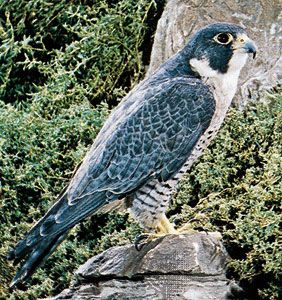
- Peregrine falcon: The most widely distributed falcon, found on every continent except Antarctica. It is renowned as the world’s fastest animal, capable of diving at speeds exceeding 320 km (200 miles) per hour.68
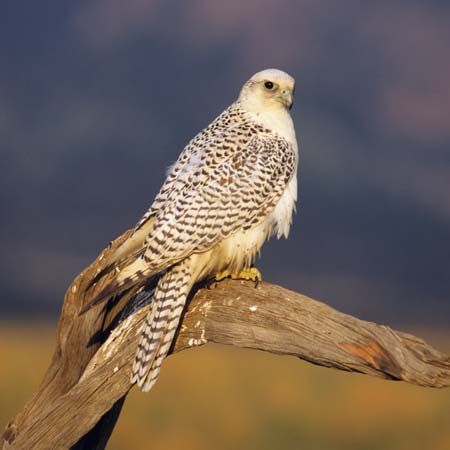
- Gyrfalcon: The largest falcon species, typically inhabiting Arctic regions.67
- Merlin: A small falcon found throughout the Northern Hemisphere, often seen in open country or near woodlands.6
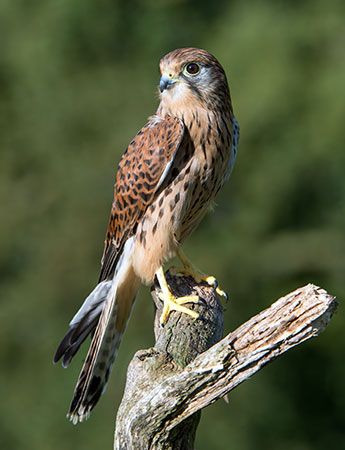
- Kestrel: Known for their habit of hovering while hunting, these include the American kestrel (common throughout the Americas) and the common kestrel of the Old World.2
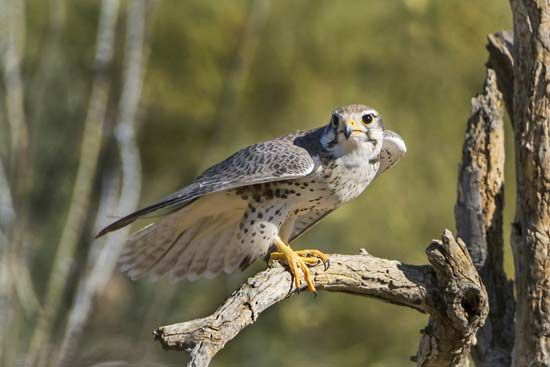
- Prairie falcon: A desert-dwelling species native to the canyon and scrub country of western North America.67
- Aplomado falcon: A colorful species found in grasslands ranging from the southern United States to Argentina.6
What conservation efforts are in place to protect falcon populations?
Conservation efforts for falcons and other raptors focus on addressing the primary threats posed by human activity, including habitat destruction, illegal persecution, and the use of toxic chemicals.10
Key Conservation Strategies
- Chemical Regulation: The most significant success in falcon conservation involved the restriction of organochlorine pesticides like DDT and dieldrin. These chemicals caused eggshell thinning and direct mortality, leading to precipitous population declines after World War II. Following bans in countries like the United States and Canada, populations of species such as the peregrine falcon have rebounded significantly.107
- Captive Breeding and Reintroduction: When populations reached critical lows, intensive programs were launched to breed birds in captivity and release them into the wild. In North America, over 6,000 captive-bred peregrine falcons were released over three decades, successfully restoring the species to areas where it had vanished.7
- Legal Protection: Many nations have enacted game laws that protect birds of prey from indiscriminate shooting, trapping, and egg collecting. These regulations also manage the taking of birds for falconry, ensuring that such activities do not threaten wild populations.103
- Habitat Management: Preservation efforts emphasize maintaining diverse landscapes, as agriculture can sometimes eliminate necessary forest habitats. Protecting nesting sites, such as cliffs, is also vital for species survival.107
What are the key characteristics that distinguish falcons from other birds of prey?
Falcons are distinguished from other birds of prey—such as hawks, eagles, and vultures—by unique anatomical, behavioral, and taxonomic traits. While all these raptors share hooked beaks and powerful talons, falcons belong to the distinct family Falconidae.111213
Key Distinguishing Characteristics
- Physical Build: Falcons are characterized by streamlined, bullet-shaped bodies and long, sharply pointed wings, which allow for high-speed flight and precision diving. In contrast, many other raptors possess broader, rounded wings suited for soaring and maneuverability in wooded environments.11141315
- Beak Structure: A defining feature of the family Falconidae is the presence of a “tooth” or notch on the cutting edge of the upper beak, which is used to break the necks of their prey.1316
- Nesting Habits: Unlike many hawks that build their own nests in trees, most falcons do not construct nests; instead, they typically lay their eggs on cliff ledges or in existing holes in trees. Additionally, their eggs often have a reddish-brown speckled appearance with a reddish interior shell color, differing from the off-white or green-tinted eggs of other raptor families.111213
- Molting and Anatomy: Falcons exhibit a noncentrifugal wing molt sequence and possess specific anatomical differences in their skeletal structure compared to the family Accipitridae.1213
Sources
- falconry — Encyclopædia Britannica
- falconry - Types of birds used in falconry — Encyclopædia Britannica
- falconry - History — Encyclopædia Britannica
- falconry - Hunting and training techniques — Encyclopædia Britannica
- falconry — Merriam-Webster
- Where Do Falcons Typically Live? — Encyclopædia Britannica
- Peregrine falcon — Encyclopædia Britannica
- Kestrel — Encyclopædia Britannica
- Falcon — Encyclopædia Britannica
- Falconiform - Importance to humans — Encyclopædia Britannica
- What are the differences between hawks and falcons? — Encyclopædia Britannica
- Falconiform - Annotated classification — Encyclopædia Britannica
- Falconiform - Flapping, soaring , and diving — Encyclopædia Britannica
- Falconiform - Form and function — Encyclopædia Britannica
- Falconiform - Distinguishing taxonomic features — Encyclopædia Britannica
- Falconiform - Feet and beak — Encyclopædia Britannica
- Falconiform - General features — Encyclopædia Britannica
Published on · 4 min read