Nunatak
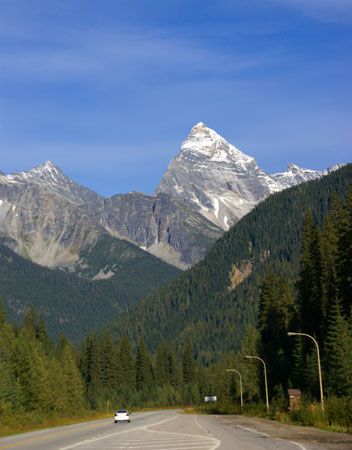
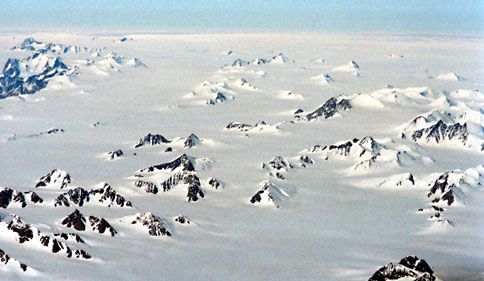
A nunatak is an isolated mountain peak or hill that projects through and is completely surrounded by a continental ice sheet or an Alpine-type ice cap.
What is nunatak?
A nunatak is an isolated mountain peak or hill that projects through and is completely surrounded by a continental ice sheet or an Alpine-type ice cap.12
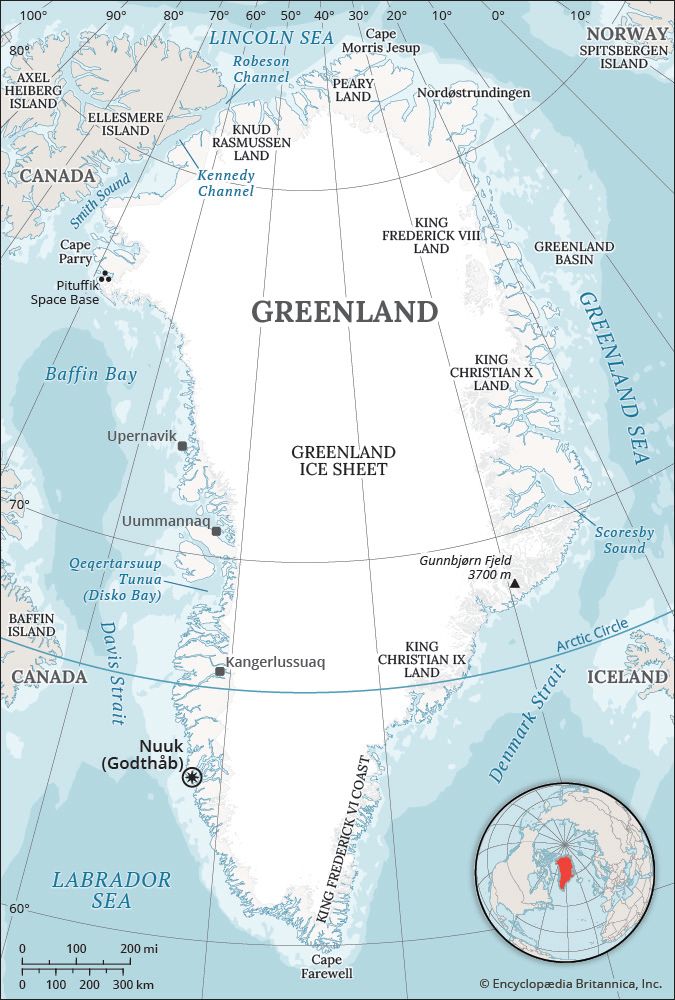
The term originates from the Greenlandic Inuit word nunataq. Historically, scientists hypothesized that these peaks served as glacial refuges for vegetation, allowing for the subsequent reoccupation of land after ice retreated. However, modern research suggests that identifying true nunataks is complex, as postglacial weathering can obscure evidence of past glaciation, making it difficult to use these peaks to accurately determine former ice thicknesses.21
How do glaciers shape the landscape around them?
Glaciers act as powerful agents of landscape transformation through two primary mechanisms: erosion and deposition.34
Glacial Erosion
Glaciers reshape the land by carving, scouring, and transporting rock debris.
- Abrasion and Plucking: Temperate glaciers, which move via basal sliding, act like giant sheets of sandpaper. They use embedded rock debris to scratch and gouge the bedrock, creating features like striations and “knob-and-tail” formations. Through a process called plucking or quarrying, glaciers also remove large chunks of bedrock by exploiting fractures and joints.35
- Valley Reshaping: Glaciers transform V-shaped river valleys into characteristic U-shaped valleys by eroding both the base and the steep sidewalls.6
- Alpine Features: In high mountains, glacial erosion creates dramatic landforms, including cirques (amphitheatre-shaped hollows), arêtes (knife-edge ridges), and horns (sharp peaks like the Matterhorn).6
- Fjords: When glaciers erode valleys near the coast to depths below sea level, the subsequent marine inundation creates deep, narrow fjords.74
Glacial Deposition
As glaciers melt or retreat, they leave behind vast amounts of sediment and debris:
- Moraines: These are ridges of till (unsorted glacial sediment) that mark the margins of former ice sheets.84
- Drumlins: These are streamlined, elongate mounds of sediment aligned with the direction of ice flow.84
- Eskers: These sinuous, steep-walled ridges were deposited by streams flowing in pressurized tunnels at the base of melting ice sheets.4
What kinds of plants or animals can survive on a nunatak?
Because nunataks are isolated, extreme environments surrounded by ice, they support only highly specialized, cold-adapted life forms. In regions like Antarctica, where ice-free land is extremely limited, the terrestrial biota is sparse and restricted primarily to these mountain peaks and coastal fringes.1
The types of life found on or near such peaks include:
- Microorganisms and Simple Flora: The flora is typically limited to algae, lichens, mosses, and fungi. In some Antarctic environments, unique endolithic (stone-dwelling) cyanobacteria live within porous rocks, remaining dormant until moisture from melting snow becomes available.11
- Invertebrates: The fauna is restricted to a small number of hardy species, including protozoans, nematodes, tardigrades, and primitive wingless insects such as collembola.11
- Vascular Plants: These are extremely rare in the most extreme nunatak environments, with only two native species found in Antarctica.11
While historically hypothesized to be “refuges” that allowed plants and animals to survive glacial periods, modern research suggests that the harsh conditions and isolation make these peaks difficult habitats to colonize.1213
What is the difference between an ice sheet and an ice cap?
The primary difference between an ice sheet and an ice cap is their scale and extent. Both are types of glaciers that form on land and flow outward from a central point, but they are distinguished by their size.1718
- Ice Sheets: These are massive, continuous expanses of ice that cover vast land areas, typically exceeding 50,000 square kilometers (19,000 square miles). The only two ice sheets existing today are those covering Antarctica and Greenland.1719
- Ice Caps: These are similar in nature to ice sheets but are smaller in total area. They often form on relatively level land or highland areas and may be found in various mountainous regions or on islands.17182021
While both structures are composed of compressed snow and ice, their massive size allows ice sheets to significantly influence global sea levels and depress the Earth’s crust, whereas ice caps are generally more localized.1722
Sources
- nunatak — Encyclopædia Britannica
- nunatak — Merriam-Webster
- glacial landform - Glacial erosion — Encyclopædia Britannica
- fjord — Encyclopædia Britannica
- glacial landform - Depositional landforms of continental glaciers — Encyclopædia Britannica
- Quaternary - Landforms — Encyclopædia Britannica
- glacial landform - Cirques , tarns, U-shaped valleys, arêtes, and horns — Encyclopædia Britannica
- glacial landform - Striations — Encyclopædia Britannica
- glacial landform - Erosional landforms of valley glaciers — Encyclopædia Britannica
- glacier - Surface features — Encyclopædia Britannica
- Pleistocene Epoch - Migration of plants and animals — Encyclopædia Britannica
- Alaska - Plant and animal life — Encyclopædia Britannica
- Mountain ecosystem - Origin — Encyclopædia Britannica
- Polar ecosystem - Biota of Antarctica — Encyclopædia Britannica
- Nunivak Island — Encyclopædia Britannica
- Polar ecosystem - The Antarctic region — Encyclopædia Britannica
- ice cap — Merriam-Webster
- ice sheet — Merriam-Webster
- sheet ice — Merriam-Webster
- ice sheet — Encyclopædia Britannica
- glacier - The great ice sheets — Encyclopædia Britannica
- Pleistocene Epoch - Glaciation — Encyclopædia Britannica
- Arctic - Continental ice sheets of the past — Encyclopædia Britannica
- What’s the Difference Between a Glacier and an Ice Floe? — Encyclopædia Britannica
Published on · 3 min read