Stenolaemate
A stenolaemate is a member of the class Stenolaemata, a group of colonial marine invertebrates within the phylum Bryozoa (moss animals). They are the oldest…
What is stenolaemate?
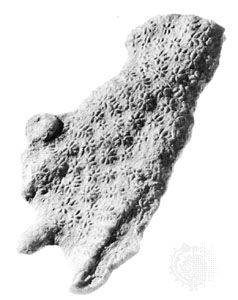
A stenolaemate is a member of the class Stenolaemata, a group of colonial marine invertebrates within the phylum Bryozoa (moss animals). They are the oldest known bryozoans, with a fossil record dating back to the Early Ordovician Epoch.12
Stenolaemates are characterized by their narrow, cylindrical zooids that possess calcified walls. Unlike other bryozoans, their body walls lack muscle fibers, meaning they do not use them to evert their lophophores.13
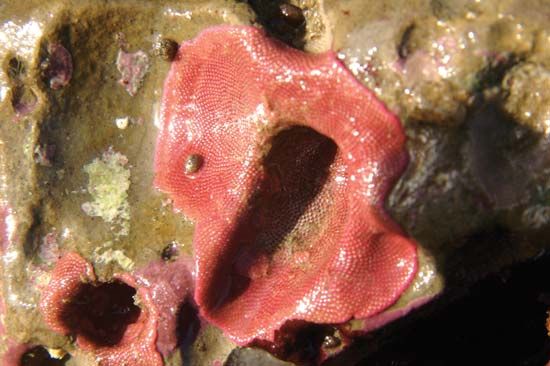
The class originally consisted of four orders, but today only the Cyclostomata remain extant. The other three orders—Cystoporata, Trepostomata, and Cryptostomata—are extinct, having disappeared by the end of the Paleozoic Era. Approximately 900 species of stenolaemates have been described, ranging from ancient massive fossilized colonies to modern species like Crisia eburnea, which forms small, white, bushy tufts in tide pools.132
What are the main differences between Bryozoa and other colonial marine animals?
Bryozoans, also known as moss animals, are colonial marine invertebrates that are often distinguished from other colonial animals by their unique biological structure and feeding mechanisms.
Key Characteristics of Bryozoa
- Colonial Structure: Bryozoans form colonies composed of numerous interconnected units called zooids. These zooids are typically less than one millimeter in length and arise through asexual budding from an initial founder zooid.45
- Feeding Mechanism: They possess a lophophore, a specialized ring of ciliated tentacles used to collect suspended food particles from the water.45
- Anatomy: A defining feature of the subphylum Ectoprocta is that the anus opens outside the tentacular ring, which distinguishes them from the phylum Entoprocta, where the anus is located within the ring of tentacles.65
Differences from Other Colonial Marine Animals
- Entoprocts: While historically classified together due to superficial similarities in their tentacled feeding structures, molecular evidence and developmental patterns confirm they are distinct. Unlike bryozoans, entoprocts have a different water flow pattern across their tentacles and a different anus position.67
- Cnidarians: Unlike bryozoans, cnidarians possess specialized stinging cells called nematocysts used to paralyze prey or defend against predators. Their colonial forms, such as corals, also differ significantly in their basic body plan and life cycles.8
- Tunicates: Some tunicates are colonial and sessile, but they belong to the phylum Chordata. They are distinguished by their complex filtering devices and, in their larval stages, possess features such as a notochord that are absent in bryozoans.8
- Sponges: Sponges are sessile and colonial, but they lack the complex organ systems, such as a digestive tract, found in bryozoans. They rely on flagellated collar cells to pump water and extract food.8
How do fossilized bryozoans help scientists understand ancient ocean environments?
Fossilized bryozoans serve as vital indicators for scientists reconstructing ancient marine environments. Because many bryozoan species possess calcified zooid walls, they are easily preserved in the fossil record, which dates back to the Early Ordovician Epoch.12133
Scientists use these fossils to understand past ecosystems in several ways:
- Habitat Mapping: Since modern bryozoans are most plentiful in the shallow waters of the continental shelf and often grow on submerged surfaces like stones, shells, or algae, their presence in limestone or shale formations helps researchers identify the depth and substrate conditions of ancient seabeds.121314
- Environmental Indicators: The distribution of specific orders, such as the extinct Trepostomata or Cryptostomata, provides clues about the energy levels and water quality of Paleozoic environments. For instance, their growth forms—ranging from solid, massive colonies to delicate, lacy structures—reflect the wave energy and current conditions of their original habitats.41314
- Chronological Markers: Because different groups, such as the Cyclostomata or various gymnolaemates, flourished during specific geological periods, they act as index fossils that help date sedimentary rock layers.133
What are the primary characteristics that distinguish the three classes of Bryozoa?
The phylum Bryozoa is divided into three distinct classes, primarily categorized by their habitat, skeletal structure, and methods of lophophore eversion.21
Classes of Bryozoa
- Phylactolaemata: These are exclusively freshwater organisms. Their zooids are cylindrical with a crescent-shaped lophophore and a specialized flap called an epistome overhanging the mouth. Unlike other classes, their body walls are non-calcareous and muscular, which facilitates the eversion of the lophophore. They are also unique in producing dormant buds known as statoblasts.21
- Stenolaemata: Primarily marine and the oldest known bryozoan class, these organisms feature narrow, cylindrical, calcified tubes. Their body walls lack muscle fibers, meaning they do not use wall deformation to evert the lophophore. While they were diverse in the fossil record, only the order Cyclostomata has living representatives today.24
- Gymnolaemata: This class is mostly marine and includes the most successful group, the Cheilostomata. Their zooids are cylindrical or box-shaped, and lophophore eversion is achieved through the deformation of the body wall by extrinsic muscles. They exhibit significant polymorphism and possess pores in their walls that are plugged with tissue.21
Sources
- stenolaemate — Encyclopædia Britannica
- moss animal - Annotated classification — Encyclopædia Britannica
- moss animal - Evolution and paleontology — Encyclopædia Britannica
- moss animal — Encyclopædia Britannica
- entoproct — Encyclopædia Britannica
- moss animal - Size range and diversity of structure — Encyclopædia Britannica
- moss animal - Distinguishing taxonomic features — Encyclopædia Britannica
- moss animal - Colonies — Encyclopædia Britannica
- moss animal - Critical appraisal — Encyclopædia Britannica
- What Is a Marine Mammal? — Encyclopædia Britannica
- Animal - Annotated classification — Encyclopædia Britannica
- Cryptostomata — Encyclopædia Britannica
- moss animal - Distribution and abundance — Encyclopædia Britannica
- moss animal - Marine bryozoans — Encyclopædia Britannica
Published on · 4 min read