Sweetfish
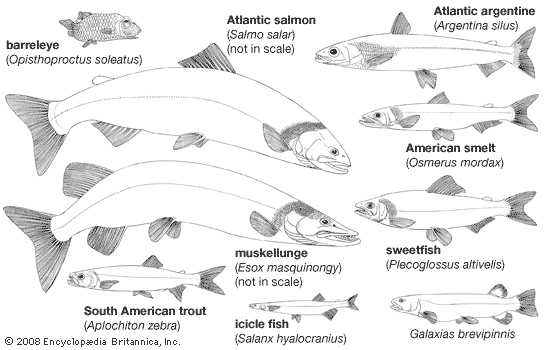
The sweetfish, also known as the ayu (Plecoglossus altivelis), is a small, salmon-like anadromous fish native to East Asia.
What is sweetfish?
The sweetfish, also known as the ayu (Plecoglossus altivelis), is a small, salmon-like anadromous fish native to East Asia.12
Reaching about 30 cm (1 foot) in length, this fish is light yellow or olive-colored and resembles a small trout. It is physically distinguished by a sail-like dorsal fin, a ridged tongue, and teeth arranged on saw-edged plates along its jaws. Highly esteemed as a food fish, the sweetfish is known for its delicate flavor and its habit of migrating upstream to spawn in clear waters. In Japan, a traditional method of harvesting these fish involves the use of trained cormorants.12
How does cormorant fishing work?
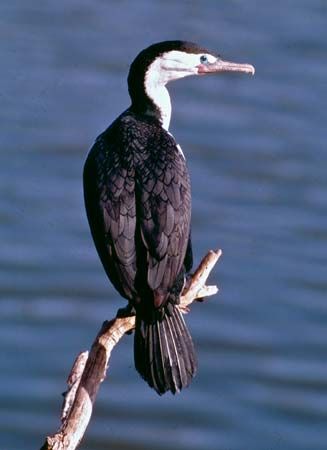
Cormorant fishing is a traditional practice in the Orient and other regions where cormorants—specifically the common cormorant (Phalacrocorax carbo) and the Japanese cormorant (P. capillatus)—are tamed and trained to assist humans in catching fish.
These birds are highly skilled, glossy black underwater swimmers. In this practice, the birds are managed by handlers who utilize the cormorants’ natural ability to pursue and capture fish. While the provided search results confirm that these birds have been tamed for fishing in the Orient, they do not detail the specific mechanical techniques (such as the use of throat snares or tethers) used by handlers to retrieve the catch.
Biologically, cormorants are well-adapted for this role, as they are specialized for underwater swimming and are capable of pursuing both free-swimming and bottom-living fish with great agility.
What does it mean for a fish to be anadromous?
For a fish to be anadromous, it must spend the majority of its life cycle in the sea, only migrating into fresh water to spawn. This migratory behavior allows species, such as salmon and certain trout, to expand their range into colder, nutrient-rich freshwater environments that might otherwise be inaccessible to strictly marine species.5678
These fish possess precise physiological adaptations that allow them to transition between different levels of water salinity. During their migration, they often return to their specific natal river—the same stream where they hatched—using environmental cues such as the Earth’s magnetic field, celestial features, and, most importantly, their sense of smell to recognize the unique chemical signature of their home waters.56
This strategy stands in contrast to catadromous fish, such as freshwater eels, which live in fresh water but migrate to the ocean to spawn.76
What other fish are part of the Osmeridae family?
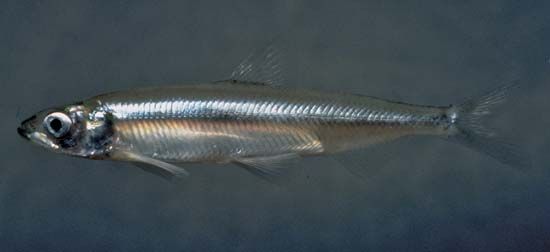
The Osmeridae family, commonly known as smelts, consists of slender, carnivorous, silvery food fishes found in cold northern waters. They are closely related to salmon and trout and are characterized by a small, fleshy adipose fin.
In addition to the American smelt (Osmerus mordax) and the European smelt (O. eperlanus), other members of this family include:
- Rainbow herring (Osmerus dentex)
- Surf smelt (Hypomesus pretiosus)
- Capelin (Mallotus villosus)
- Eulachon, or candlefish (Thaleichthys pacificus), which is so oily during spawning that it can be dried and burned as a candle.
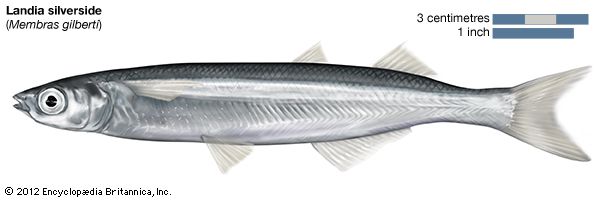
It is worth noting that the name “smelt” is sometimes applied to unrelated fishes, such as the silversides.
Sources
- sweetfish — Encyclopædia Britannica
- ayu — Merriam-Webster
- Cormorant — Encyclopædia Britannica
- Pelecaniform - Feeding ecology — Encyclopædia Britannica
- Migration - Anadromous fish — Encyclopædia Britannica
- protacanthopterygian - Life cycle and reproduction — Encyclopædia Britannica
- protacanthopterygian - Distribution and abundance — Encyclopædia Britannica
- Marine ecosystem - Migrations of marine organisms — Encyclopædia Britannica
- smelt — Encyclopædia Britannica
- perciform - Annotated classification — Encyclopædia Britannica
- mackerel — Encyclopædia Britannica
Published on · 2 min read