Torreya
Torreya is a genus comprising approximately six species of ornamental trees and shrubs belonging to the yew family (Taxaceae). These plants are native to…
What is Torreya?
Torreya is a genus comprising approximately six species of ornamental trees and shrubs belonging to the yew family (Taxaceae). These plants are native to localized regions within the United States, China, and Japan.1
Key characteristics of the genus include:
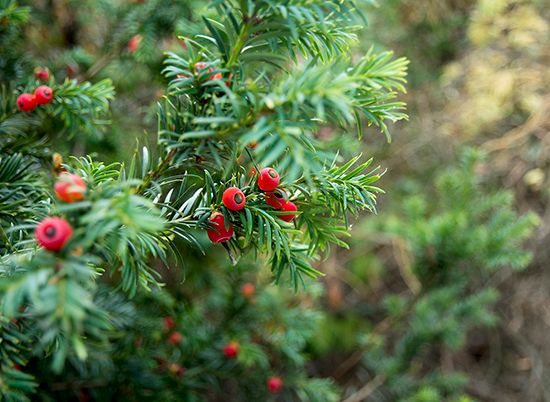
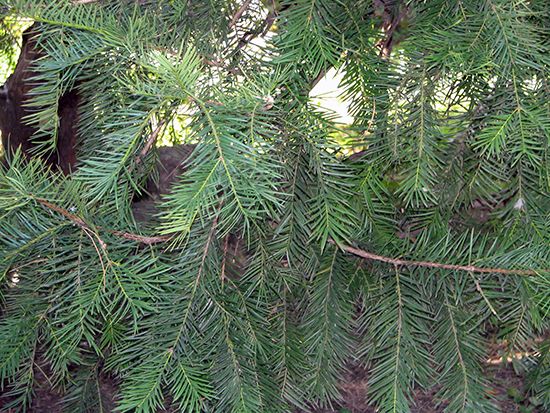
- Foliage: They feature persistent, linear, bristle-pointed leaves arranged in two ranks. The leaves often emit a pungent or foul odor when bruised.1
- Reproduction: Male and female flowers are typically borne on separate trees or different branches of the same tree.1
- Fruit: The seeds are large and encased in a fleshy covering known as an aril.12
Commonly known species include the California nutmeg, the Japanese torreya, and the stinking yew. While some are used for timber or food, the stinking yew is currently considered an endangered species due to habitat loss and reproductive challenges in the wild. The genus is named in honor of the American botanist John Torrey.1342
What are the main characteristics of the yew family?
The Taxaceae, commonly known as the yew family, is a group of approximately 30 species of evergreen trees and shrubs within the order Pinales. Distributed primarily across the Northern Hemisphere, these plants are characterized by several distinct botanical features.56
Main Characteristics
- Foliage: The plants possess numerous branches covered in alternate, needlelike leaves. These leaves are typically flattened and linear, often appearing to grow in two rows due to a twist at their bases.57
- Reproductive Structures: Taxaceae are generally dioecious, meaning pollen-bearing and ovule-bearing reproductive units are found on separate plants. Unlike many other conifers, they do not produce traditional seed cones; instead, they bear solitary ovules at the ends of dwarf shoots.586
- Seeds and Fruit: A defining feature of the family is the mature seed, which is typically encased in a fleshy, berrylike or plumlike structure known as an aril. This fleshy covering is thought to aid in seed dispersal by animals.56
- Toxicity: In many species, such as the yew, the foliage and seeds contain poisonous alkaloids that can be fatal to livestock and humans, though the fleshy arils are typically non-toxic.79
Why is the stinking yew considered an endangered species?
The stinking yew (Torreya taxifolia) is classified as an endangered species due to its critical status in the wild, where it is limited to a small range in western Florida and southwestern Georgia.3
The primary reasons for its decline include:
- Habitat Destruction: Human activity and environmental changes have eliminated several natural populations of the tree.3
- Reproductive Failure: For reasons that remain not fully understood, the remaining wild plants struggle to reproduce effectively.3
- Stunted Growth: Beyond reproductive issues, the surviving trees often fail to reach their full potential height, further weakening the stability of the remaining populations.3
While the species performs well in cultivation, researchers are currently working to stabilize these remnant wild populations and restore the tree to sites where it formerly grew.3
How do evergreen trees differ from deciduous trees?
The primary difference between evergreen and deciduous trees lies in their foliage retention patterns and survival strategies in response to environmental conditions.
Evergreen Trees
Evergreen plants retain their leaves throughout the year and into the following growing season. In cold-temperate and Arctic regions, these are typically conifers with needlelike or scalelike leaves that are thicker and more leathery than those of deciduous trees. These leaves often feature protective waxes and resins that prevent freezing and fracturing during winter. While many evergreens are conifers, some broad-leaved species exist in tropical and subtropical climates, where they utilize their foliage to remain productive year-round.101112
Deciduous Trees
Deciduous trees shed their leaves annually, typically in autumn or during a dry season. This is a protective mechanism; because their leaves are generally thinner and more tender, they are susceptible to freezing, which would rupture their cells and render them useless for photosynthesis. By dropping their leaves, these trees also reduce the risk of physical damage from wind and the weight of snow. The shedding process is a controlled biological event involving the formation of an abscission layer that seals off the leaf stalk, allowing the tree to enter dormancy and conserve energy.1011
Sources
- Torreya — Encyclopædia Britannica
- Japanese torreya — Encyclopædia Britannica
- stinking yew — Encyclopædia Britannica
- Torreya — Merriam-Webster
- Taxaceae — Encyclopædia Britannica
- yew — Encyclopædia Britannica
- conifer - Annotated classification — Encyclopædia Britannica
- Taxaceae — Merriam-Webster
- English yew — Encyclopædia Britannica
- Evergreen — Encyclopædia Britannica
- Why Do Leaves Fall in Autumn? — Encyclopædia Britannica
- forestry - Occurrence and distribution — Encyclopædia Britannica
- Tree - Popular classifications — Encyclopædia Britannica
Published on · 3 min read