What Do Whales Eat?
Whales have diverse diets that depend primarily on whether they are classified as baleen whales or toothed whales.
What do whales eat?
Whales have diverse diets that depend primarily on whether they are classified as baleen whales or toothed whales.1
Baleen Whales
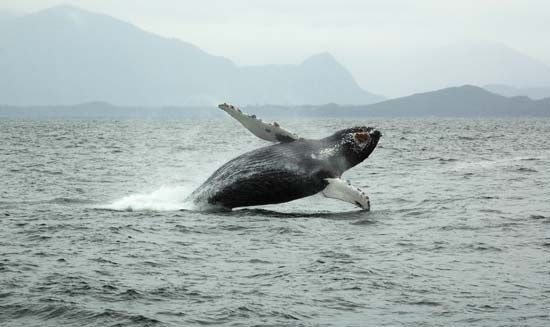
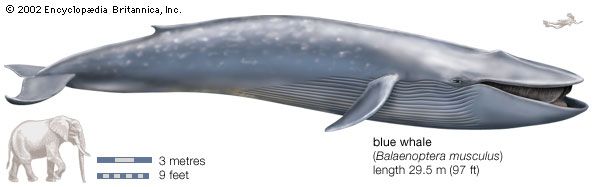
Baleen whales, such as the blue whale and humpback whale, are filter feeders. They use comb-like baleen plates made of keratin to trap small organisms while expelling water. Their diet typically consists of:12
Toothed Whales
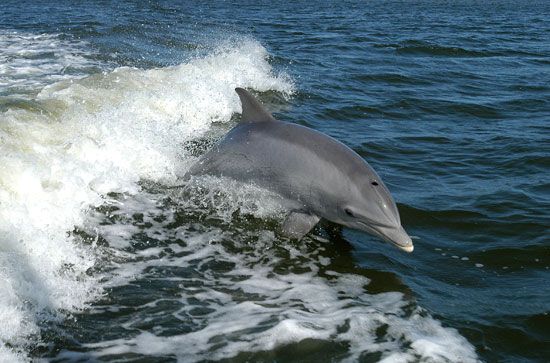
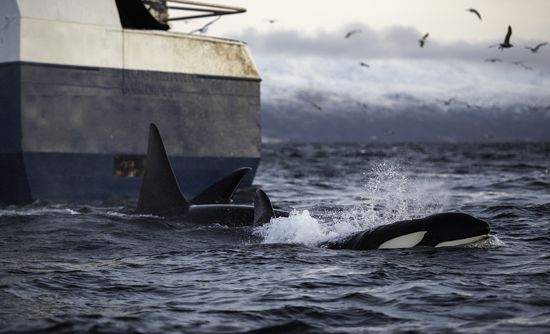
Toothed whales, including sperm whales and killer whales, are active hunters that use their teeth to grasp individual prey. They generally swallow their food whole. Their diet is more varied and includes:12
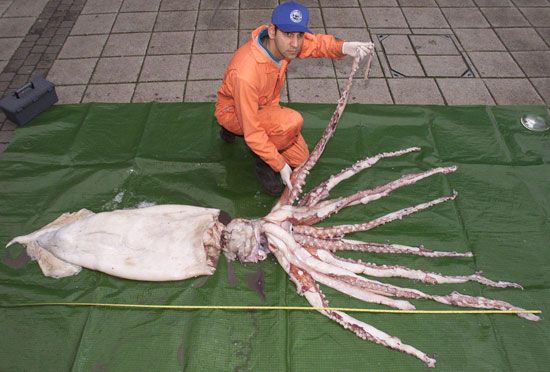
- Squid, including giant squid1
- Various species of fish13
- Larger marine animals, such as seals, sea lions, penguins, and other whales13
How does bubble netting work as a hunting strategy?
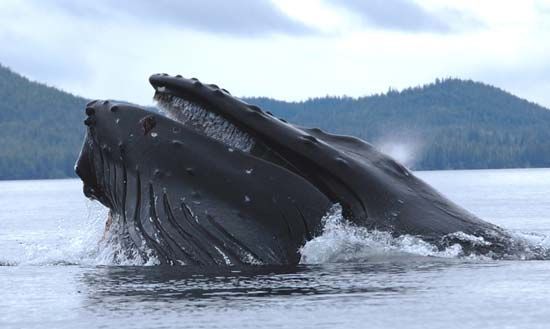
Bubble netting is a sophisticated, cooperative hunting strategy primarily used by humpback whales to capture large quantities of prey at once.1
The process involves a coordinated group effort:
- Creating the Trap: A whale blows bubbles in a circular pattern beneath a school of fish or krill. These bubbles form a vertical “net” that effectively corrals and traps the prey in a confined space.1
- Communication: The group works in tandem; typically, one whale is responsible for blowing the bubbles, while another emits vocalizations to signal the rest of the pod.1
- The Feed: Once the prey is contained, other members of the group swim upward through the center of the bubble circle with their mouths open, consuming the concentrated mass of food.1
This complex behavior highlights the high level of intelligence and social cooperation found among these marine giants.1
What are the main differences between baleen and toothed whales?
The primary distinction between baleen whales (mysticetes) and toothed whales (odontocetes) lies in their feeding apparatus and hunting strategies.
Feeding Mechanisms
- Toothed Whales: These whales possess simple, conical teeth used for grasping individual prey, such as fish or squid, which they swallow whole. The number of teeth varies significantly by species, ranging from as few as one in the narwhal to over 240 in some river dolphins to over 240 in some river dolphins.25
- Baleen Whales: These whales lack teeth entirely. Instead, they have rows of baleen plates made of keratin hanging from their upper jaws. They are filter feeders that take in large volumes of water and use these plates to trap small organisms like krill and plankton while expelling the water.251
Hunting Strategies
Toothed whales are active hunters that target specific prey, sometimes diving to great depths or working in groups to hunt larger marine animals. In contrast, baleen whales focus on consuming vast quantities of small prey in single mouthfuls, occasionally utilizing cooperative techniques like bubble netting to concentrate their food source.12
Why is krill so important to the Antarctic food chain?
Krill are fundamental to the Antarctic food chain because they serve as the primary diet for a vast array of marine life, including whales, seals, fish, and seabirds.36
Their importance is driven by several key factors:
- Nutritive Value and Density: Krill congregate in massive, dense schools, allowing large predators like baleen whales to efficiently consume tons of biomass in a single feeding session.36
- Trophic Link: They act as a critical bridge in the ecosystem by consuming phytoplankton and converting that energy into a food source for higher-level predators.36
- Environmental Sensitivity: Krill rely on sea ice for protection from predators and storms, as well as for the growth of the phytoplankton they eat. Because of this, their population is highly sensitive to climate change; declines in krill abundance have already been linked to population drops in species such as Adélie penguins and chinstrap penguins.3
Ecologists are increasingly concerned that human harvesting of krill for dietary supplements and other uses may further disrupt these delicate Antarctic populations.3
Sources
- What do whales eat? — Encyclopædia Britannica
- Do whales have teeth? — Encyclopædia Britannica
- krill — Encyclopædia Britannica
- killer whale — Encyclopædia Britannica
- cetacean - Feeding adaptations — Encyclopædia Britannica
- Antarctica - Sea life — Encyclopædia Britannica
Published on · 3 min read